What happened
SEDA’s original FAQ assigned 100 MW to NEM Rakyat from a 500 MW headline quota. The household tranche was therefore one fifth of that original allocation. This is a measure of programme design, not the fraction of homes that had panels or the useful output achieved by a particular roof. SEDA allowed unused credit to roll over for a maximum of twelve months under the published rules. The ten-year offset period therefore did not give each exported unit ten years of usable life.
Malaysia introduced net energy metering (NEM) in 2016 to encourage rooftop solar. Under NEM 3.0, launched in 2021, the NEM Rakyat programme let households offset their electricity bills with solar power exported to the grid over a 10-year period. It started with a 100 MW quota, with separate quotas for government buildings and for commercial and industrial users. Take-up by households was initially slow: in early 2022 the Energy Commission said about a quarter of the household quota had been used.
Demand then accelerated. The household quota, raised to 150 MW, was fully taken by November 2023. The government added more, and a rebate scheme called SolaRIS, announced in April 2024, offered RM1,000 per kilowatt of capacity. The enlarged 350 MW quota was filled by September 2024, and the 600 MW quota by May 2025, after which another 100 MW was added. NEM 3.0 closed on 30 June 2025, as a new itemised tariff structure took effect.
For a household, the value of panels depends on how much of their output offsets electricity they would otherwise buy. Credits for exported power can only be used within set periods, so oversized systems may generate credits that expire unused. Rising tariffs and rebates improve the payback; uncertainty about future tariff rules can slow decisions.
Key moments
Net Energy Metering introduced with a 500 MW quota
NEM 2.0 adopts true one-for-one net metering
NEM 3.0 and NEM Rakyat launched
Initial 150 MW household quota fully taken
SolaRIS rebate scheme announced
NEM 3.0 closes ahead of a new tariff structure
Each step shows the quota available after extensions. Sources: SEDA; pv magazine; EdgeProp; The Vibes.
The trade-offs at the heart of the case
Keep a credit ledger alongside the meter
A panel produces kilowatt-hours, while a bill includes a tariff structure and charges that generation may not offset. Make a monthly ledger of imports, on-site use, exports and credits available for later billing periods. A homeowner installing more panels might generate additional midday exports but lack sufficient imports against which to use the credits within the allowed period. The marginal panel can therefore be worth less than the first.
The last panel deserves a separate quote
Ask the installer to price the final row of panels on its own. Match its expected monthly production with the part of the bill the household still could avoid after the smaller system is installed. If the last row generates mostly credits the household cannot use, retain the smaller design and reserve funds for maintenance or a future change in occupancy that can justify another installation.
Who pays for the grid?
A household with panels still relies on the grid at night and on cloudy days. When its bill falls, the fixed cost of poles, wires and backup generation does not. If tariffs are mostly per kilowatt-hour, part of that cost shifts to households without solar. Regulators must balance encouraging clean energy against fairness to other customers.
For your seminar, paper or interview
- Q1
When could an export credit expire unused?
- Q2
What changes if the household moves before year ten?
- Q3
Which fixed bill items should be excluded from the forecast?
- Q4
How should a proposed extra row of panels be valued?
- Q5
When is shifting a load a genuine household saving?
- Net metering economics
- Incentive design
- Consumer adoption
- Rebates and subsidies
How we would approach it
Simplifying Finance’s opinion, offered as a starting point for debate, not as fact or investment advice.
NEM Rakyat shows how incentive design drives adoption. A modest scheme with a small quota became oversubscribed once rebates and tariff changes improved the payback, and quotas were raised repeatedly to meet demand.
Size systems to use
Match panel size to household consumption.
Signal policy early
Announce successor schemes before quotas close.
Target support
Focus rebates on households that would not otherwise invest.
What this plan gives up
Generous incentives speed adoption but transfer costs to other electricity users and taxpayers.
The strongest counter-argument
Net metering can shift grid costs onto households without solar, who tend to be poorer. Rebates also cost public money that might reduce emissions more cheaply elsewhere.
Metrics to watch
- Rooftop solar installations under the successor scheme
- Household electricity tariffs
Propose your solution
Pick a discussion question and set out what you would do, why, and what it would cost. Strong, well-argued answers are reviewed and published below with your first name and programme.
Published solutions
Loading published solutions…
- SEDA Malaysia: NEM Rakyat programme design ↗
- SEDA Malaysia: original NEM 3.0 frequently asked questions ↗
- SEDA: Net Energy Metering 3.0 ↗
- pv magazine: Malaysia reaches 350 MW residential quota ↗
- EdgeProp: residential rooftop solar quota fully taken up ↗
- The Vibes: PETRA adds 100 MW for households ↗
- Malay Mail: NEM 3.0 take-up rates, 2022 ↗
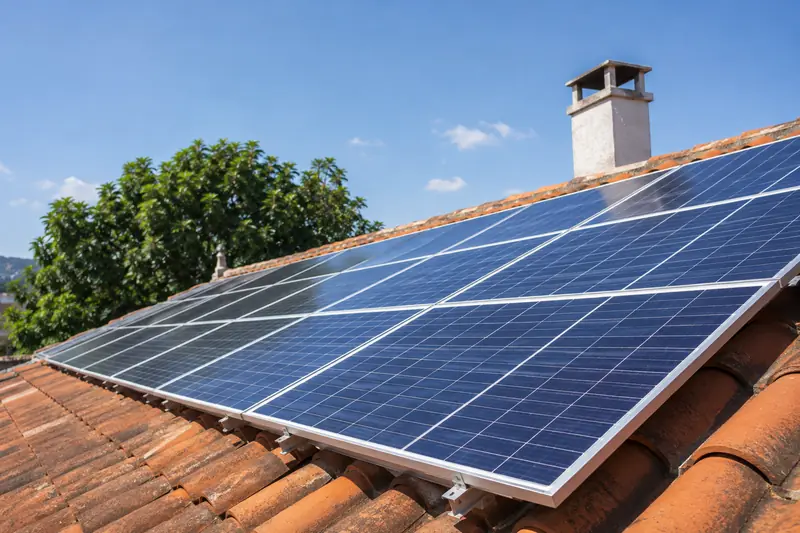
- Image: Solar panels serving public facilities at Sungai-Sungai, Sabah, illustrate the technology. The case concerns residential NEM Rakyat terms. Photograph: CEphoto, Uwe Aranas, CC BY-SA 3.0 (cropped and resized) ↗
Figures are as reported by the companies or cited outlets as of 25 November 2026. Check the source before quoting. Corrections: let us know through the solution form.