What happened
MRT Corp describes a 57.7-kilometre line with 36 operational stations, ten interchange or connecting stations and 17 stations equipped with park-and-ride facilities. The first section opened in June 2022. The rest launched on 16 March 2023. The government also offered free rides for eligible entries or exits on the new line until the end of March. Early ridership therefore measured a temporarily different price as well as a newly connected railway.
MRT Corp lists 6,416 park-and-ride bays across the seventeen equipped stations and describes five provisional stations as distinct from the 36 operational ones. Capacity reserved for a future station cannot improve an interchange today. Even an available parking bay serves a different traveller from a protected pedestrian connection.
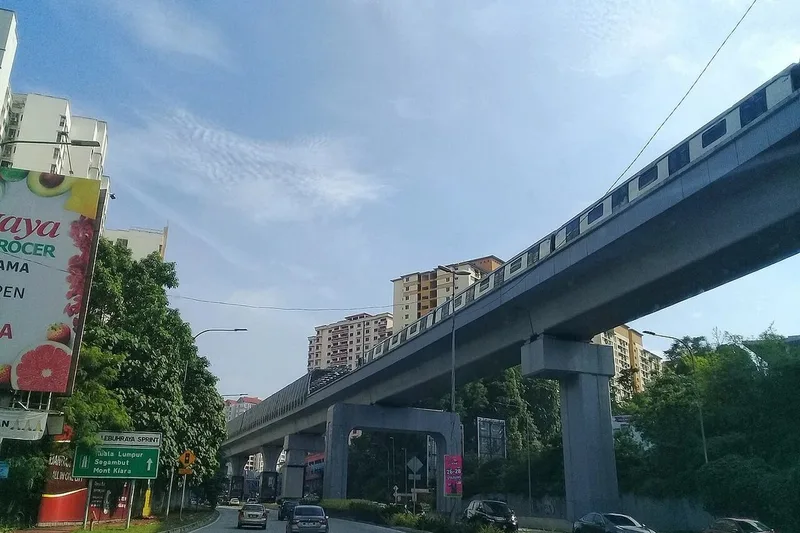
The line’s construction cost was pegged at RM39.35 billion before a change of government in 2018. The new administration cut it to RM30.53 billion, largely by removing items such as stations, including two underground stops at Bandar Malaysia that were turned into provisional stations. Including land and other costs, the total project cost has been put at about RM56.93 billion. Of its 36 stations, 27 are elevated and nine underground, and ten are interchanges or connecting stations with other lines.
When the full line opened in March 2023, the government expected initial ridership of about 104,000 a day and hoped for 200,000 within two years. The Auditor-General reported that the line carried about 20,842 people a day in 2022, a fifth of its target, while Phase 1 was operating alone, and about 89,400 a day in 2023, 45.6 percent of that year’s 196,000 target. By May 2024 the transport minister put average daily ridership at about 140,000, and later quarterly figures showed further growth.
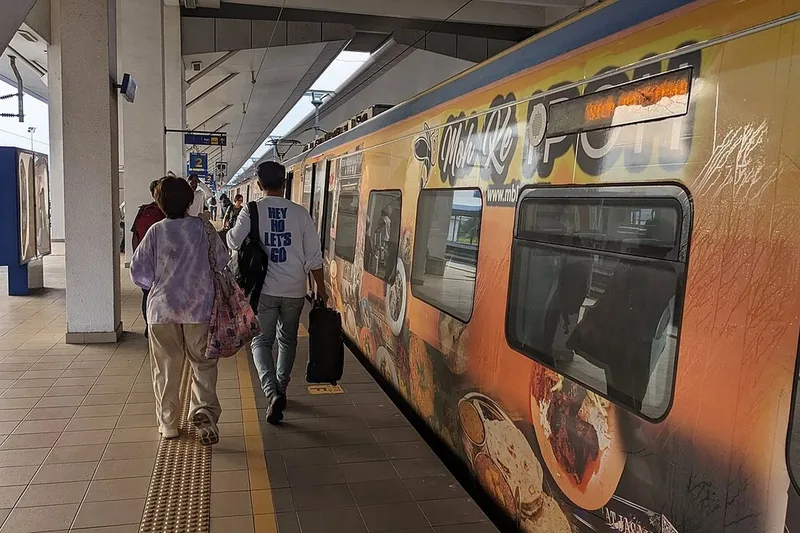
Because so many of its stations connect with other lines, the Putrajaya Line’s value depends heavily on transfers. A passenger’s journey may involve the Kajang Line, LRT lines, the monorail or KTM Komuter. Each interchange adds walking time and a risk of missing a connection, especially when the connecting line runs less often. The interchanges are where the network effect is either captured or lost.
Key moments
Cabinet approves the line at an initial RM28 billion estimate
Construction cost cut from RM39.35 billion to RM30.53 billion
Phase 1 opens, Kwasa Damansara to Kampung Batu
Full line opens to Putrajaya Sentral
Average daily ridership reaches about 89,000
Ridership averages about 140,000 a day
2022–2023 from the Auditor-General’s report; 2024 figure from the transport minister. Sources: Free Malaysia Today; The Star.
The trade-offs at the heart of the case
Price the transfer in missed departures
Two passengers taking the same five-minute walk can experience very different costs. One reaches a frequent service and boards almost immediately. Another misses a train that runs much less often. Signs, lifts and timetable coordination affect both journeys differently. Parking also has an opportunity cost because land close to an entrance could house people or host a bus turn. Comparing only the construction cost per parking bay ignores who can reach the station without buying a car.
Negotiate the minutes between operators
Bring the connecting line’s dispatcher and the interchange station manager into the same review. Give them the last departure that passengers regularly miss and ask them to recover it without disrupting an entire evening timetable. The responsible decision may be a revised platform notice, another lift attendant or a shorter walk. Naming the missed connection, the parties able to fix it and the passengers already aboard makes a better investment brief than requesting a general improvement in connectivity.
For your seminar, paper or interview
- Q1
Which missed connection has the highest cost?
- Q2
How would promotional fares affect a ridership comparison?
- Q3
Where should parking land enter the appraisal?
- Q4
Which connections can be recovered without delaying other passengers?
- Q5
What rights would justify a permanent investment at a shared station?
- Network effects
- Interchange design
- Cost control in megaprojects
- Demand ramp-up
How we would approach it
Simplifying Finance’s opinion, offered as a starting point for debate, not as fact or investment advice.
Cutting the construction cost by about RM9 billion was a meaningful saving, and the line’s ridership has grown quickly once the full route opened. The lesson is that an interchange-heavy line earns its return through smooth transfers, so spending on walkways, signage and coordinated timetables is part of the investment.
Measure transfer times
Track walking and waiting time at each interchange.
Coordinate timetables
Align last trains and peak headways across operators.
Keep provisional stations ready
Protect the option to open deferred stations as demand grows.
What this plan gives up
Deferring stations lowers the upfront bill but can raise the cost of adding them later.
The strongest counter-argument
Some of the cost savings came from deferring stations that may later be needed, which can cost more to add after the line is running. Early ridership figures also reflected a partial line and free introductory rides, so they say little about long-run demand.
Metrics to watch
Propose your solution
Pick a discussion question and set out what you would do, why, and what it would cost. Strong, well-argued answers are reviewed and published below with your first name and programme.
Published solutions
Loading published solutions…
- MRT Corp: Putrajaya Line project profile ↗
- MRT Corp: launch of full Putrajaya Line operations ↗
- Bernama: Putrajaya Line cost RM30.53 billion, 104,000 initial daily riders expected ↗
- The Star: urban rail network a reality after almost a decade ↗
- Free Malaysia Today: MRT1 and MRT2 missed ridership targets ↗
- The Star: Loke on MRT2 ridership growth ↗
- Image: The passenger interior of a Putrajaya Line train in March 2023. Photograph credit: Wee Hong. Original photograph.jpg) · CC BY-SA 4.0. ↗
Figures are as reported by the companies or cited outlets as of 25 November 2026. Check the source before quoting. Corrections: let us know through the solution form.