What happened
The federal transport ministry and ANTT reported a winning offer from Rumo of R$2,719,530,000 in March 2019. ANTT gave the premium over the minimum as 100.92 percent. The premium measures competition for the concession at award. It is not a forecast of freight growth or a return that Rumo expected to earn. The distinction matters when comparing the auction result with projected investment.
A grain shipper buys a delivered journey to a buyer or port. It may need local trucking to a terminal, storage during a harvest peak, a train path and access to a connecting network. A low published trunk tariff is of limited value if a producer cannot obtain a loading slot when its crop is ready. Costs can simply migrate to waiting, storage or the price of the connecting segment.
An integrated operator has good reasons to coordinate trains across boundaries. It can reduce wagon turnaround times, avoid missed paths and plan maintenance jointly. The same knowledge and control can advantage its own services over an independent shipper. A regulator reviewing complaints needs a record of requested times, actual allocations, reasons for refusal and available alternatives. An annual tonnage total cannot settle a dispute about one critical week.
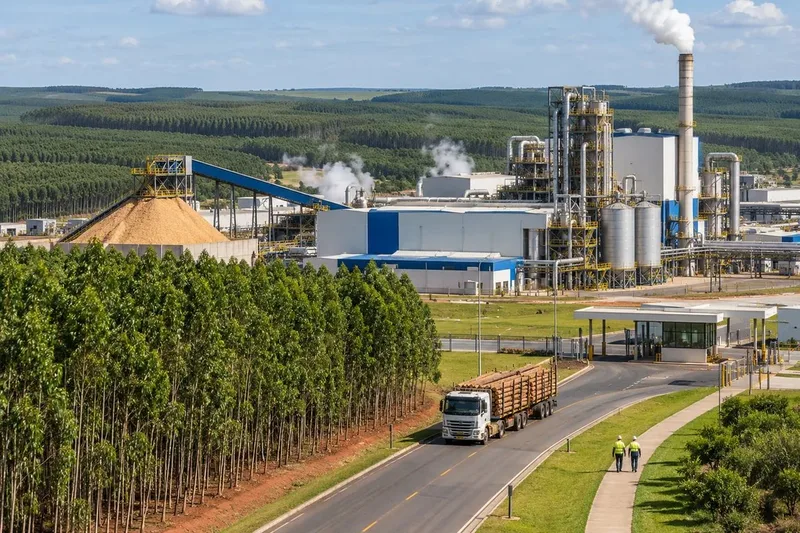
The Ferrovia Norte-Sul has been under construction since 1987, designed as the backbone of Brazil’s rail network, linking agricultural regions in the centre of the country to ports. Its northern section, from Açailândia to Porto Nacional, was granted to VLI in 2007.
On 28 March 2019 the government held its first railway concession auction in 12 years for the 1,537-kilometre central and southern sections between Porto Nacional, in Tocantins, and Estrela d’Oeste, in São Paulo. Rumo, part of the Cosan group, bid R$2.719 billion, a premium of 100.92% over the minimum of R$1.353 billion. VLI, backed by Vale, Mitsui and Brookfield, bid R$2.065 billion. The 30-year contract, signed on 31 July 2019, cannot be renewed. The line was reported to be largely built.
The case shows why an asset can be worth more to a bidder that already owns connecting infrastructure.
Key moments
Rumo submits the winning North–South Railway bid.
ANTT reports a premium of 100.92 percent over the minimum.
Rumo won a 30-year, non-renewable concession for 1,537km from Porto Nacional (Tocantins) to Estrela d’Oeste (São Paulo). Sources: Railway Gazette; Agência Brasil; Gazeta SP.
The trade-offs at the heart of the case
The option to send a train
A producer comparing road and rail may value flexibility more than the published price suggests. A truck can sometimes leave on a different day or use another destination. A train service may require a minimum consolidated load and a booking made well in advance. If the buyer at the port changes its delivery window, the cheapest quoted rail tariff can become the more expensive total route. The key comparison is a feasible door-to-door service on matching terms. Track access disputes in actual train paths. A request for a slot during a harvest peak differs from a request at another time, even when the tonnes are identical. The operator may have a sound safety or maintenance reason to decline. Documenting requested dates, alternatives offered and actual network occupancy allows an authority to distinguish a genuine constraint from preferential allocation. The process can also reveal a low-cost timetable change benefiting multiple users. The grant premium is sometimes treated as proof that the asset will create a large public benefit. The bid indicates what a bidder was willing to pay under a specified package of rights and expectations. Some private value may arise from greater operating efficiency, some from the ability to set access terms, and some from an overly optimistic forecast. Only the first necessarily improves overall economic productivity. Public evaluation should therefore combine fiscal receipts with service performance and the choices available to independent freight customers.
For your seminar, paper or interview
- Q1
Could a lower rail tariff still leave a farmer worse off than trucking?
- Q2
How would you audit a legitimate rejection of a requested train path?
- Q3
What does the auction premium reveal, and which benefits require separate evidence?
- Q4
How would you verify delivered freight cost for comparable shipments using information available at the time?
- Q5
Which finding about harvest-season access and wagon turnaround would most change your recommendation, and why?
- Network economics
- Competitive bidding
- Rail access
- Agricultural logistics
How we would approach it
Simplifying Finance’s opinion, offered as a starting point for debate, not as fact or investment advice.
An independent freight trader could test access by asking for a complete, bookable route at two different times of the crop year. Document the terms, including the first and last segment outside the main railway. Compare those offers with an equivalent shipment organised through the integrated operator. A difference may reflect legitimate coordination savings or an access problem. The detailed quotations show where the difference originates and which organisation can address it. Evaluate the concession through a sample of end-to-end freight invoices and service records across customers. Reward efficiencies that reduce the delivered cost of moving a tonne. Examine denials of access in the busiest weeks and distinguish actual capacity constraints from commercial discretion. Expanding track could be valuable where there is persistent unmet demand, but better timetable coordination may create usable capacity at far lower cost.
Connect to your own network
Link the new section to Rumo’s Malha Paulista to reach the Port of Santos.
Outbid a rival operator
Pay more because the line is worth more to a connected operator.
Finish and equip the line
Complete construction and add terminals to start carrying grain.
What this plan gives up
Winning the line extended Rumo’s network deep into Brazil’s farm belt, but it paid double the minimum and took on the cost of finishing and running a long, partly built railway.
The strongest counter-argument
Think about the auction from the perspective of a competing logistics provider. The new concession could lower its customers’ transport costs if it can reach the trunk line on workable terms. It could deprive it of business if the winning operator can bundle access and onward services more efficiently. A complaint may therefore reflect either exclusion or ordinary commercial rivalry. Evidence about comparable terms, service quality and physical availability matters more than the identity of the complainant. An alternative infrastructure proposal might add sidings or improve scheduling discipline rather than expand the entire main line. To compare them, examine train length, turnaround, missed slots and time spent waiting at interfaces. Then translate the additional usable path into freight the shipper could actually book within its harvest calendar. A theoretical increase in paths after the harvest has moved by road has little value for that season. The best proposal may change with the commodity and the timing of demand. Access conditions can determine who captures a rail efficiency gain. A rejected path needs a specific operational explanation.
Metrics to watch
- Norte-Sul volumes
- Rumo returns on investment
Propose your solution
Pick a discussion question and set out what you would do, why, and what it would cost. Strong, well-argued answers are reviewed and published below with your first name and programme.
Published solutions
Loading published solutions…
- Transport Ministry records the winning North–South Railway bid (Brazilian public authority) ↗
- ANTT reports the auction premium and concession (Brazilian public authority) ↗
- Railway Gazette: Rumo wins Norte-Sul operating concession ↗
- Agência Brasil: Government raises R$2.719bn from Norte-Sul auction ↗
- Revista Cultivar: Rumo signs Norte-Sul concession contract ↗
- Image: Simplifying Finance · AI-generated editorial illustration
Figures are as reported by the companies or cited outlets as of 22 November 2026. Check the source before quoting. Corrections: let us know through the solution form.