What happened
NTPC, formerly the National Thermal Power Corporation, was founded by the Indian government in 1975 and became the country’s largest power producer. Most of its electricity comes from large coal-fired power stations, which provide reliable power but produce heavy carbon emissions. The government remains its majority owner.
India has set ambitious clean energy goals, including around 500 gigawatts of non-fossil power capacity by 2030 and net-zero emissions by 2070. Electricity demand is growing quickly as the economy expands and more households use air conditioners, appliances and electric vehicles. Meeting this demand without large increases in emissions requires massive investment in solar, wind, storage and transmission.
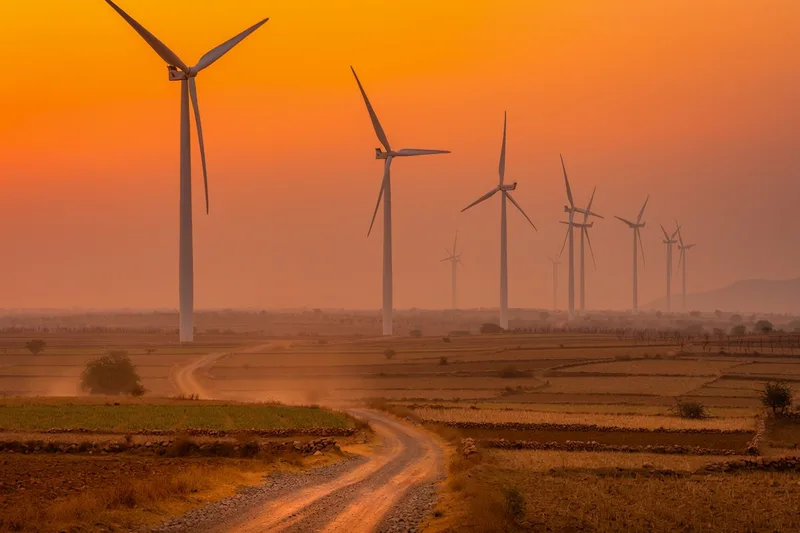
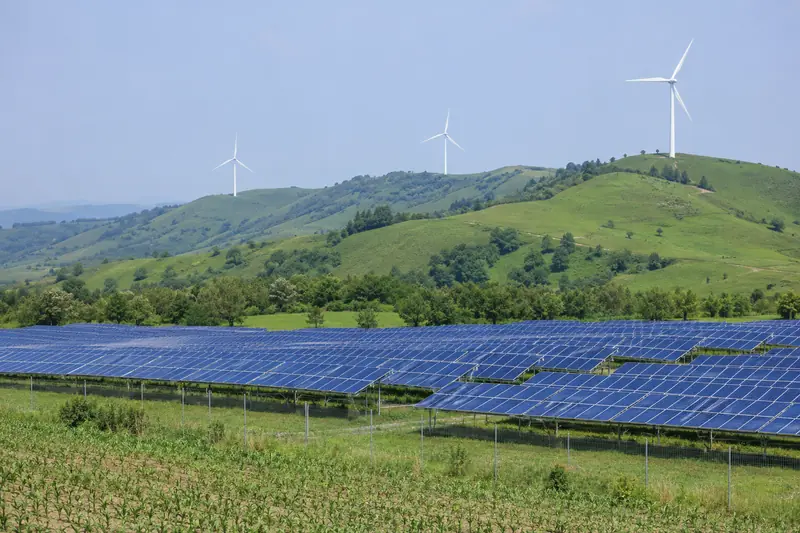
In 2022 NTPC created NTPC Green Energy Limited (NGEL) to hold its renewable energy projects. Placing these assets in a separate company allowed NTPC to show investors the value of its green business, raise money directly for renewable projects and give managers a clear focus. NGEL’s target is to reach 60 gigawatts of renewable capacity by 2032, which would be a large share of India’s total.
At the time of its listing NGEL operated about 3.2 to 3.5 gigawatts of solar and wind projects across six states, with around 12 gigawatts contracted and under construction and a further development pipeline. It planned to add 3 gigawatts in the year to March 2025, 5 gigawatts the following year and 8 gigawatts after that.
NGEL’s IPO, from 19 to 22 November 2024, was entirely a fresh issue: all ₹10,000 crore went to the company to fund expansion, mainly through its subsidiary NTPC Renewable Energy, rather than to NTPC as seller. The price band was ₹102 to ₹108 per share. Anchor investors took ₹3,960 crore before the offer opened. The issue was subscribed 2.42 times, a moderate response compared with many Indian IPOs that year.
The shares listed on 27 November 2024 at about ₹111.5, just 3% above the issue price. Later that day they jumped to the 10% upper limit at ₹122.75, giving NGEL a market value of more than ₹1 trillion on its first day. Investors were attracted by the government backing, the scale of the growth plan and the long-term nature of renewable power contracts.
Renewable energy companies earn money mainly through long-term power purchase agreements with utilities, often for 25 years at fixed tariffs. This provides predictable revenue but low returns, because competitive auctions have pushed tariffs down. Profitability depends on building projects cheaply, financing them at low interest rates and keeping plants running efficiently.
NGEL’s customers are concentrated: its top five buyers, mostly state utilities, accounted for about 88% of revenue. Some Indian state distribution companies have a history of paying late, which can strain cash flow for power producers, although government reforms have improved payment discipline.
For the year to March 2025, NGEL’s consolidated revenue rose to ₹2,210 crore from ₹1,963 crore, and net profit rose to ₹474 crore from ₹343 crore. In the fourth quarter alone profit rose 188% to ₹233 crore, and the shares jumped 12% on the result.
The case explores why parent companies list subsidiaries, how renewable energy projects create value, and the challenges of financing an energy transition in a fast-growing economy. It also examines the role of state-owned enterprises in delivering national goals.
Execution is the biggest risk. Building tens of gigawatts requires land, transmission lines, equipment and skilled workers. Delays in grid connections have left some completed renewable projects unable to deliver power. Supply chain issues, particularly imported solar modules, can raise costs.
There are also questions of valuation. At listing NGEL traded at a very high multiple of its current earnings, reflecting expectations of rapid growth. If capacity additions are delayed or returns disappoint, the share price could fall.
For NTPC, the green arm provides a route to reduce its carbon intensity and attract investors who avoid coal. But NTPC will continue to rely on coal for many years to keep India’s lights on, illustrating the gradual nature of the energy transition in emerging economies.
For investors, NGEL is a way to own a piece of India’s renewable buildout backed by a strong state-owned parent. The trade-off is lower risk of failure but potentially lower returns than private developers that take more risk.
Financing costs matter a great deal. Renewable projects are mostly built with borrowed money repaid over many years from power sales. A small change in interest rates can make the difference between an attractive and a weak return. As a government-backed company, NGEL can usually borrow more cheaply than private rivals, which is one of its main competitive advantages in auctions where tariffs are very thin.
Investors will also watch how NTPC treats minority shareholders of the green subsidiary. Parent companies sometimes keep the best projects for themselves or set intra-group prices that favour the parent. Clear rules on how projects are allocated between NTPC and NGEL will help build trust in the listed company over time.
Key moments
NTPC founded.
NTPC Green Energy created.
₹10,000 crore IPO subscribed 2.42 times.
Shares list and hit ₹1 trillion market value.
Net profit rises to ₹474 crore.
Revenue rose to ₹2,210 crore from ₹1,963 crore. Source: NTPC Green Energy via Quartr.
The trade-offs at the heart of the case
Coal vs. clean
A coal giant leading renewables.
Growth vs. returns
Rapid expansion at low tariffs.
State vs. market
Government goals versus investor returns.
For your seminar, paper or interview
- Q1
Why did NTPC list its green energy business separately?
- Q2
How do renewable projects make money?
- Q3
What are the main execution risks?
- Q4
Was NGEL’s valuation justified at listing?
- Q5
Can state-owned companies lead the energy transition?
- Subsidiary IPOs
- Project finance
- Energy transition strategy
- Execution risk
How we would approach it
Simplifying Finance’s opinion, offered as a starting point for debate, not as fact or investment advice.
NGEL gives India’s largest power producer a credible clean energy platform. It should focus on executing projects on time, securing grid connections and storage, and diversifying customers, rather than chasing headline capacity at any cost.
Prioritise execution
Commission projects on schedule.
Add storage
Invest in batteries and pumped hydro.
Diversify buyers
Sign contracts with corporates, not just utilities.
Control costs
Use scale to lower equipment and financing costs.
What this plan gives up
Disciplined growth may mean missing the 60 GW target date.
The strongest counter-argument
Some argue NTPC should invest directly from its own balance sheet rather than create a separately listed subsidiary.
Metrics to watch
- Capacity commissioned
- Tariffs won in auctions
- Receivable days
- Return on equity
- Share price versus IPO price
Propose your solution
Pick a discussion question and set out what you would do, why, and what it would cost. Strong, well-argued answers are reviewed and published below with your first name and programme.
Published solutions
Loading published solutions…
- Business Standard: NTPC Green Energy joins ₹1 trillion club on debut ↗
- Business Standard: NTPC Green Energy IPO gains on debut ↗
- Quartr: NTPC Green Energy Q4 FY25 summary ↗
- Business Standard: NTPC Green share zooms on Q4 profit ↗
Figures are as reported by the companies or cited outlets as of 22 November 2026. Check the source before quoting. Corrections: let us know through the solution form.