What happened
A relative may take a child into their home immediately after a bereavement. Food, travel and school expenses begin long before a formal placement process can finish. A state response at ordinary application speed may still be late from the child’s point of view. The financing problem involved the route to support as well as its value.
The Child Support Grant Top-Up offered eligible relatives caring for orphaned children a route to a higher grant without first needing a foster-care court order. It began operating on 1 June 2022. The government reported the launch-period monthly amount as R480 for the underlying grant plus a R240 top-up. These are historical figures.
The department reported more than 5,000 applications processed by the end of July 2022. This demonstrates that the new route was in use within two months. Processed applications are different from approved applications, first payments or children receiving continuous support. An estimate of unmet need also requires a picture of relatives who did not apply.
South Africa has many children who have lost one or both parents and live with grandparents, aunts or other relatives. Before 2022, relatives who wanted more support than the standard Child Support Grant often had to apply for a foster child grant, which required a social worker’s report and a court order.
That route created long backlogs. Social workers spent much of their time processing foster-care applications for children who were already safely living with family, leaving less time for children who needed protection.
From 1 June 2022, the Department of Social Development and SASSA began paying a Child Support Grant Top-Up of R240 for orphans cared for by relatives. A qualifying caregiver could receive R720 a month for the child instead of the standard R480, and did not need a social worker’s report or a court order to apply.
The Top-Up is not a separate grant. It is an additional 50 percent added to the basic Child Support Grant, and the same means test applies.
The amounts have since risen with annual grant increases. From April 2025 the standard grant was R560 and the Top-Up R280, a total of R840. From April 2026 the figures became R580 and R290.
To keep a link with child protection, SASSA is required to give provincial social development departments a monthly list of caregivers and children on the Top-Up, so that social workers can check whether any child needs a formal care and protection inquiry.
The reform illustrates a broader lesson about public finance: the design of the application process can be as important as the size of the benefit.
For students, the case is a reminder that benefit adequacy should be judged in real terms. Raising a grant each year helps protect its purchasing power against inflation, but whether it keeps pace depends on how the rise compares with the cost of food and other essentials.
Key moments
CSG Top-Up starts at R480 + R240.
Amount rises to R560 + R280.
Amount rises to R580 + R290.
Sources: DSD (2022: R480 + R240); SAnews (2025: R560 + R280); Government Gazette (2026: R580 + R290).
The trade-offs at the heart of the case
Work through the evidence
The launch-period sum was R720 a month. Adding the R480 base again to an expenditure total that already includes R720 would count the base twice. In a budget for the top-up alone, identify the incremental R240 and the work required to verify eligibility. Then follow a caregiver from first inquiry to funds actually available. The simplification is most valuable if it reduces a binding delay on that journey. At a counter, write down the one document or verification step most often missing from an incomplete application. Then inspect whether it is unavailable, costly to replace or simply poorly explained. These are different administrative problems. A faster decision for complete files can coexist with a long wait for the most vulnerable relatives outside that pile.
Our assessment
Track completion and receipt alongside application volume. A local office could process more forms because awareness improved or because families needed to submit additional material. Record the number of distinct children reaching payment and the time from a complete application to first receipt. A top-up and an alternative placement pathway are sometimes compared using only their monthly cash values. That omits the resources required to qualify and the purposes for which each route exists. For an administrative evaluation, the appropriate comparison is a family in the relevant eligibility group following its plausible previous route. Record appointments, documents and time until support becomes usable. The result might reveal a faster handover even when the monthly amounts differ. It would not establish that a single process meets every child’s protection needs. Keep the question about efficient grant delivery specific to the circumstances the top-up was intended to address.
For your seminar, paper or interview
- Q1
Who could be missing from the reported measure of time until a qualifying child receives the top-up?
- Q2
Which part of verifying claims and supporting applicants must be financed every year?
- Q3
How would evidence on outcomes for incomplete applications as well as approvals affect your choice?
- Social assistance design
- Administrative burden
- Kinship care
- Benefit adequacy
How we would approach it
Simplifying Finance’s opinion, offered as a starting point for debate, not as fact or investment advice.
We think the Top-Up is a smart reform because it removes a slow court process from the path to support. Relatives caring for orphans need help quickly, and a simpler route lets social workers focus on children who need protection.
Raise awareness
Tell relatives caring for orphans about the Top-Up.
Keep the link to child protection
Share caregiver lists with social workers.
Index to inflation
Adjust the amount each year.
What this plan gives up
A simpler route speeds support but reduces formal oversight of each placement.
The strongest counter-argument
Some argue the foster child grant offers more money and should remain the main route.
Metrics to watch
- Number of Top-Up beneficiaries
- Foster care backlog
Propose your solution
Pick a discussion question and set out what you would do, why, and what it would cost. Strong, well-argued answers are reviewed and published below with your first name and programme.
Published solutions
Loading published solutions…
- Department of Social Development • invitation to relatives caring for orphaned children ↗
- South African Government • parliamentary update on the top-up and July 2022 applications ↗
- UCT Children’s Institute • CSG Top-Up FAQ (Aug 2022) ↗
- SAnews • Social Development gazettes social grant increases (2025) ↗
- Government Gazette • Social grant amounts from April 2026 ↗
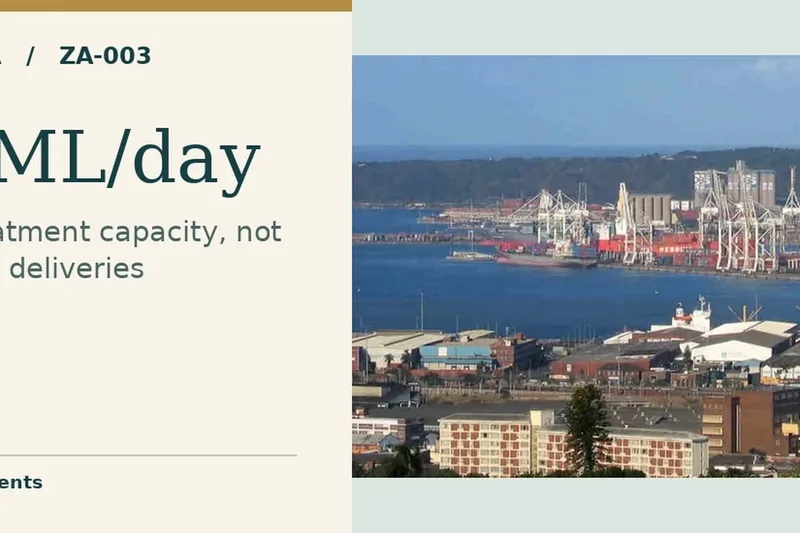
- Photo: SASSA Cape Town 2 by Josephou, CC BY-SA 3.0 (cropped and resized) ↗
Figures are as reported by the companies or cited outlets as of 22 November 2026. Check the source before quoting. Corrections: let us know through the solution form.