What happened
The Early Grade Reading Study compared centralized training with in-class coaching through a randomized evaluation. Both approaches supported structured early reading instruction. The comparison asked whether the form of professional support influenced what children learned, rather than treating the number of teachers trained as the final outcome.
After two years, researchers reported reading gains of around 0.12 standard deviations in the training arm and 0.24 in the coaching arm relative to the comparison group. The coaching estimate was numerically twice the training estimate. That arithmetic does not establish twice the financial return or settle whether the difference between the arms is statistically precise.
Many South African children struggle to read with understanding in the early grades. In response, the Department of Basic Education launched the Early Grade Reading Study in 2015, working with academics at the University of the Witwatersrand, the Human Sciences Research Council and Georgetown University.
The study worked in 230 quintile 1 to 3 schools in North West province, where Setswana is the language of learning in the Foundation Phase. Each of three interventions was implemented in a separate group of 50 schools, with 80 control schools continuing as normal.
The training intervention gave teachers lesson plans, graded reading materials and centralised training twice a year. The coaching intervention gave the same materials plus specialist coaches who visited teachers in their classrooms. A third intervention focused on parental involvement.
After two years, on-site coaching improved home-language reading by 0.24 standard deviations, while training did so by 0.12 standard deviations.
The department summarised the coaching result in a more intuitive way: learners who received two years of coaching were about 40 percent of a year of learning ahead of learners in schools that received no intervention. Training gave about 19 percent and the parental programme about 13 percent.
The study is one of the largest education impact evaluations in South Africa and has shaped how the government thinks about improving reading.
Its lesson applies widely: comparing interventions by their cost per unit of learning, not just their cost or their effect alone, gives a clearer guide to where public money should go.
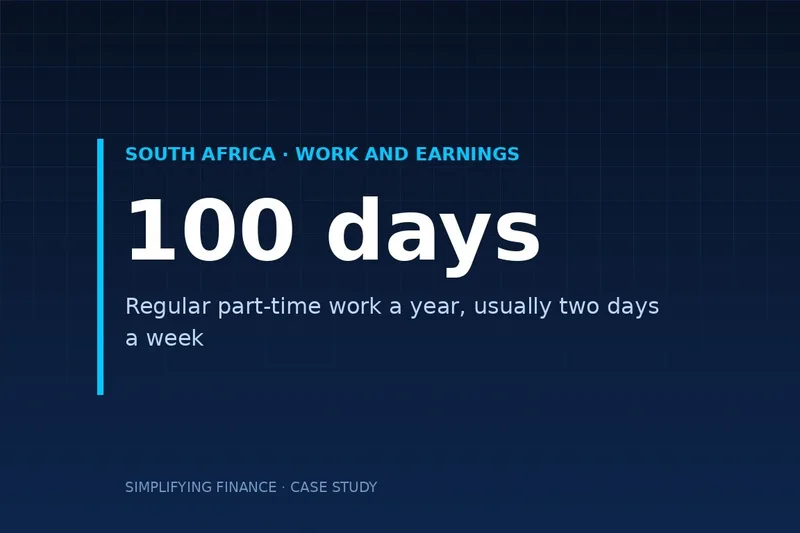
The study took place in two districts, Ngaka Modiri Molema and Dr Kenneth Kaunda. Coaches visited teachers in their classrooms each month, while the training group attended two days of residential training twice a year.
The difference in delivery explains much of the difference in results. In a workshop, teachers learn a method away from their classrooms. A coach can watch a real lesson, see where children struggle and help the teacher adjust.
Coaching costs more per school because coaches must travel and spend time with each teacher. But if it delivers twice the learning gain, the cost per unit of learning may be lower, which is the figure that matters for a budget-holder.
The department has since tested ways to make coaching cheaper. A later Early Grade Reading Programme in North West, running from 2021 to 2023 in 140 schools, compared external coaches with coaching by schools’ own department heads.
The approach reflects a principle familiar in business: training is most effective when it is applied on the job, with feedback, rather than delivered once in a classroom.
Reading is the foundation for later learning. A child who cannot read with understanding by the end of the Foundation Phase will struggle in every subject that follows, which is why early gains can compound over a school career.
This makes early reading programmes an investment with potentially high long-term returns, much like early contributions to a savings plan that compound over decades.
The study’s design also strengthens confidence in its results. Because schools were randomly assigned to each intervention or to the control group, differences in reading at the end can be attributed to the programmes rather than to differences between schools, something that ordinary comparisons of programmes cannot guarantee.
Its findings have since influenced reading programmes in other provinces.
Key moments
Study begins in 230 North West schools.
Two-year results show coaching outperforming training.
Findings inform national reading policy.
Source: Cilliers et al., as summarised in RISE Working Paper 050.
The trade-offs at the heart of the case
Work through the evidence
Use a common test and common time horizon before comparing delivery modes. Then estimate the full resources each requires, including teacher time, travel, preparation and how many classrooms one coach can realistically reach. A gain measured in standard deviations describes a position in a score distribution. Converting it into extra pupils reading at a benchmark requires the distribution of starting scores and the definition of that benchmark. Build two budgets for the same number of schools. A centralized workshop needs a venue and requires teachers to leave their classrooms. Classroom visits need travel time, observation and a manageable caseload. The lower-cost option per teacher reached may differ from the lower-cost option per defined improvement in learning. Use the study’s common outcome before comparing resources.
For your seminar, paper or interview
- Q1
Who could be missing from the reported measure of reading proficiency measured on the same assessment?
- Q2
Which part of coach travel, preparation and teacher time must be financed every year?
- Q3
How would evidence on reading progress by starting level and school accessibility affect your choice?
- Randomised evaluation
- Teacher development
- Cost-effectiveness
- Human capital
How we would approach it
Simplifying Finance’s opinion, offered as a starting point for debate, not as fact or investment advice.
We think the Early Grade Reading Study makes a strong case for on-site coaching. It costs more than workshops, but it doubled the gains in reading, which makes it the better investment for teaching children to read.
Scale coaching carefully
Expand while protecting quality.
Provide materials
Pair coaching with lesson plans and readers.
Measure costs
Compare cost per unit of learning gained.
What this plan gives up
Coaching works better but costs more per school than central training.
The strongest counter-argument
Some argue cheaper approaches can reach more schools for the same budget.
Metrics to watch
- Reading fluency
- Cost per learner
Propose your solution
Pick a discussion question and set out what you would do, why, and what it would cost. Strong, well-argued answers are reviewed and published below with your first name and programme.
Published solutions
Loading published solutions…
- Cilliers and colleagues • professional development and early-grade reading ↗
- South African Early Grade Reading Study • comparative impact estimates ↗
- Department of Basic Education • Early Grade Reading Study series ↗
- Department of Basic Education • Early Grade Reading Study: North West ↗
- RESEP • Early Grade Reading Studies presentation (2018) ↗
- Department of Basic Education • EGRS programme page ↗
- Photo: Mafikeng, North West, South Africa (20506154516) by South African Tourism from South Africa, CC BY 2.0 (cropped and resized) ↗
Figures are as reported by the companies or cited outlets as of 22 November 2026. Check the source before quoting. Corrections: let us know through the solution form.