What happened
A household can gain from an energy investment by paying less, keeping warmer or using hot water that was previously difficult to obtain. Counting only lower utility bills would miss the latter two outcomes. Homes that used very little energy before an upgrade may have the greatest unmet needs and the smallest bills to reduce.
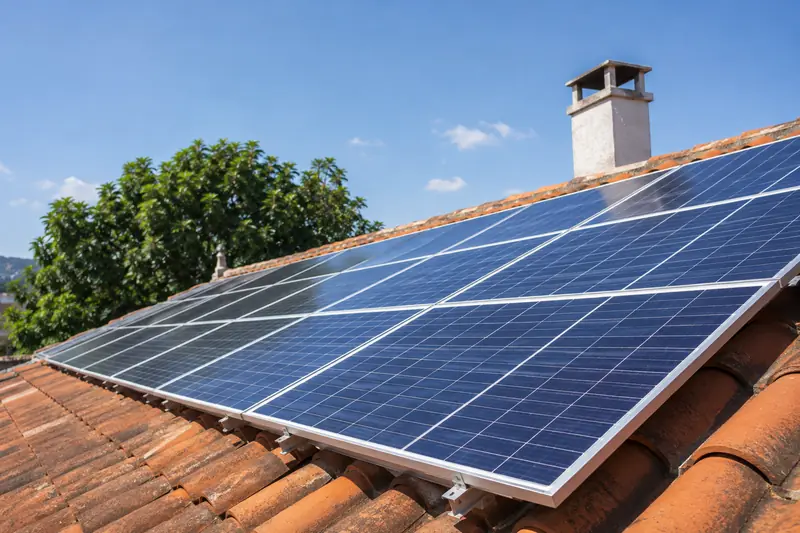
The Kuyasa retrofit combined solar water heating, insulated ceilings and energy-efficient lighting in low-cost homes. The measures affected different household services. A ceiling influenced indoor conditions, a heater changed how hot water could be provided, and lighting changed the electricity needed for illumination. Public and project partners coordinated the package.
A public project account records retrofits in approximately 2,300 homes. This is a count of homes reached by the package. It cannot establish that each home saved an identical quantity of energy or that each component remained operational for the same period. A warmer occupied room may itself be a benefit even if the energy bill changes little.
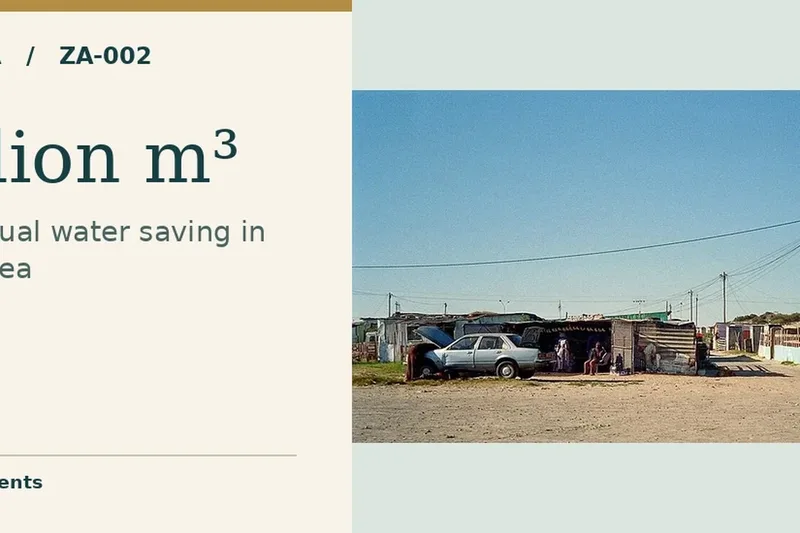
Kuyasa is a low-income housing area in Khayelitsha, Cape Town. Many government-subsidised homes were built without ceilings or insulation, leaving them cold in winter and hot in summer, and residents relied on paraffin and electricity for heat and hot water.
The Kuyasa project, launched in 1999, retrofitted 2,309 homes with three measures: solar water heaters, insulated ceilings and energy-efficient lighting. A pilot first tested the approach in 10 homes.
In 2005 the project became the first Clean Development Mechanism project in Africa and the first to receive the Gold Standard, a premium label for projects with strong sustainable-development benefits. Under the Kyoto Protocol, it could earn carbon credits for the emissions it avoided.
Residents reported savings from using less paraffin and electricity. The UN highlighted co-benefits including warmer homes in winter, lower risk of respiratory illness, increased home values and skills for local residents employed as installers.
The project also raised a design question. Some households had used very little energy before the retrofit because they could not afford it. In such cases the main gain is better comfort rather than lower bills, which complicates calculations based only on energy savings.
The ESMAP case study described the project as evidence that the CDM could be used for poverty alleviation and sustainable development.
Energy-efficiency retrofits for low-income housing are now promoted worldwide, from Europe’s renovation programmes to social housing in Latin America.
The three measures address different needs. A ceiling keeps heat in during winter and out during summer. A solar water heater provides hot water without paying for electricity or paraffin. Efficient light bulbs cut the electricity needed for lighting.
Carbon credits provided part of the financing. By earning credits for the emissions avoided, the project could sell them to buyers seeking to offset their own emissions, and the Gold Standard label helped secure a higher price.
The UNFCCC records the issuance of credits for the project, and its documentation includes social research, thermal modelling and monitoring reports. That level of documentation is typical of carbon projects and adds to their cost.
Kuyasa’s experience shows that a carbon market can fund benefits for poor households, but it also shows the administrative burden of proving those benefits.
The project also created local jobs. Residents were trained and employed to install solar water heaters and ceilings, and research has examined how those skills affected their later work.
For students, the case links three topics: housing quality, energy affordability and carbon markets.
South Africa’s government has built millions of subsidised homes since 1994. If even a small share of the cost of insulation and solar water heating were included at construction, the savings in energy bills and health costs could accumulate for decades, which is why many analysts argue that efficiency should be built in from the start rather than added later.
Key moments
Kuyasa energy efficiency initiative launched.
Project registered as Africa’s first CDM project, with Gold Standard status.
Carbon credit issuance recorded by the UNFCCC.
Sources: Mail & Guardian (2005) for the pilot; ESMAP for the 2,309 homes.
The trade-offs at the heart of the case
Our assessment
Plan maintenance at the point of installation. A failed fitting, an inaccessible repair or an unresolved warranty can reduce an otherwise useful service. Compare a program that expands the number installed with one that keeps existing systems working through another winter. If outcomes are measured only by billed electricity, the household with the largest utility bill before the retrofit may appear to have the greatest potential benefit. A household unable to afford adequate warmth might register little energy saving precisely because it started from a much lower level of service. Decide whether the program is being evaluated as a cost-saving project, a housing-quality intervention or both. A sensible record can include both objectives and identify their beneficiaries. Without that choice, evidence about improved comfort and evidence about a smaller bill may be made to compete when both describe legitimate outcomes of the same investment.
For your seminar, paper or interview
- Q1
Who could be missing from the reported measure of useful hot water and indoor comfort across seasons?
- Q2
Which part of system upkeep and replacement of failed parts must be financed every year?
- Q3
How would evidence on continued operation after the original installation campaign affect your choice?
- Clean Development Mechanism
- Energy efficiency
- Co-benefits
- Low-income housing
How we would approach it
Simplifying Finance’s opinion, offered as a starting point for debate, not as fact or investment advice.
We think Kuyasa shows how carbon finance can improve the lives of low-income households. The retrofit delivered warmer homes, hot water and lower bills, benefits that matter more to residents than the carbon credits that helped pay for them.
Build efficiency in
Include ceilings and solar heaters in new low-cost homes.
Train local installers
Create jobs during installation.
Measure comfort
Track health and indoor temperature, not only savings.
What this plan gives up
Carbon credits help fund retrofits but involve complex verification costs.
The strongest counter-argument
Some argue building efficient homes from the start is cheaper than retrofitting.
Metrics to watch
- Household energy spending
- Indoor winter temperatures
Propose your solution
Pick a discussion question and set out what you would do, why, and what it would cost. Strong, well-argued answers are reviewed and published below with your first name and programme.
Published solutions
Loading published solutions…
- UN-Habitat • Kuyasa low-cost housing energy upgrade case ↗
- Published public-sector account of the completed Kuyasa retrofit ↗
- TIPS • Skills development in the Kuyasa CDM project ↗
- UNFCCC • CDM project 0079, Kuyasa ↗
- ESMAP • Kuyasa Low-Income Energy Efficiency Housing Project case study (2012) ↗
- UNFCCC • CDM co-benefits: Kuyasa ↗
- Mail & Guardian • Khayelitsha a world leader (Dec 2005) ↗
- Photo: Khayelitsha Lookout-Hill Ilitha-Park by FreddieA, CC BY-SA 3.0 (cropped and resized) ↗
Figures are as reported by the companies or cited outlets as of 22 November 2026. Check the source before quoting. Corrections: let us know through the solution form.