What happened
A protected coastline can leave offshore habitats scarcely represented. Expanding a marine protection network can close that geographic gap on the day boundaries are declared. The ecological value develops over a different timescale and depends on management, allowed uses and what happens in neighboring waters.
In May 2019 the government declared 20 marine protected areas. The new network expanded geographic representation across habitats. The decision established boundaries and management obligations, creating a foundation for protection that operating budgets, monitoring and cooperation with users would then have to support.
The department reported that spatial protection of the marine environment would rise from about 0.4 percent to 5.4 percent. Other public summaries round the new share to about five percent. These figures describe area designated under the cited definitions. They do not measure a change in fish abundance, enforcement success or household income from fishing.
South Africa has a long coastline bordering the Atlantic and Indian oceans and a rich variety of marine habitats. Before 2019, however, most of its marine protected areas were close to the coast, leaving offshore habitats largely unprotected.
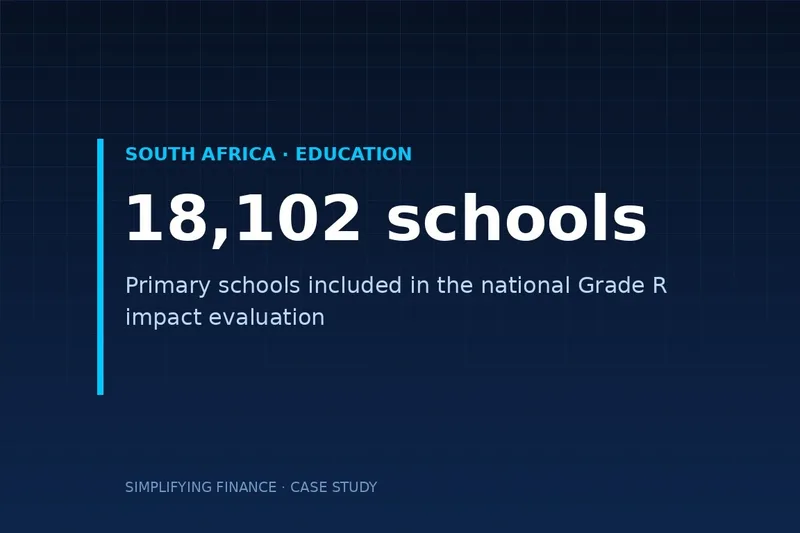
In 2019 the government declared 20 new marine protected areas, increasing the share of the ocean under protection from 0.4 percent to 5.4 percent.
The new areas were designed to cover a wider range of habitats, including deep-sea reefs, submarine canyons and seamounts that were previously scarcely represented.
The expansion was part of Operation Phakisa, a government initiative launched in 2014 to unlock the economic potential of the ocean while protecting its ecosystems.
Marine protected areas can help fish stocks recover by providing refuges where fish can grow and reproduce. Over time, larger and more abundant fish can spill over into surrounding waters, benefiting fisheries.
These benefits take years to develop and depend on management. A protected area that is not monitored or enforced may offer little protection in practice.
Globally, countries have committed to protecting 30 percent of land and ocean by 2030 under the Kunming-Montreal Global Biodiversity Framework, and South Africa’s experience shows the challenges of moving from declaration to effective protection.
Protected areas use zoning to balance different uses. Some zones prohibit all extraction, while others allow certain types of fishing, so the effect on fishers depends on the rules in each area.
Small-scale and commercial fishers have raised concerns about lost access, which is why consultation and fair compensation are important parts of marine planning.
From a finance perspective, a marine protected area is an investment in natural capital. It may reduce some catches today in exchange for healthier fish stocks and tourism income in the future, much like reinvesting returns rather than spending them.
Measuring that return requires long-term monitoring of fish populations, habitats and the incomes of coastal communities.
Effective protection also requires enforcement against illegal fishing, which can be costly in remote offshore areas, and that cost belongs in any assessment of the network’s value.
Monitoring results over the coming decade will show how much the expanded network delivers for fish stocks and coastal livelihoods. Those results will also guide decisions on whether and where to expand protection further as South Africa works towards international biodiversity targets.
Key moments
Operation Phakisa ocean economy initiative launched.
Twenty new marine protected areas declared.
Management and monitoring of new areas.
Source: South African Government media statement, 2019.
The trade-offs at the heart of the case
Work through the evidence
Subtract the reported shares to obtain an increase of about five percentage points. That is different from saying the protected area rose by five percent of its old extent. Before comparing countries or dates, use the same marine boundary and protection categories. Then choose a habitat or activity to monitor, with observations inside and outside the chosen area and a clear starting date. Some vessels may move effort to waters outside the designated area. A local ecological improvement inside a boundary and a change in pressure elsewhere could occur at the same time. Ask how both areas will be monitored and who has access to the results. A mapped percentage is a starting record for this question, not its answer.
Our assessment
Budget for the work that begins after a boundary appears on the map. Monitoring, communication with fishing communities and practical management determine what can be learned about the result. Use designated area as a verified milestone and ecological and livelihood indicators for the next evaluation. The government also described the new network as providing at least some protection to about 90 percent of habitat types. This is a measure of representation, not a claim that 90 percent of the whole ocean was closed to activity. A rare habitat can be represented by a comparatively small protected area, while a large designated zone may still contain relatively few habitat types. Comparing the expansion with its stated purpose therefore calls for both geography and ecological classification. Management and subsequent use determine how much protection individual sites deliver over time, which is a separate question from whether a category appears within the network.
For your seminar, paper or interview
- Q1
Who could be missing from the reported measure of ecological condition and permitted use in defined areas?
- Q2
Which part of management, monitoring and communication after designation must be financed every year?
- Q3
How would evidence on conditions inside and outside comparable protected areas affect your choice?
- Natural capital
- Marine conservation
- Fisheries economics
- Spatial planning
How we would approach it
Simplifying Finance’s opinion, offered as a starting point for debate, not as fact or investment advice.
We think the 2019 marine protected area network was a major step for South Africa’s ocean. Expanding protection from 0.4 to 5.4 percent of the ocean helps safeguard fisheries and biodiversity, though benefits depend on effective management over many years.
Fund management
Provide budgets for patrols and monitoring.
Engage fishers
Involve small-scale fishers in planning.
Measure recovery
Track fish stocks and habitats.
What this plan gives up
Protection supports long-term fish stocks but can limit short-term fishing.
The strongest counter-argument
Some fishing groups argue protected areas reduce their access and income.
Metrics to watch
- Fish biomass inside protected areas
- Compliance with zoning rules
Propose your solution
Pick a discussion question and set out what you would do, why, and what it would cost. Strong, well-argued answers are reviewed and published below with your first name and programme.
Published solutions
Loading published solutions…
- Department of Environmental Affairs • declaration of twenty marine protected areas ↗
- SANParks • marine protected areas and the 2019 network ↗
- South African Government • Environmental Affairs declares 20 marine protected areas (2019) ↗
- Photo: HOOP - Rocky coast at Koppie Alleen, De Hoop Nature Reserve, South Africa, 2017 by Josep M. Gracia, CC BY-SA 4.0 (cropped and resized) ↗
Figures are as reported by the companies or cited outlets as of 22 November 2026. Check the source before quoting. Corrections: let us know through the solution form.