What happened
Living far from work creates a catch. A job seeker must pay to reach a possible employer before knowing whether the trip will yield an interview, much less a wage. A subsidy can make a wider geographical search possible. It cannot create vacancies or guarantee that the jobs found will cover the future cost of commuting.
Researchers offered transport support under different arrangements to job seekers in Soweto and examined travel, search behavior and later employment. Administrative travel records supplemented interviews. The study distinguished access to transport from a separate question about what people learned when they looked beyond the township.
J-PAL reports more intensive search and revisions to expectations. When wider search did not yield the desired jobs, some participants accepted lower-paying local work. In the unrestricted subsidy group, job seekers still spent close to 70 percent of their subsidy on transport. This helps identify what constrained search without implying that all additional trips paid off.
Soweto, the large township south-west of Johannesburg, lies far from many of the city’s jobs. Townships in Gauteng are often 20 kilometres or more from central business districts, and travelling to search for work can be expensive.
Researchers Abhijit Banerjee and Sandra Sequeira worked with South Africa’s Department of Labour and local transport operators to test whether subsidising travel would change job search. They randomly assigned 1,082 job seekers to different groups.
One group of 365 received transport cards that could only be used for travel. Another group of 352 received the same value but could use it on any job-search activity. A comparison group received no subsidy. The subsidy lasted four to six months.
Before the study, job seekers had often been searching for more than a year. Many overestimated typical salaries and their chances of finding a professional job, and 91 percent believed the city centre was the main place to find suitable work.
The subsidy led people to search more intensively and further from home. Their expectations moved closer to reality, but their overall lack of success led some to lower their search standards and accept lower-paying jobs closer to home.
The study shows that job search is partly a learning process. Searching teaches people about wages and opportunities, and the information they gain can change their decisions.
Spatial mismatch, where poorer residents live far from jobs, affects cities from Johannesburg to Nairobi and São Paulo, and its effects on employment are a major concern for urban planners.
The findings also show why policymakers should look beyond a single outcome. A subsidy that leads to more searching but not more jobs may still improve decisions, by helping job seekers form more realistic expectations about wages and opportunities.
For students, the case is a good example of a randomised evaluation: by assigning subsidies by lottery, researchers could compare similar groups and attribute differences to the subsidy itself.
The study also highlights a cost that rarely appears in unemployment statistics: the money spent on looking for work by people who have no income.
Key moments
Evaluation begins.
Job seekers in Soweto receive subsidies.
Evaluation period ends.
Source: J-PAL evaluation summary (total sample 1,082 job seekers).
The trade-offs at the heart of the case
Work through the evidence
Follow a trip outward and a decision on the way home. The outward cost is observable on a card. The decision afterward may be to submit an application, revise the wage one expects, or redirect tomorrow’s search. Compare a worker’s expected take-home pay after regular commuting with the wage in a reachable local job. A lower gross wage may be compatible with a different assessment once travel and risk are considered. Ask a job seeker to distinguish the cost of one speculative trip from the cost of commuting five days a week after accepting a role. A ticket can remove the first obstacle without changing the second. Evaluating offers after commuting costs can explain why a person who searched more widely eventually selects a nearby job.
Our assessment
Evaluate search assistance against more than journeys taken. Pair travel records with interviews, offers, accepted work and actual commuting costs. If the main constraint becomes the availability of suitable work, another round of tickets may buy activity without improving the match. The share of unrestricted support used for transport is especially informative because participants had another option. It indicates that travel had value to them, even in an experiment where improved search did not automatically produce a better-paying job in the city. One should not infer that the rest of the subsidy was wasted or that spending on a trip proves the trip was financially profitable. Job seekers can rationally pay to learn what is available and later choose a different job. Track that information alongside earnings and commuting expenses when assessing whether a transport subsidy is the right service to offer again.
For your seminar, paper or interview
- Q1
Who could be missing from the reported measure of interviews and accepted work reachable at a sustainable cost?
- Q2
Which part of travel subsidies and the time spent on unsuccessful trips must be financed every year?
- Q3
How would evidence on travel after obtaining work as well as during the search affect your choice?
- Spatial mismatch
- Randomised evaluation
- Job search costs
- Labour market information
How we would approach it
Simplifying Finance’s opinion, offered as a starting point for debate, not as fact or investment advice.
We think the Soweto study shows that the cost of searching for work is a real barrier, but that lowering it is not enough on its own. Subsidies encouraged more search and gave job seekers better information, yet many still struggled to find work in a weak labour market.
Combine support
Pair transport help with job matching.
Improve information
Share realistic salary and vacancy data.
Plan cities
Bring jobs and housing closer together.
What this plan gives up
Subsidies increase search but cannot create vacancies.
The strongest counter-argument
Some argue resources should focus on job creation rather than search.
Metrics to watch
- Job search trips
- Employment rates
Propose your solution
Pick a discussion question and set out what you would do, why, and what it would cost. Strong, well-argued answers are reviewed and published below with your first name and programme.
Published solutions
Loading published solutions…
- J-PAL • Transport Subsidies and Job Matchmaking in South Africa ↗
- Research summary • Johannesburg transport subsidy trial ↗
- J-PAL • Transport Subsidies and Job Matchmaking in South Africa (print summary) ↗
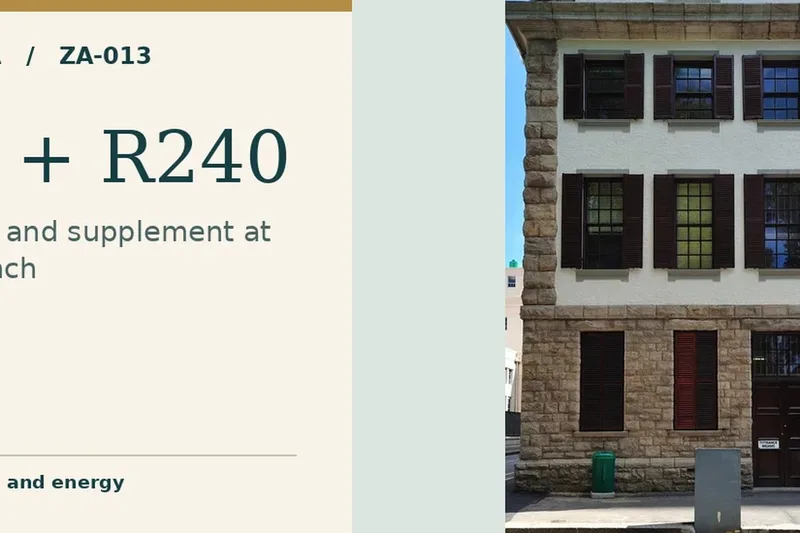
- Photo: JohannesburgStation-001 by Rute Martins of Leoa’s Photography ( www.leoa.co.za ), CC BY-SA 3.0 (cropped and resized) ↗
Figures are as reported by the companies or cited outlets as of 22 November 2026. Check the source before quoting. Corrections: let us know through the solution form.