What happened
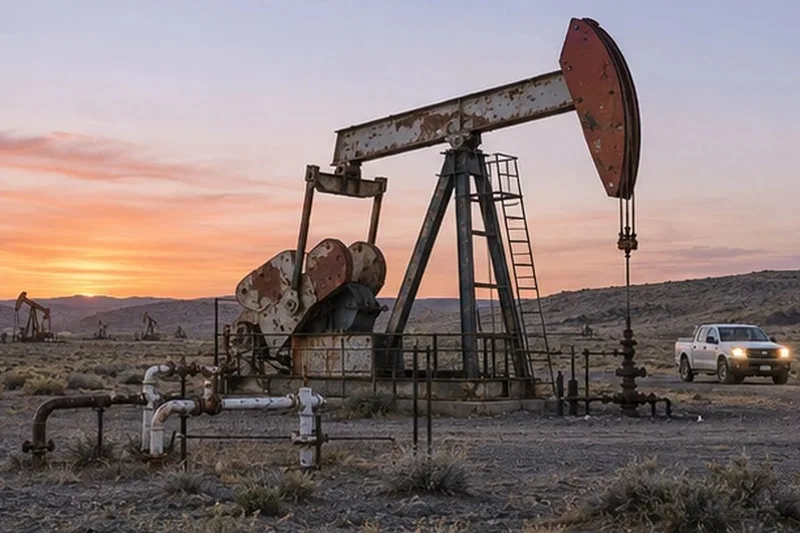
Fenix entered production off Tierra del Fuego in September 2024. A new unmanned platform feeds gas through a subsea line to Véga Pléyade. Existing facilities then treat the gas onshore. The configuration helps explain why an operator might develop a field that would struggle to support a separate processing plant. Spare equipment, staff and an established route to customers can turn an undeveloped discovery into a credible investment. Their economic value depends on whether they remain available when the new gas arrives.
At design capacity of ten million cubic metres per day, thirty uninterrupted days would yield 300 million cubic metres. That is an upper-bound arithmetic example. The reported 37.5% operated interest does not mean that the operator receives the entire project’s gas revenue, and an ownership calculation ignores operating agreements, royalties and downtime. The 35-kilometre line measures the connection to another platform, not the distance to land.
TotalEnergies has operated in Tierra del Fuego for decades through its subsidiary Total Austral, which runs about a quarter of Argentina’s gas production. Fenix lies 60 kilometres offshore in the CMA-1 concession. Partners took the investment decision in September 2022, after Argentina extended the concession by 10 years to April 2041, and budgeted about US$706 million.
Production started on 20 September 2024, ahead of the planned date. The 4,800-tonne platform sits in 70 metres of water and sends gas through existing facilities. At 10 million cubic metres a day, roughly 70,000 barrels of oil equivalent, TotalEnergies said Fenix could cover about 8% of Argentina’s gas needs. Harbour Energy became a 37.5% partner through its purchase of Wintershall Dea’s assets.
The case shows why tie-backs to existing infrastructure are among the cheapest ways to add production.
Installation was done in two stages because of the platform’s size: the jacket and its four piles went in during January 2024, before the topsides were lifted into place.
Argentina’s gas market has long swung between shortages and surpluses, with costly imports of liquefied natural gas in winter. New domestic supply such as Fenix helps reduce those imports. It also exposes producers to government decisions on domestic gas prices, which have changed several times in recent decades. TotalEnergies said Fenix’s low break-even cost and low carbon intensity matched its strategy, a sign that the company expected the project to remain profitable even at modest prices.
Key moments
The partners sanction the development about two years before start-up.
TotalEnergies announces first production.
Gas goes via Véga Pléyade to existing onshore treatment facilities.
Fenix cost about US$706m, can produce 10 million m³ of gas a day (about 70,000 boe/d) and could cover about 8% of Argentina’s gas needs. Sources: TotalEnergies; Business Wire (2022).
The trade-offs at the heart of the case
Core tensions
A standalone design gives engineers control over more of the production chain. A tieback saves capital and introduces a shared point of failure. If the host platform needs maintenance at the height of winter demand, the apparent saving must be weighed against the cash value of gas that cannot be delivered. Maintenance coordination is therefore a commercial decision as well as an engineering task. A standalone processing option could look expensive in the base forecast and valuable in a winter interruption. Estimate how frequently that independence would be used. Counting every common operating cost as avoidable would give the independent design an unjustified advantage.
Testing the evidence
The appropriate unit of observation is one production day at the delivery meter. Track marketable gas delivered after host downtime and record the baseline before the decision. The most useful records are meter reconciliations, planned outages and host access agreements. Align their dates and definitions before drawing an inference. In particular, allow for seasonal changes in customer nominations. A change in that factor can move the reported outcome even when the intervention has had no effect. Match outages affecting the host to upstream availability and the delivery programme. Use scheduled work at unaffected facilities to check whether gas would otherwise have been saleable. Multiplying every shutdown hour by nameplate capacity will overstate the value if production was already constrained elsewhere.
A related Argentine case
The Riachuelo sanitation project also required several links to work together. There, completed construction lots could precede an effective public service. At Fenix, a productive well similarly depends on a functioning host and onshore facilities.
For your seminar, paper or interview
- Q1
Who should pay for a host-platform upgrade that benefits several fields unequally?
- Q2
How would you measure marketable gas delivered after host downtime for one production day at the delivery meter using the available records?
- Q3
Which assumption in “The value of host availability” would you challenge first, and how would changing it affect the decision?
- Q4
Could seasonal changes in customer nominations explain the observed change? What evidence would distinguish that explanation?
- Q5
Under what conditions would you prefer a separately costed upgrade to the shared host facilities, and who would bear the residual risk?
- Brownfield tie-backs
- Partner economics
- Domestic gas pricing
- Infrastructure reuse
How we would approach it
Simplifying Finance’s opinion, offered as a starting point for debate, not as fact or investment advice.
Evaluate the chain from wellhead through delivery meter. Require compatible maintenance calendars and a contract defining priority when processing capacity is constrained. Approve changes to the host only where their additional availability justifies their cost across all connected fields.
Reuse existing facilities
Connect a new unmanned platform to existing CMA-1 infrastructure.
Extend the concession
Secure a 10-year extension to 2041 before investing.
Serve the home market
Sell gas domestically to reduce imports.
What this plan gives up
Using existing pipelines and plants keeps costs low, but the field depends on shared facilities and on Argentina’s domestic gas prices.
The strongest counter-argument
For the operating partners, the alternative worth costing is a separately costed upgrade to the shared host facilities. Give both choices the same information date. Specify what can still be reversed, who absorbs the cost if the forecast is wrong, and the point at which new evidence would justify changing course. Make the decision conditional on an observable change in marketable gas delivered after host downtime. That condition lets someone outside the original decision team distinguish a sensible revision of the plan from an attempt to explain away poor results.
Metrics to watch
- Fenix production rate
- Argentine gas prices
Propose your solution
Pick a discussion question and set out what you would do, why, and what it would cost. Strong, well-argued answers are reviewed and published below with your first name and programme.
Published solutions
Loading published solutions…
- TotalEnergies: Fenix offshore gas production start-up, 20 September 2024 ↗
- TotalEnergies: Production start-up at Fenix offshore gas field ↗
- TotalEnergies: Fenix, a low-emission offshore gas project ↗
- Business Wire: TotalEnergies launches Fenix (2022, French) ↗
- Image: AI-generated editorial illustration
Figures are as reported by the companies or cited outlets as of 22 November 2026. Check the source before quoting. Corrections: let us know through the solution form.