What happened
An oil producer is interested in the price it can obtain overseas. A pipeline lender has a narrower question. Who pays the tariff when the producer cannot send its oil? In their project disclosures Vista and other participants described building a route from the producing area to an Atlantic export outlet. A separate company could pool commitments from several producers. That structure offered lenders a way to finance a large common asset without making the loan depend entirely on the investment budget of a single oil company.
For the project company, there is an important difference between a producer reserving space and a producer guaranteeing construction debt. The first contract may begin paying only after the system passes a completion test. The company can therefore face rising interest during construction before any firm tariff comes due. A lender can ask for completion support or a reserve funded before drawdown. Either solution changes the amount of equity that the sponsors must put at risk. In negotiations, insist on a calendar showing when each undertaking starts and expires. Two large promises that never overlap leave a real financing gap, even if they look reassuring on the same presentation slide.
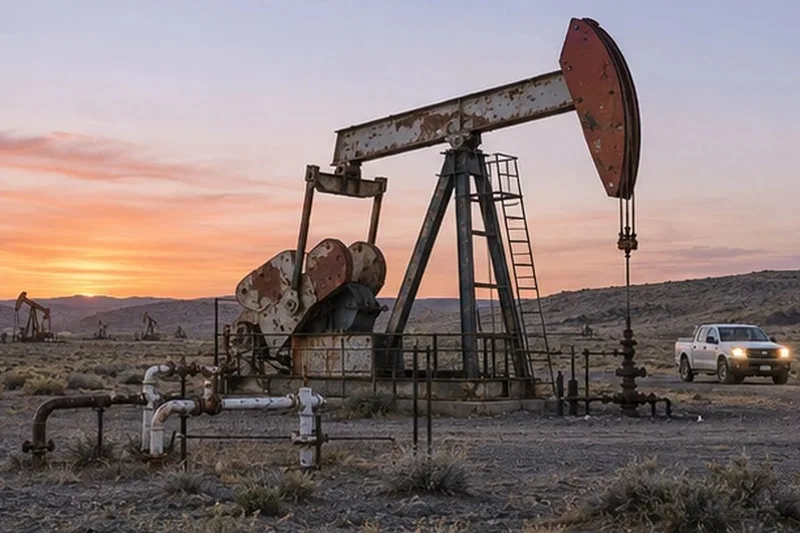
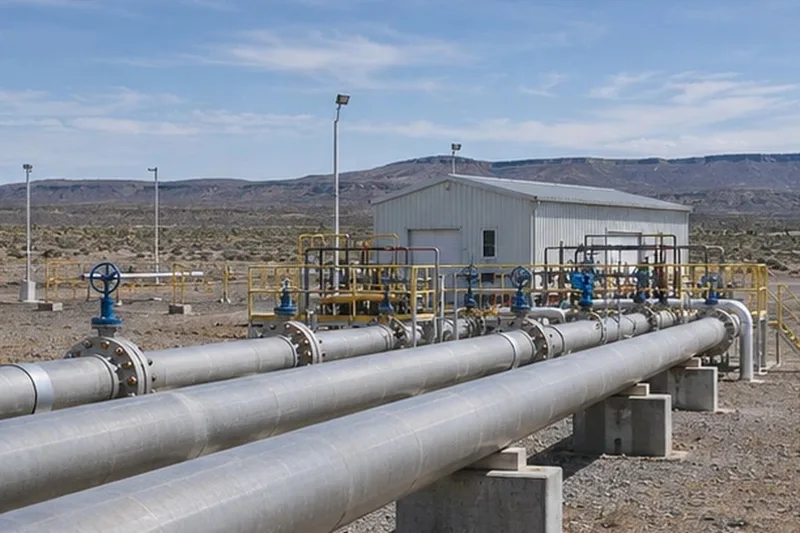
VMOS is a company owned by Argentina’s main shale producers: YPF, Pluspetrol, Pan American Energy, Pampa Energía, Vista, Chevron, Shell and Tecpetrol, with Neuquén’s provincial company GyP. It is building a 570-kilometre pipeline from Añelo in Neuquén to a new export terminal at Punta Colorada on the Río Negro coast.
In July 2025 VMOS signed a US$2 billion syndicated loan led by Citi, Deutsche Bank, Itaú, JP Morgan and Santander, with 14 banks and institutional investors in total. It was described as the largest commercial loan for an infrastructure project in Argentine history. The loan has a five-year term at SOFR plus 5.5% and covers about 70% of the capital needed. The pipeline was due to start by the end of 2026 at 180,000 barrels a day, rising to 550,000 in 2027.
The deal also marked the return of international project finance to Argentina, which had been closed to it since 2019. It shows how lenders assess shared infrastructure: they look at who must pay if the oil does not flow.
For lenders, the key question is who pays if construction slips or volumes disappoint. Shared ownership by several large producers, including Chevron and Shell, gave banks comfort that the pipeline would have customers. It also means each sponsor’s export plans now depend on a jointly controlled asset.
Key moments
Project shareholders establish their agreement.
Vista describes the project design and funding estimate.
Participants contract syndicated financing.
The US$2bn five-year loan at SOFR + 5.5% covers about 70% of the capital needed; sponsors provide the rest. Sources: Enerdata; El Economista; Mayer Brown.
The trade-offs at the heart of the case
Core tensions
Firm reservations help a lender only to the extent that their payment conditions cover the interruption under examination. A suspended obligation during a terminal shutdown is a very different source of security from an unconditional capacity payment. Several shippers may appear diversified while depending on the same loading facility, regional weather and export market. Shippers may prefer a lower unconditional charge in return for a higher charge on each barrel moved. That passes more volume risk to the project. It can be acceptable if other reservations cover fixed debt service and the equity investors are explicitly paid to bear the residual.
Testing the evidence
The appropriate unit of observation is one shipper reservation. Track cash tariff collectible during a terminal interruption and record the baseline before the decision. The most useful records are signed transport contracts, completion tests and debt drawdown notices. Align their dates and definitions before drawing an inference. In particular, allow for temporary changes in producer nominations. A change in that factor can move the reported outcome even when the intervention has had no effect. Compare reservations with and without enforceable minimum payments. Match contract length and credit quality, then inspect what actually happens to invoices during interruptions. Physical utilisation alone will miss the distinction between an empty pipe earning a reservation tariff and an empty pipe earning nothing.
A related Argentine case
Oldelval’s Duplicar case measures the physical space released by an expansion. VMOS asks whether a lender can rely on customers to pay for that space. A capacity calculation answers the first question even if it cannot settle the second.
For your seminar, paper or interview
- Q1
Would the bank accept a lower tariff backed by an unconditional minimum payment?
- Q2
How would you measure cash tariff collectible during a terminal interruption for one shipper reservation using the available records?
- Q3
Which assumption in “Insuring a tariff interruption” would you challenge first, and how would changing it affect the decision?
- Q4
Could temporary changes in producer nominations explain the observed change? What evidence would distinguish that explanation?
- Q5
Under what conditions would you prefer a smaller first stage supported by binding capacity reservations, and who would bear the residual risk?
- Project finance
- Shared infrastructure
- Ship-or-pay contracts
- Construction risk
How we would approach it
Simplifying Finance’s opinion, offered as a starting point for debate, not as fact or investment advice.
Build the debt schedule around payments that are enforceable through the relevant disruption. Stress the terminal and the pipeline together. Give later expansion its own investment decision once committed tariffs, shipping capacity and financing cover that stage.
Pool producers
Bring several oil companies together in one pipeline company.
Borrow against contracts
Raise a syndicated loan supported by capacity commitments.
Build in stages
Start at 180,000 barrels a day and ramp up to 550,000.
What this plan gives up
Sharing the pipeline spreads cost and makes it bankable, but every partner depends on the others meeting their commitments, and a construction delay hits all of them.
The strongest counter-argument
For the lending syndicate, the alternative worth costing is a smaller first stage supported by binding capacity reservations. Give both choices the same information date. Specify what can still be reversed, who absorbs the cost if the forecast is wrong, and the point at which new evidence would justify changing course. Make the decision conditional on an observable change in cash tariff collectible during a terminal interruption. That condition lets someone outside the original decision team distinguish a sensible revision of the plan from an attempt to explain away poor results.
Metrics to watch
- Construction progress
- Start-up date and first exports
Propose your solution
Pick a discussion question and set out what you would do, why, and what it would cost. Strong, well-argued answers are reviewed and published below with your first name and programme.
Published solutions
Loading published solutions…
- Issuer disclosure: VMOS syndicated financing, 8 July 2025 ↗
- Vista Energy: 2024 audited statements, VMOS investment and capacity assumptions ↗
- Enerdata: VMOS signs US$2bn loan for 550 kb/d pipeline ↗
- Chambers: Vaca Muerta Sur pipeline US$2 billion syndicated loan ↗
- El Economista: Histórico financiamiento para el oleoducto Vaca Muerta Sur ↗
- Image: AI-generated editorial illustration
Figures are as reported by the companies or cited outlets as of 22 November 2026. Check the source before quoting. Corrections: let us know through the solution form.