What happened
Toyota’s announcement positioned the Hiace van as a third locally produced vehicle alongside Hilux and SW4. The project shared components with existing vehicles and included facilities, access and equipment. Starting at low scale gave Toyota an opportunity to learn from domestic and Brazilian demand. It also raised a capital-allocation question. A shared assembly or supplier resource has an opportunity cost even when its cash cost is already included in the factory’s accounts.
A component shared with an established pickup can have two prices. The invoice price is what the supplier charges. Its economic cost to the plant also includes what happens if the component is scarce and assigned to the van instead of the pickup. This second cost can be negligible in a quiet month and significant during a run of firm export orders. A product manager who sees only averaged standard costs might accept van orders that lower the plant’s total contribution. A production plan linked to actual supplier constraints can identify those weeks in advance and support a different price or delivery promise to a fleet buyer.
The US$50 million figure describes the announced investment programme. The twenty-two countries in the release are destinations for the existing Hilux and SW4 exports. They are not twenty-two committed markets for the van. Treating each existing destination as a confirmed Hiace dealer would artificially increase forecast sales without evidence of demand, local approval or distribution support.
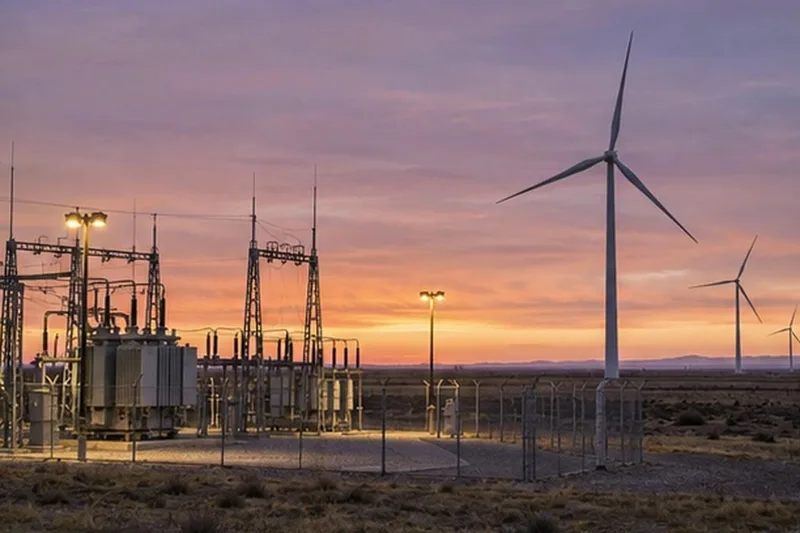
Toyota has made the Hilux pickup at Zárate, in Buenos Aires province, since 1997 and the SW4 SUV since 2005. It is Argentina’s largest vehicle producer and exporter. In 2024 it made 170,330 vehicles and exported about 80% to over 20 markets, almost 5% of the country’s total exports.
In June 2023 Toyota announced a US$50 million investment to add the Hiace van as a third model. A new 8,000-square-metre hall was built in about a year, with a modular design allowing later expansion. Production of two versions, the Commuter and the panel van, began in February 2024. The van is assembled from components imported from Japan and shares its engine, rear axle and other parts with the Hilux and SW4.
Toyota said initial output would be about 4,000 units, with potential to reach 10,000, and that 70% would eventually be exported. Exports to Brazil began about a year and a half after production started. In the first half of 2025, Toyota accounted for 51% of Argentina’s vehicle exports.
Key moments
The Zárate plant makes the Hilux and SW4.
Toyota presents its Hiace production investment.
Domestic sales and exports to Brazil provide the starting markets.
Toyota exports about 80% of its Argentine output. Sources: Mercado; El Cronista.
The trade-offs at the heart of the case
Core tensions
A new commercial van can fill gaps in a factory schedule and extend relationships with fleet buyers. Small runs can also create disproportionate changeover, variant and spare-parts costs. A common component may be cheap to procure in a larger lot yet scarce on the days when two models need it at the same time. A slow local launch can be a deliberate way to learn about parts and servicing before committing to scale. It becomes costly if shared workstations create delays for high-margin existing models. Track those effects at the plant, not only in the new product budget.
Testing the evidence
The appropriate unit of observation is one Hiace production run. Track incremental contribution per constrained assembly hour and record the baseline before the decision. The most useful records are line schedules, fleet orders and supplier capacity agreements. Align their dates and definitions before drawing an inference. In particular, allow for changes in demand for Hilux and SW4. A change in that factor can move the reported outcome even when the intervention has had no effect. Follow actual production slots and supplier deliveries. Compare fleet orders with completed handovers, excluding demonstrators. A full order book with extended cancellation rights offers less protection for the plant than a fleet contract backed by a deposit.
A related Argentine case
Santa Isabel’s alliance had to allocate production slots between partners. Toyota’s challenge is similar even inside one company: a supposedly spare hour still has a value when another vehicle can use it.
For your seminar, paper or interview
- Q1
When should a supposedly shared component be priced at more than its supplier invoice?
- Q2
How would you measure incremental contribution per constrained assembly hour for one Hiace production run using the available records?
- Q3
Which assumption in “Allocating constrained hours to the new van” would you challenge first, and how would changing it affect the decision?
- Q4
Could changes in demand for Hilux and SW4 explain the observed change? What evidence would distinguish that explanation?
- Q5
Under what conditions would you prefer low-volume runs against firm fleet orders, and who would bear the residual risk?
- Incremental investment
- Shared platforms
- Export-led manufacturing
- Learning by doing
How we would approach it
Simplifying Finance’s opinion, offered as a starting point for debate, not as fact or investment advice.
Start with firm fleet orders and a protected allocation for the existing vehicles. Track time consumed at the constrained station rather than spreading overhead mechanically across the extra model. Expand exports when repeat orders and parts availability justify longer production runs.
Start small
Build a new hall for 4,000 vans a year.
Share components
Use the Hilux engine, rear axle and other parts.
Export once proven
Begin shipments to Brazil after local production stabilises.
What this plan gives up
A small, modular start limits risk, but low volume means higher unit costs, and the van must compete with imports in Brazil.
The strongest counter-argument
For the Zárate plant’s product committee, the alternative worth costing is low-volume runs against firm fleet orders. Give both choices the same information date. Specify what can still be reversed, who absorbs the cost if the forecast is wrong, and the point at which new evidence would justify changing course. Make the decision conditional on an observable change in incremental contribution per constrained assembly hour. That condition lets someone outside the original decision team distinguish a sensible revision of the plan from an attempt to explain away poor results.
Metrics to watch
- Hiace production volume
- Exports to Brazil
Propose your solution
Pick a discussion question and set out what you would do, why, and what it would cost. Strong, well-argued answers are reviewed and published below with your first name and programme.
Published solutions
Loading published solutions…
- Government of Argentina: February 2024 Hiace investment plan and model scope ↗
- ADEFA: Toyota Hiace announcement ↗
- El Cronista: Toyota inició exportaciones a Brasil de Hiace ↗
- El Cronista: El 70% del nuevo modelo será para exportación ↗
- Autodata: Toyota começa a produzir o Hiace na Argentina ↗
- El Economista: Toyota comenzó a exportar a Brasil su tercer modelo ↗
- Image: AI-generated editorial illustration
Figures are as reported by the companies or cited outlets as of 22 November 2026. Check the source before quoting. Corrections: let us know through the solution form.