What happened
Vale’s 2016 sustainability report describes production starting at the S11D Eliezer Batista complex and gives annual iron ore production capacity as 90 million metric tonnes. Capacity is an engineering measure under specified operating conditions. The figure does not say that 90 million tonnes were mined in the commissioning year, loaded onto ships or paid for. Those events belong on different dates in an investment model.
Ore quality adds another dimension. Material that improves a customer’s blend may earn a premium or allow the seller to manage other grades more efficiently. The premium depends on the buyer’s process, freight costs and alternative supplies. Multiplying every design tonne by a premium observed in a particularly tight market would give geological capacity the appearance of guaranteed commercial demand.
S11D, also called the Eliezer Batista complex, is in Canaã dos Carajás in the Brazilian state of Pará. It is the largest iron ore project in Vale’s history, with reserves of more than 4 billion tonnes and an iron content of about 66–67%. Its mine uses conveyor belts instead of trucks to move ore, lowering costs and emissions.
Vale estimated total investment at US$14.3 billion: US$6.4 billion for the mine and plant, and US$7.9 billion for a 101-kilometre railway branch, double-tracking the Carajás railway and expanding the Ponta da Madeira terminal in São Luís. The operating licence was granted on 9 December 2016, production began that month, and commercial shipments started in January 2017. Vale planned to reach full capacity of 90 million tonnes a year over the following years.
The case shows why a mine’s value depends on the whole chain, from pit to port, and why capacity is not the same as shipments.
Key moments
Production starts at the S11D complex.
Vale identifies annual design capacity of 90 million metric tonnes.
The logistics spending covered a 101km rail branch, double-tracking the Carajás railway and expanding the Ponta da Madeira terminal. Design capacity: 90 million tonnes a year. Sources: Vale (via E&MJ, Maritime Executive).
The trade-offs at the heart of the case
Finding the bottleneck by following one cargo
Start with a single outbound vessel and work backwards. The buyer requires a defined grade at a nominated place and time. The port needs a sufficient stockpile of the right blend before loading. The rail system needs enough wagons, paths and turnaround time to supply that stockpile. The mine needs available equipment and saleable ore. A proposed investment in a faster piece of equipment is worth little to this cargo if another stage still prevents the vessel from sailing on time. A blended average can hide a genuine operating success. If rail disruption forces the company to sell fewer tonnes, it may give priority to its highest-margin product. Average realised price can rise while total contribution falls. Conversely, adding some lower-margin shipments can reduce average netback while increasing cash generated. Reporting both incremental contribution and total netback prevents a manager from improving one ratio by turning down economically worthwhile cargo. The social and financial perspectives can also point to different priorities. A more reliable timetable might reduce community disturbance at one point while intensifying it elsewhere. Longer trains can change road crossing delays and noise patterns even if the number of train movements falls. Give the operating plan a geographic record of such effects and include feasible mitigation costs in the comparison. That makes an infrastructure recommendation more complete than a ranking based solely on additional tonnes loaded per capital real spent.
For your seminar, paper or interview
- Q1
How would you reconcile mine production to tonnes sold during a logistics interruption?
- Q2
Which investment improves cash if the port remains the limiting stage?
- Q3
Can a higher average netback accompany weaker total contribution?
- Q4
How would you verify saleable ore shipped at the required specification using information available at the time?
- Q5
Which finding about realised netback and inventory accumulated between stages would most change your recommendation, and why?
- Megaproject economics
- Ramp-up
- Logistics as a bottleneck
- Low-cost producers
How we would approach it
Simplifying Finance’s opinion, offered as a starting point for debate, not as fact or investment advice.
A final mine-to-port reconciliation should cover moisture, quality adjustments, normal handling losses and measurement dates. Apparent missing tonnes may reflect two records made at different points in the same journey. Investigate a gap before assuming waste or theft. A matched cargo record gives both engineering and commercial teams a common starting point and lets them locate the stage at which a production estimate became a different quantity of material paid for by the customer. Use shipped tonnes of saleable specification and realised netback to assess the ramp. Reconcile mining, processing, inventory movements and shipment before treating a missed sales target as a mine problem. More buffer stock could be sensible if weather interrupts loading intermittently. It becomes an expensive substitute for maintenance if the same section repeatedly limits deliveries even in favourable conditions.
Invest in logistics with the mine
Build rail and port capacity so ore can actually reach customers.
Ramp up with the market
Increase output gradually in line with demand and prices.
Lower unit cost
Use truckless mining and high-grade ore to cut cost per tonne.
What this plan gives up
S11D gave Vale one of the world’s lowest-cost, highest-grade iron ore mines, but more than half the investment went into logistics, and full output took years to reach.
The strongest counter-argument
A useful investment meeting would put two proposals beside each other. One increases processing capacity at the mine. Another reduces the probability of a rail interruption. At low volumes the first may find no customer for extra output, while the second may create value by improving reliability for customers already contracted. Estimate incremental cash in a normal month and in a disrupted month. Weighting the two by plausible frequency can change the ranking even if the larger engineering project looks more impressive. The contracting team should also explain the commercial cost of late or inconsistent cargo. A customer could hold extra stock, request a price concession or source a competing grade. Some of those actions occur outside the seller’s accounts before they eventually affect realised prices. Discuss stock quality and delivery performance with the customers responsible for blending. Evidence that a buyer kept less safety stock because of dependable Brazilian deliveries can help establish value that a simple mine-gate cost comparison misses. Rail dwell can consume working capital without changing the mining cost per tonne.
Metrics to watch
- S11D production
- Iron ore price premiums for high grade
Propose your solution
Pick a discussion question and set out what you would do, why, and what it would cost. Strong, well-argued answers are reviewed and published below with your first name and programme.
Published solutions
Loading published solutions…
- Vale 2016 sustainability reporting, S11D production and capacity (Vale) ↗
- Vale filing on inauguration of the S11D project (US SEC EDGAR) ↗
- E&MJ: Vale starts the S11D iron ore project ↗
- Maritime Executive: Vale opens Amazonian iron ore mine ↗
- Mining Weekly: Carajás S11D iron-ore project ↗
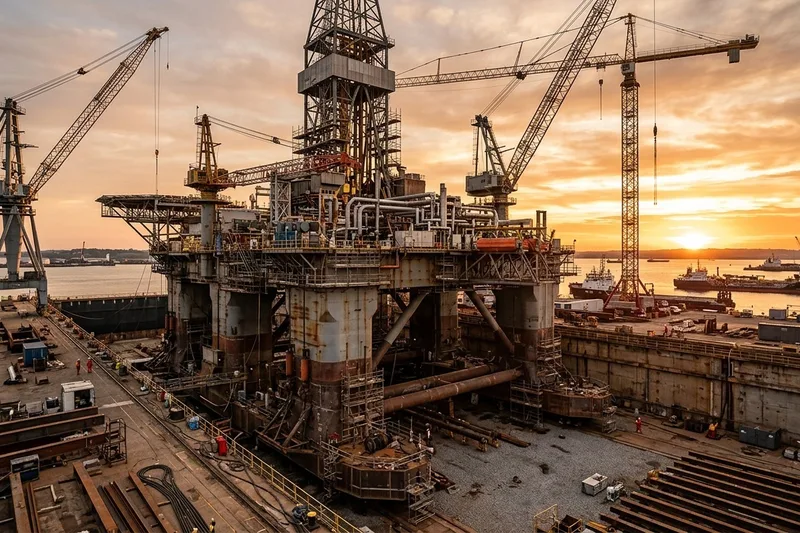
- Image: Simplifying Finance · AI-generated editorial illustration
Figures are as reported by the companies or cited outlets as of 22 November 2026. Check the source before quoting. Corrections: let us know through the solution form.