What happened
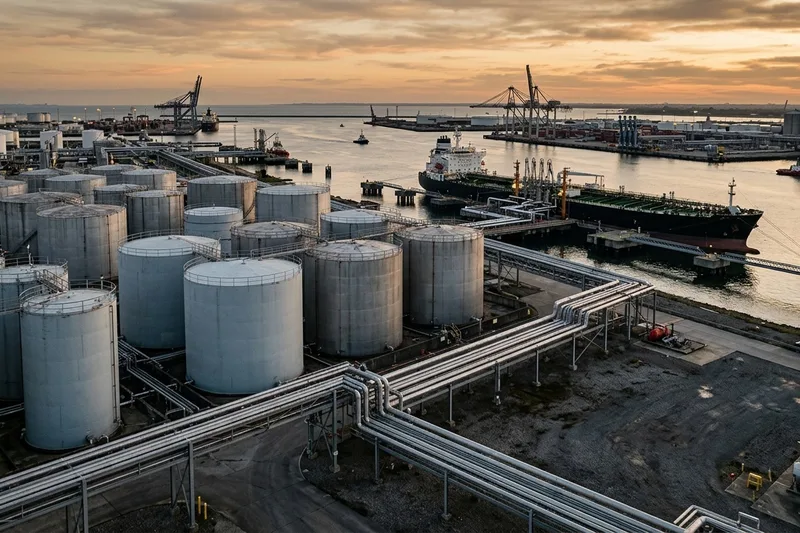
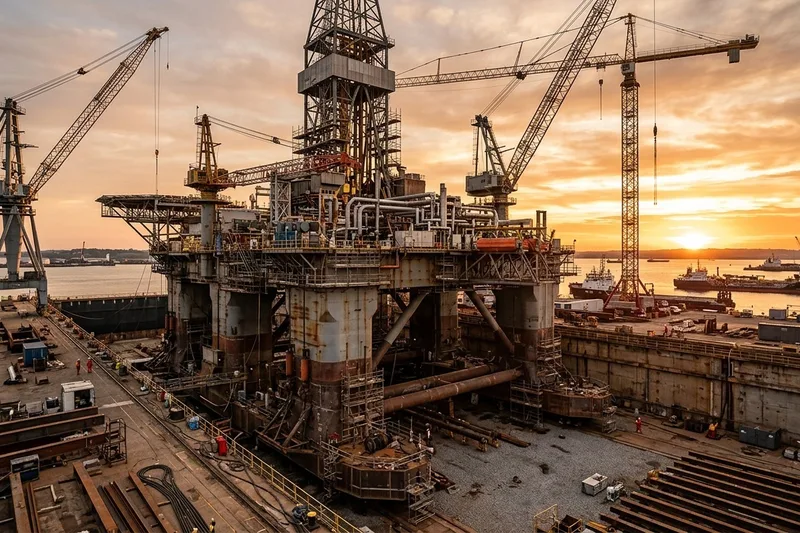
Yangzijiang Shipbuilding is one of China’s largest private shipbuilders, with yards on the Yangtze River in Jiangsu province. It was incorporated in Singapore in 2005 and listed on the Singapore Exchange in 2007, becoming one of the largest Chinese companies on the exchange. It builds container ships, bulk carriers, tankers and gas carriers for owners around the world.
Shipbuilding is intensely cyclical. Orders boom when freight rates are high and owners want new ships, and collapse when overcapacity pushes rates down. Shipyards often face long periods of weak orders, low prices and losses. To smooth earnings and use its cash, Yangzijiang built a large investment business from around 2008, lending money to companies in China and investing in debt instruments that paid high interest.
The investment business became very large, at times making up a significant part of the group’s assets and profits. But it worried many investors. Lending to Chinese companies outside the formal banking system carries credit risk and can be hard for outsiders to assess. Shipbuilding investors wanted exposure to ships, not to opaque loans, and some applied a discount to Yangzijiang’s shares because of the investment arm.
In 2021 Yangzijiang announced a plan to spin off the investment business into a separate company, Yangzijiang Financial Holding, and list it on the Singapore Exchange. Shareholders would receive one share in the new company for each Yangzijiang share they held, through a dividend in specie, meaning a distribution of shares rather than cash. The parent capitalised about RMB20 billion of receivables owed by the investment arm as part of the restructuring.
Management argued that the separation would let each company focus on its own business. Yangzijiang Shipbuilding would become a pure shipbuilder with a cleaner balance sheet, while Yangzijiang Financial would aim to become an investment manager in Asia, diversifying beyond China and growing fund management and wealth management income. Investors could choose which business they wanted to own.
SGX approved the plan, shareholders voted in favour and Yangzijiang Financial Holding was listed on 28 April 2022. Some strategic investors agreed not to sell their allotted shares for six months to support its share price. After the spin-off, Yangzijiang Financial began reducing its exposure to Chinese debt investments and shifting more of its assets to Singapore and other markets.
The timing for the shipbuilder turned out to be excellent. After years of weak orders, demand for new ships surged from 2021, driven by high freight rates during the pandemic, an ageing global fleet and new environmental rules pushing owners to order ships that can run on cleaner fuels such as liquefied natural gas and methanol. Newbuild prices rose sharply.
Yangzijiang benefited strongly. Its orderbook reached US$10.5 billion at the end of 2022. In 2024 it won about US$14.6 billion of new orders, more than three times its target, and its orderbook climbed to a record US$24.4 billion, with about three-quarters for clean energy vessels. Net profit rose from about RMB2.8 billion in 2022 to RMB4.1 billion in 2023 and a record RMB6.6 billion in 2024.
The share price followed. Yangzijiang Shipbuilding’s shares ended 2022 at about S$1.36 and 2024 at about S$2.99, more than doubling. The company raised its dividends. Investors who had worried about the investment arm now valued the company as a focused shipbuilder at the top of a strong cycle.
Risks remain. Shipbuilding cycles eventually turn, and large orderbooks can become problems if owners cancel orders or costs rise. In 2025 the United States proposed additional port fees on ships built in China, which could affect demand from some owners. Currency movements also matter, because Yangzijiang earns in US dollars while many of its costs are in Chinese yuan.
The spin-off illustrates how separating unrelated businesses can reduce complexity and improve valuation, especially when one business is hard for investors to understand. But it also shows that timing and the underlying industry cycle often matter as much as corporate structure.
For students, the case is useful for studying spin-offs, the conglomerate discount, the shipbuilding cycle and how management decisions interact with market conditions.
The structure of the spin-off also mattered for shareholders. Because the new shares were distributed in proportion to existing holdings, no one was forced to sell or buy. Investors who wanted only the shipbuilder could sell their Yangzijiang Financial shares, while those attracted to the investment business could keep or add to them. This flexibility is one of the main advantages of a spin-off over an outright sale of a business to a third party.
Key moments
Yangzijiang incorporated in Singapore.
Lists on the Singapore Exchange.
Announces spin-off of investment business.
Yangzijiang Financial lists on SGX.
Orderbook reaches US$10.5bn.
Record profit; orderbook hits US$24.4bn.
Source: Yangzijiang Shipbuilding Annual Report FY2024.
The trade-offs at the heart of the case
Focus vs. diversification
The lending arm smoothed earnings but clouded value.
Structure vs. cycle
Gains owed much to a shipbuilding boom.
Transparency vs. returns
High-yield lending was hard to assess.
For your seminar, paper or interview
- Q1
Why did investors discount Yangzijiang because of its investment business?
- Q2
How does a spin-off through a dividend in specie work?
- Q3
How much of the share price rise came from the spin-off versus the shipbuilding cycle?
- Q4
What risks does Yangzijiang Financial face as a standalone company?
- Q5
What could end the current shipbuilding boom?
- Spin-offs and focus
- Conglomerate discount
- Industry cycles
- Credit risk
How we would approach it
Simplifying Finance’s opinion, offered as a starting point for debate, not as fact or investment advice.
The spin-off was a good decision that removed a major source of investor concern and let the shipbuilder be valued on its own merits. Its timing was fortunate, coinciding with a powerful shipbuilding upcycle. Management should now prepare for the next downturn while the orderbook is full.
Lock in margins
Price new orders to protect against cost increases.
Hedge currencies
Manage US dollar and yuan exposure.
Build reserves
Hold cash for the next downturn.
Return capital
Share boom profits through dividends.
What this plan gives up
Holding large cash reserves for future downturns reduces returns during the boom.
The strongest counter-argument
Some argue the investment business generated steady profits during weak shipbuilding years and that separating it removed a natural hedge.
Metrics to watch
- New order wins
- Newbuild prices
- Cancellation rates
- US port fee policy
- Yangzijiang Financial asset quality
Propose your solution
Pick a discussion question and set out what you would do, why, and what it would cost. Strong, well-argued answers are reviewed and published below with your first name and programme.
Published solutions
Loading published solutions…
- Yangzijiang Shipbuilding: Annual Report FY2024 ↗
- Yangzijiang Shipbuilding: FY2024 results media release ↗
- Yangzijiang Shipbuilding: Circular on proposed spin-off ↗
- Yangzijiang Shipbuilding: Annual Report 2022 ↗
Figures are as reported by the companies or cited outlets as of 22 November 2026. Check the source before quoting. Corrections: let us know through the solution form.