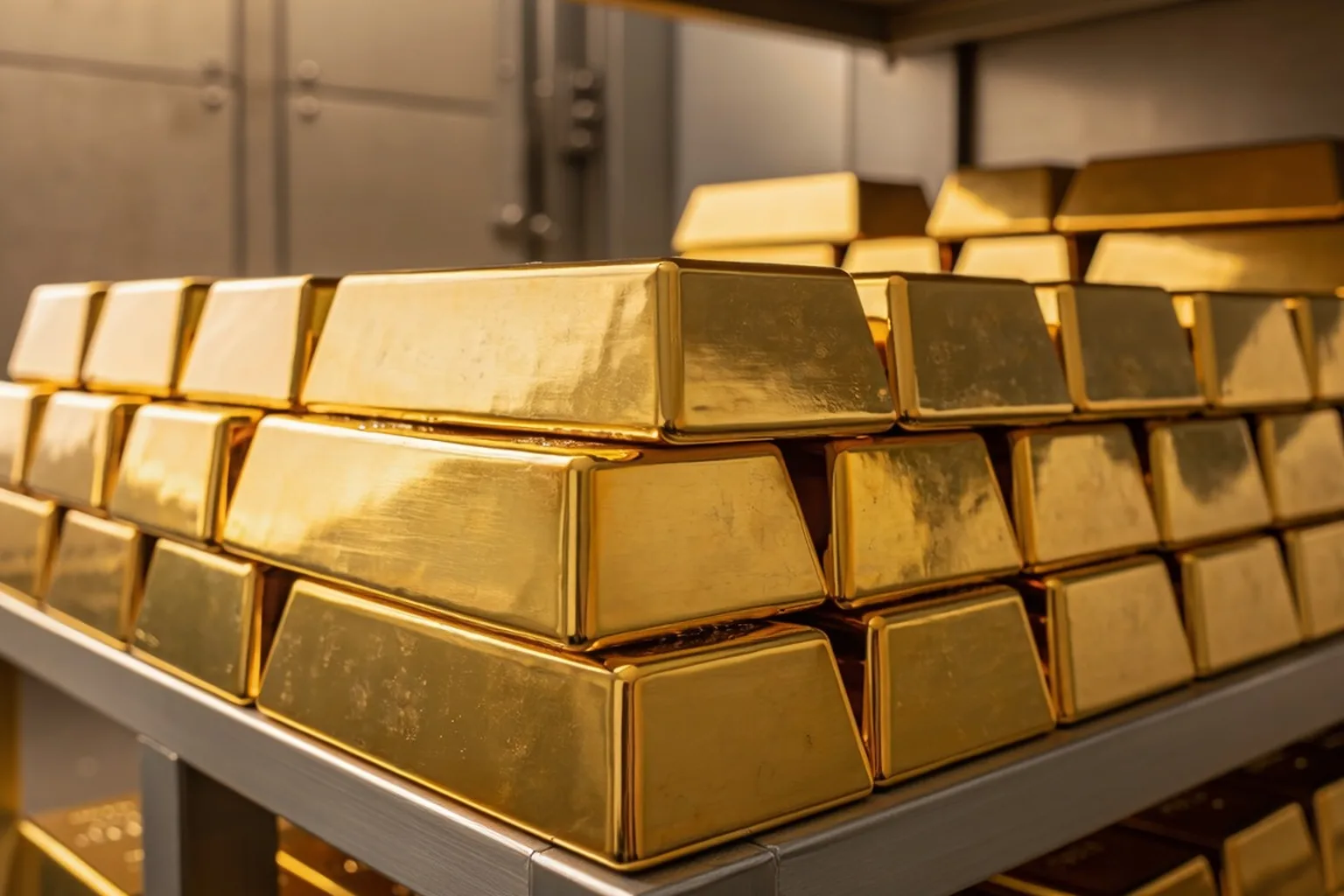
The idea
Gold produces no interest, dividends or rent. Its return comes only from price changes. When investors can earn a good return after inflation on safe government bonds, the opportunity cost of holding gold rises. When real yields are low or negative, gold looks more attractive.
For much of 2006 to 2021, gold moved closely and inversely with US real yields measured by inflation-protected Treasury bonds (TIPS). That relationship weakened from 2022 as central banks bought record amounts.
What tends to move gold
| Driver | Usual effect on gold |
|---|---|
| Rising real interest rates | Negative |
| Falling real interest rates | Positive |
| Stronger US dollar | Often negative, since gold is priced in dollars |
| Crises and geopolitical fear | Often positive |
| Central bank buying | Positive |
| Strong jewellery demand in India and China | Supportive, especially when prices dip |
When the rule broke
In 2022 and 2023, US real yields rose sharply, from negative to around 2%.
On the old relationship, gold should have fallen substantially.
Instead it held up and then reached record highs, as central banks bought more than 1,000 tonnes in each of 2022, 2023 and 2024, according to the World Gold Council.
Relationships in markets change when a big new buyer appears.
Why central banks buy
Diversifying reserves
Reducing reliance on the US dollar and other currencies.
Sanctions risk
Gold held at home cannot be frozen by foreign governments.
No counterparty
Physical gold is not someone else's promise to pay.
Long history
Gold has been a reserve asset for centuries.
For a dirham investor
Because the dirham is pegged to the US dollar, gold priced in dollars is effectively priced in dirhams too. A dollar-based gold return is your return, without separate currency risk.
Gold as a crisis hedge
Gold has often held up or risen during financial crises and periods of high uncertainty, such as 2008 and 2020, though it can fall at first when investors sell everything to raise cash. Over long periods its returns have been lumpy: strong decades have been followed by long flat or falling stretches.
For example, gold peaked in 1980 and did not regain that level in nominal terms until 2008. Investors who bought near a peak waited many years to break even.
A realistic scenario
Aisha bought gold in 2022, expecting it to protect her against inflation. As interest rates climbed, friends told her gold would fall because bonds were finally paying real returns. Instead, gold held steady and later reached record highs.
She learns that gold's price reflects several forces at once: real yields, the dollar, investor fear and, in this period, unusually heavy central bank buying. She keeps gold at about 5% to 10% of her portfolio as a diversifier rather than betting on any single driver.
Questions to ask yourself
What are real interest rates doing, and why? Is the US dollar strengthening or weakening? Are central banks still buying? What role does gold play in my portfolio? Am I holding gold for protection, diversification or speculation?
Official sources to check
The World Gold Council (gold.org) publishes quarterly Gold Demand Trends, central bank data and research. The US Treasury (treasury.gov) and Federal Reserve Bank of St. Louis FRED database (fred.stlouisfed.org) publish real yield data. The Central Bank of the UAE (centralbank.ae) explains the dirham's dollar peg.
Common mistakes
One-factor thinking
Real yields are important but not the only driver.
Expecting income
Gold pays nothing while you wait.
Over-allocating
Large gold positions can lag for years.
Buying in panic
Crisis spikes often fade once fear eases.
Your checklist
- I understand gold earns no income.
- I watch real interest rates and the US dollar.
- I know central bank demand can override old patterns.
- I size gold as a diversifier, not a core growth asset.
The short version
Gold pays no income, so real interest rates usually act against it. The US dollar, crisis demand and central bank buying also matter, and can override the usual relationship for years. Use gold as a diversifier sized to your goals.
Illustration: a 10-year US bond yields 4.5% with 2.5% expected inflation, a real yield of about 2%. Holding gold instead gives up that 2% a year of real income.
Gold pays no income, so higher real interest rates raise the cost of holding it; but central bank demand and fear can override that link.
Primary educational reference
World Gold Council · Gold market ↗Reviewed November 20, 2026. Examples are hypothetical illustrations in AED or USD. Educational content, not personalised investment, legal or tax advice.