The idea
Iron ore is the main raw material for steel, and steel is the backbone of buildings, bridges, railways, ships, cars and machines. Because of this, iron ore prices move closely with construction and manufacturing activity around the world.
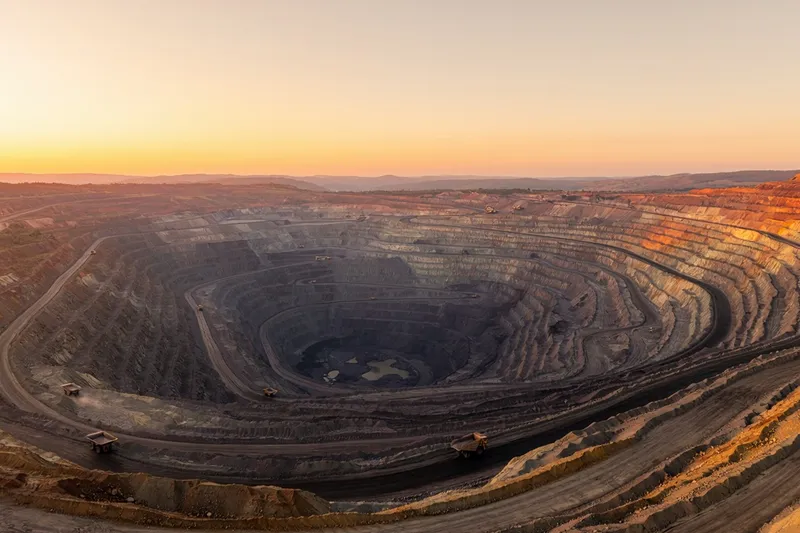
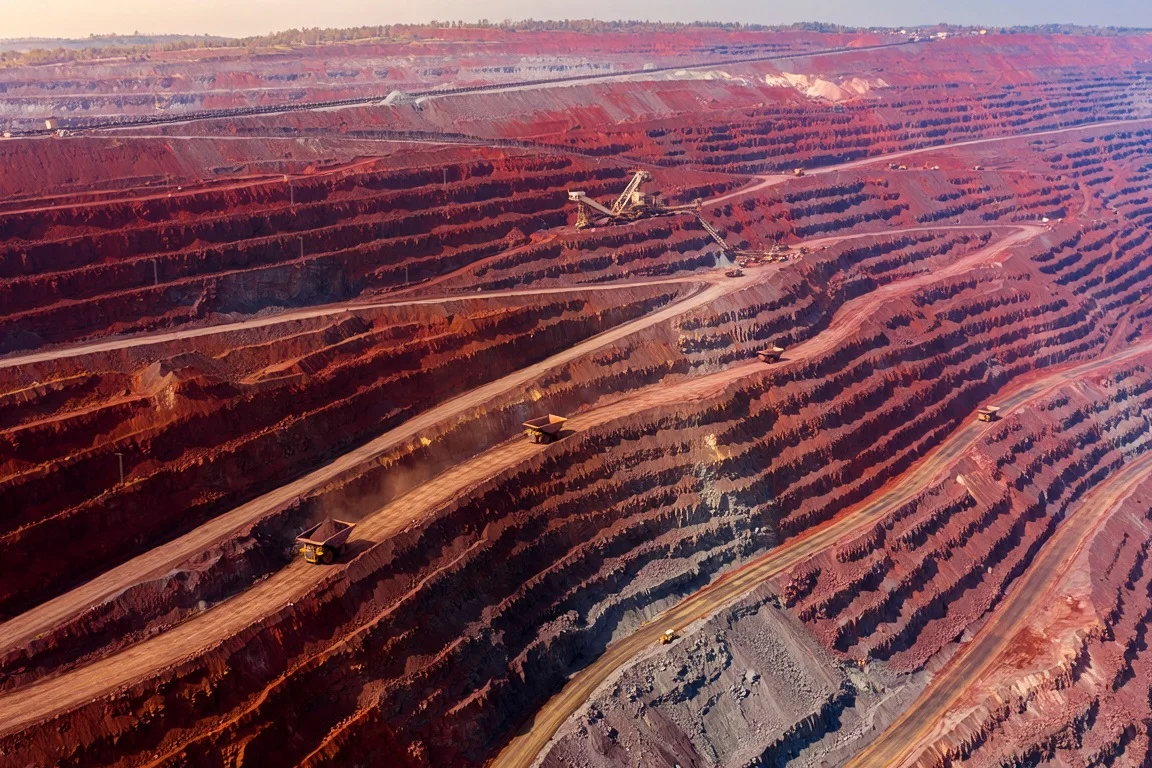
Iron ore is mined in huge quantities, shipped across oceans in bulk carriers and turned into iron in blast furnaces using coking coal. The iron is then refined into steel. Some steel is also made by melting scrap in electric arc furnaces, which needs little or no fresh ore.

China's dominant role
China produces roughly half of the world's steel and buys most of the iron ore traded by sea. That makes its property sector, infrastructure spending and factory output the biggest single drivers of the iron ore price.
When China's property market weakened in the early 2020s, iron ore prices became very sensitive to news about Chinese housing, government stimulus and limits on steel output. Investors in iron ore are, in effect, taking a view on Chinese construction.
Who supplies it
A few countries and companies dominate supply.
| Supplier | Role |
|---|---|
| Australia | Largest exporter, mainly from the Pilbara region |
| Brazil | Second-largest exporter, high-grade ore |
| Large miners | A handful of global miners produce much of the seaborne supply |
| New projects | Large West African deposits are being developed |
Grades and prices
Not all ore is equal. Higher-grade ore, with more iron and fewer impurities, produces less waste and pollution in the furnace and usually sells at a premium. As steelmakers face tighter emissions rules, demand for high-grade ore and for pellets suited to cleaner steelmaking has risen.
The benchmark price most often quoted is for ore with 62% iron content delivered to northern China. Prices are set in a market of physical contracts, futures and swaps.
Steel's green transition
Traditional blast furnaces are among the world's largest industrial sources of carbon emissions. Steelmakers are investing in electric arc furnaces that use scrap, and in direct reduction plants that use natural gas or, in future, hydrogen. The Gulf, with cheap energy, is positioning itself in lower-carbon iron and steel.
Over decades, more scrap-based steelmaking could reduce demand for fresh iron ore growth, while raising demand for high-grade ore and pellets.
How investors get exposure
Most individual investors gain iron ore exposure through shares of large diversified miners, which also produce copper, aluminium and other materials. Their profits rise and fall sharply with iron ore prices, and many pay large dividends in good years.
Iron ore futures trade on exchanges in Singapore and China, but they are mainly used by professionals. Steelmaker shares are a different bet: they can suffer when ore prices rise faster than steel prices.
Reading iron ore as an economic signal
Because iron ore feeds steel, and steel feeds construction and manufacturing, its price is often watched as a signal of global industrial health, and especially of Chinese activity. Rising prices, rising Chinese steel output and falling port stockpiles usually point to strong demand. Falling prices with growing stockpiles point the other way.
The signal is imperfect. Supply disruptions, such as cyclones in Australia or mine accidents in Brazil, can push prices up even when demand is weak. Government decisions, such as Chinese limits on steel output to cut pollution, can also move prices independently of the wider economy. Use iron ore alongside other indicators rather than on its own.
A realistic scenario
Omar holds shares in a diversified miner earning most of its profit from iron ore. When Chinese property starts fall and ore prices drop 30%, the miner's profits and dividend fall sharply. Omar decides to cap any single mining company at 3% of his portfolio and holds the rest of his materials exposure through a broad global fund.
Questions to ask about iron ore exposure
- How dependent is my investment on Chinese construction?
- Is the company a miner or a steelmaker?
- How much of its profit comes from iron ore?
- How would a 30% price fall affect its dividend?
- Is my exposure part of a diversified portfolio?
The short version
Iron ore is the raw material of steel, and its price follows construction and manufacturing, especially in China. Supply is concentrated in Australia and Brazil. Most investors gain exposure through miners, whose profits swing widely with the ore price.
Illustration: a steelmaker needs about 1.6 tonnes of iron ore to make a tonne of steel in a blast furnace. If iron ore rises from $100 to $130 a tonne, the ore cost of each tonne of steel rises by roughly $48 unless steel prices also rise.
Iron ore is a bet on construction and manufacturing, especially in China. Its price can swing sharply when building slows or speeds up.
Primary educational reference
World Steel Association · Steel statistics ↗Reviewed November 21, 2026. Examples are hypothetical illustrations in AED or USD. Educational content, not personalised investment, legal or tax advice.