Oil overview
US shale: the swing producer
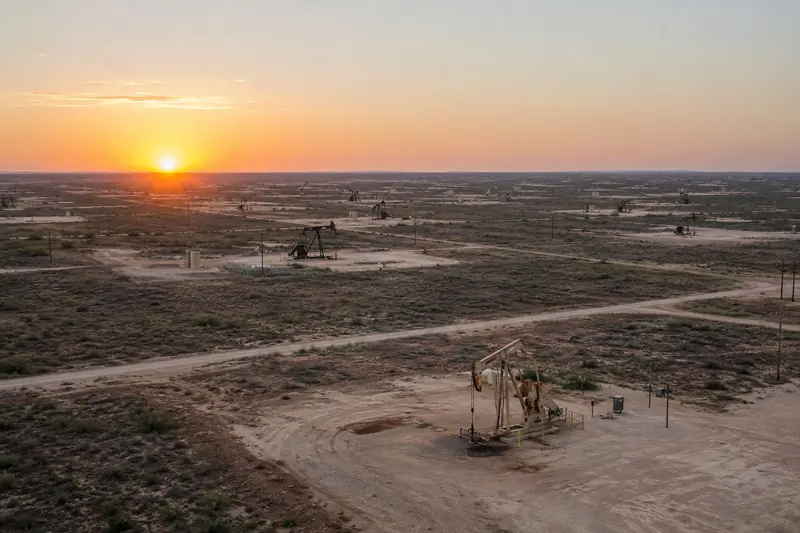
The shale revolution made the US the world’s largest oil producer. Shale wells can be drilled in months, so US output reacts to prices far faster than conventional projects — capping rallies and cushioning slumps.
13.9 mb/dEstimated US crude output in 2026
14.3 mb/dEIA forecast for 2027 — a record
MonthsTime from decision to new shale oil
FridaysWeekly rig count release
How shale behaves
Fast response
Higher prices bring more rigs and wells within months; lower prices stop drilling.
Steep declines
Shale wells lose output quickly, so constant drilling is needed to keep production flat.
Breakeven prices
New wells need roughly $60–70 a barrel in recent industry surveys; above that, output tends to grow.
Capital discipline
Since 2020, companies have prioritised dividends over growth, slowing the response.
What to watch
| Indicator | Signal |
|---|---|
| Rig count (weekly) | Future production direction |
| EIA weekly production estimate | Current output |
| Company guidance | Spending and growth plans |
| Futures curve | Producers hedge forward sales when prices are high |
Trader’s checklist
- Track the Friday rig count.
- Remember shale caps long rallies.
- Watch producer hedging after big price spikes.
- EIA — Short-Term Energy Outlook, November 2026 ↗
- Gulf News — US crude output to hit record 14.3m bpd ↗
- Dallas Fed Energy Survey ↗
- Wikipedia — Tight oil ↗
Educational content, not investment or trading advice. Trading leveraged products carries a high risk of losing money.