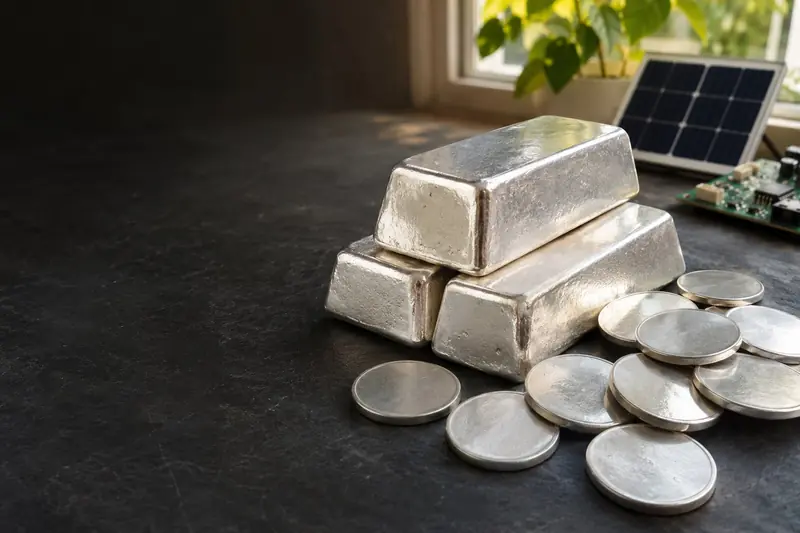
Silver overview
Silver or gold: which suits you?
Gold and silver are often lumped together, but they behave differently and suit different goals. Here is a side-by-side comparison to help you decide which — or how much of each — fits your plan.
GoldSteadier; a store of value bought by central banks
SilverCheaper per ounce; industrial and far more volatile
~80:1Ounces of silver per ounce of gold, November 2026
BothPay no interest or dividends
Side by side
| Gold | Silver | |
|---|---|---|
| Main role | Store of value, reserve asset | Industrial metal and investment |
| Main buyers | Central banks, investors, jewellers | Industry, investors, jewellers |
| Volatility | Moderate | High — roughly twice gold |
| In a recession | Often holds up | Often falls with industrial demand |
| Storage | Compact: high value per gram | Bulky: about 80 times the weight for the same value |
| Dealer spreads | Narrower | Wider, and VAT or GST in some countries |
| 2026 so far | About −33% from record | About −62% from record |
Who tends to choose which
Long-term savers
Usually prefer gold for stability and lower storage costs.
Higher-risk investors
May add some silver for its bigger upside in strong rallies.
Short-term traders
Trade both; silver gives bigger moves but needs smaller positions.
Small budgets
Silver lets people buy physical metal in small amounts, but spreads eat into returns.
Trader’s checklist
- Decide whether you want stability (gold) or upside with risk (silver).
- Count storage, spreads and taxes, not just the price.
- Size silver positions smaller than gold.
- Simplifying Finance — Gold overview ↗
- Simplifying Finance — Silver overview ↗
- USAGold — Daily precious metals report, 18 Nov 2026 ↗
Educational content, not investment or trading advice. Trading leveraged products carries a high risk of losing money.