What happened
BMW reported nearly 225,000 exports from Spartanburg in 2024 with a combined export value of $10.1 billion. A production manager can call a vehicle finished while the export team still has to move it to a port, book a sailing and deliver it into a foreign distribution network. Each extra day absorbs space and ties up capital somewhere in that chain.
Using 225,000 as a rounded denominator, $10.1 billion divided by 225,000 is approximately $44,900 per exported vehicle. BMW says nearly 225,000, so greater precision would be spurious. The quotient is an aggregate export value, not a dealer sticker price or the amount of cost that remains tied up in each vehicle at the port.
BMW’s plant in Spartanburg, South Carolina, builds the company’s larger X models, including the X3 to X7 and the XM. It is the largest BMW Group plant in the world.
In 2024 the plant assembled 396,117 vehicles. More than 57,000 were plug-in hybrids, over 14 percent of the total, according to BMW.
BMW reported exporting nearly 225,000 vehicles from Spartanburg in 2024, with an export value of $10.1 billion. Based on US Department of Commerce data, that made BMW the largest US automotive exporter by value.
From 2014 to 2024 the plant exported more than 2.7 million vehicles, about 63 percent of its production, with a total export value of more than $104 billion.
The main export markets were Germany, South Korea, China, Canada and Great Britain. Most vehicles left through the Port of Charleston, with others shipped through ports in Georgia, Florida and Maryland.
At the same time, nearly half of all BMWs sold in the United States in 2024 came from Spartanburg, showing that the plant serves both its home market and the world.
Jalopnik, using census data, estimated that the United States exported just over $58 billion of passenger cars in 2024, so BMW accounted for close to a fifth of the total by value.
BMW’s board member for production said the strong export share underlined the importance of free trade, a reminder that tariffs in any of the plant’s markets directly affect its economics.
The exhibit compares the plant’s total output with its exports. More than half of what Spartanburg builds leaves the United States, which makes exports central to its business.
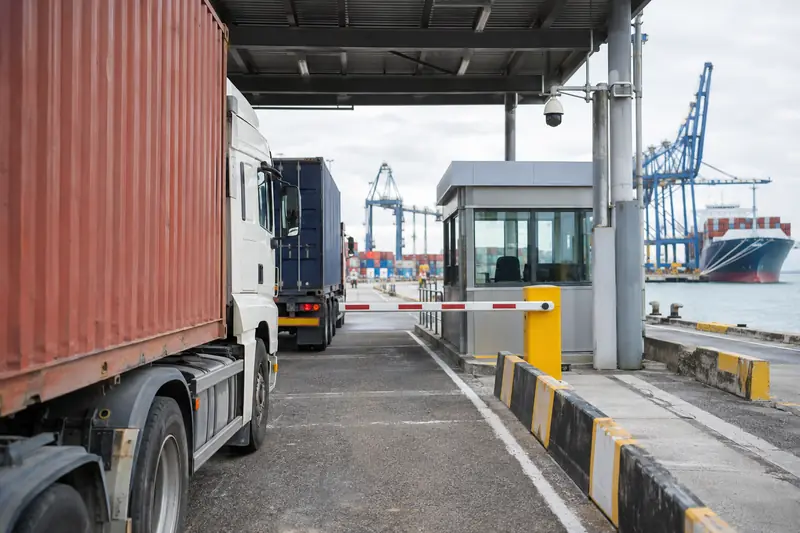
For an export-focused plant, the job is not finished when a car leaves the assembly line. It must be transported to a port, loaded onto a ship and delivered to dealers abroad.
Each day a car spends waiting ties up working capital. Missing a sailing can mean cars wait days for the next ship, adding storage costs and delaying payment.
Exchange rates also matter. When the dollar is strong, cars built in the United States become more expensive in other currencies, which can affect demand or margins abroad.
Tariffs add another layer of risk. If an export market raises import duties on US-built cars, the plant’s products become less competitive there.
Spreading exports across several markets reduces dependence on any one country, but it does not remove exposure to wider trade tensions.
The plant’s large export role also makes it important to the economy of South Carolina, where BMW employs more than 11,000 people.
Car makers worldwide must make similar decisions about whether to concentrate production in large export hubs or build closer to each market.
The Spartanburg case also shows how manufacturing location and trade policy are linked. A plant built mainly to serve one market can find itself serving many, and therefore exposed to the trade rules of many countries.
Managers in such plants watch trade negotiations closely, because changes can quickly alter the profitability of export routes.
Its export record shows how one plant can become a bridge between national economies, linking South Carolina to customers across Europe and Asia.
Key moments
Vehicles are completed in South Carolina
Nearly 225,000 vehicles exported
BMW reports $10.1 billion of export value
Source: BMW Group, February 2025.
The trade-offs at the heart of the case
A closer look
A missed sailing has a lumpy cost. Vehicles may wait for the next vessel even when the average inland journey has shortened. Compare the share of vehicles arriving before the cut-off with average transit time, and price the yard space and protective handling for the missed group. It is possible for those measures to move in opposite directions after a faster but less predictable route is introduced.
The alternative on the table
For comparison, consider the option to carry additional finished-car inventory to buffer the shipping schedule. The related case “The used-car price inside a new BMW lease” supplies a useful reference point. BMW’s 2024 financial statements explain that leased products are depreciated towards their expected residual value. A lease residual depends on the price of a car years later. An export buffer depends on a vehicle’s financing cost over days or weeks. Use the correct holding period and the accounting value of the car at that stage.
For your seminar, paper or interview
- Q1
How much does missing a vessel’s cut-off cost compared with arriving a day earlier?
- Q2
Which finding in the records on days between factory release and vessel departure would persuade you to carry additional finished-car inventory to buffer the shipping schedule?
- Q3
Compare this decision with “The used-car price inside a new BMW lease”. Which difference between the cases would change your recommendation?
- Export strategy
- Logistics
- Global production networks
- Trade policy
How we would approach it
Simplifying Finance’s opinion, offered as a starting point for debate, not as fact or investment advice.
We think Spartanburg shows how a factory can serve the world, not just its home market. More than half its output is exported, so the plant’s value depends on ports, shipping and trade rules as much as on assembly lines. That makes logistics and trade policy central to its economics.
Plan the export chain
Treat ports and shipping as part of production.
Spread markets
Export to several regions to reduce risk.
Watch trade rules
Model how tariffs affect each route.
What this plan gives up
Export-heavy plants gain scale but are exposed to trade barriers.
The strongest counter-argument
Some argue cars should be built closer to each market to avoid shipping and tariff risk.
Metrics to watch
- Export share of output
- Time from factory to ship
Propose your solution
Pick a discussion question and set out what you would do, why, and what it would cost. Strong, well-argued answers are reviewed and published below with your first name and programme.
Published solutions
Loading published solutions…
- BMW Group • BMW Manufacturing Continues as the Largest Automotive Exporter by Value in the U.S. ↗
- BMW Group PressClub • Source document — Why a South Carolina factory needs an export port ↗
- BMW Group PressClub USA • BMW Manufacturing continues as the largest automotive exporter by value ↗
- BMWBlog • Plant Spartanburg exports in 2024 ↗
- Jalopnik • BMW remains top exporter by value ↗
- Photo: BMW Zentrum Spartanburg by User:AnthonyA7, CC BY-SA 3.0 (cropped and resized) ↗
Figures are as reported by the companies or cited outlets as of 22 November 2026. Check the source before quoting. Corrections: let us know through the solution form.