What happened
The first X5 rolled off the Spartanburg line in September 1999. BMW had to make a taller, more versatile vehicle credible to people who associated its name with saloons. Calling it a sports activity vehicle signalled how the company wanted the product to be judged. The factory translated that promise into a category BMW could actually supply.
In the 1990s, sport utility vehicles became one of the fastest-growing parts of the US car market. Many buyers wanted higher seating, more space and all-wheel drive.
BMW was known for saloons with sporty handling. An SUV raised a question: could a taller, heavier vehicle still feel like a BMW?
The X5 was BMW’s first SUV. It was presented at the North American International Auto Show in Detroit in January 1999, and BMW described it as a Sports Activity Vehicle, emphasising on-road driving over off-road ability.
It was developed after BMW acquired the Rover Group, which included Land Rover, giving the company access to experience with four-wheel-drive vehicles.
The first X5 rolled off the line at Spartanburg on 1 September 1999. The plant built it exclusively for more than 120 markets.
Demand was strong. The 500,000th X5 was built about five and a half years later, and by the time first-generation production ended in September 2006, Spartanburg had built 616,867.
BMW said in 2005 that its US sales had grown from 53,000 cars when it decided to build the plant in 1992 to 260,079 in 2004, and that local production had been essential to that growth.
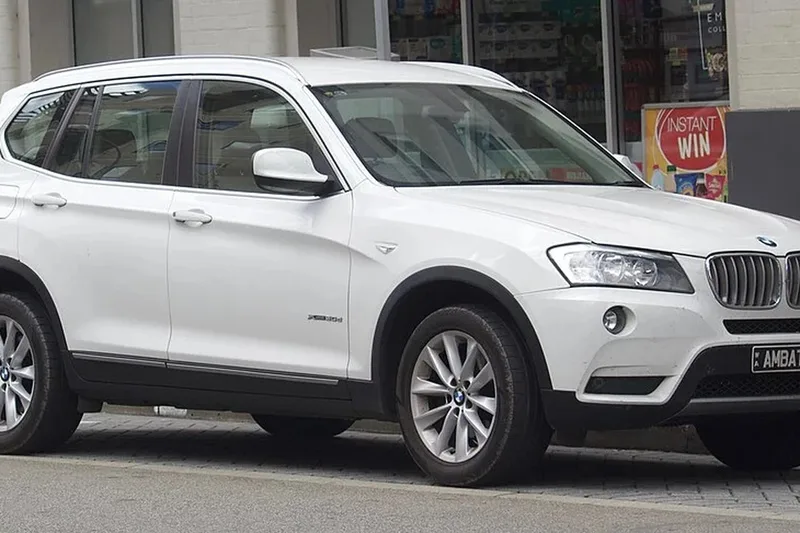
In June 2010 Spartanburg built its one millionth X5. The success of the model led BMW to add other X models, including the X3, X6 and X7, many of them built at the same plant.
The exhibit shows how BMW’s US sales grew after it decided to build in Spartanburg. Local production of models like the X5 helped BMW grow in its most important export market.
Entering a new segment carries risk. If an SUV had damaged BMW’s reputation for driving dynamics, the company could have weakened the brand that supported its higher prices.
BMW reduced that risk by designing the X5 for on-road performance and by giving it a distinctive name. The approach helped customers see it as a BMW first and an SUV second.
The reward was large. SUVs became one of the most profitable parts of the global car market, and the X5 gave BMW an early position in the premium segment.
That position became an economic moat. Each successful X model made it easier to launch the next one, since customers already trusted the brand in this segment.
The X5 also changed the role of Spartanburg. The plant became BMW’s global centre for X models, exporting to more than 120 markets.
By 2018 BMW said the X5 accounted for more than half of the 4.4 million vehicles produced at Spartanburg since 1994.
Other premium car makers, including Mercedes-Benz, Audi and Porsche, also moved into SUVs, showing how the segment reshaped the industry worldwide.
The X5 raises an important question about customer lifetime value. A buyer who switches from a rival’s SUV to a BMW may stay with the brand for many years, buying several cars.
Measuring how many X5 buyers were new to BMW, rather than existing customers changing models, helps judge how much the vehicle truly grew the business.
It also helps a company plan how much capacity to build for new segments.
For students, the X5 is a classic example of a brand extension that succeeded because the company kept its core promise while entering a new market.
The X5’s success also influenced BMW’s later decisions about where to build new models, with Spartanburg receiving much of the X range. A product decision taken in the 1990s still shapes the company’s production network today.
That approach has since been copied widely, and the term Sports Activity Vehicle remains part of how BMW describes its X models.
Key moments
BMW’s US plant builds passenger cars
First X5 is built at Spartanburg
The plant reports its 500,000th X5
Source: BMW Group, announcing the 500,000th X5 in 2005.
The trade-offs at the heart of the case
A closer look
Record what the X5 replaces in the driveway. A buyer who keeps a BMW saloon and trades another maker’s utility vehicle broadens the household relationship. A buyer who trades the saloon for the X5 changes its composition. Both buy one X5. The distinction influences how much the factory should invest in additional capacity and how much a dealer should attribute to the new category.
The alternative on the table
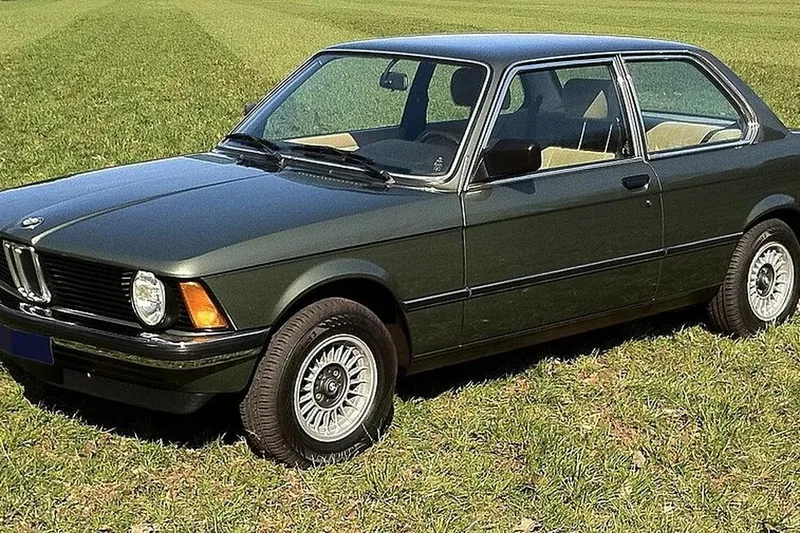
For comparison, consider the option to extend the existing estate range. The related case “Replacing a bestseller without losing its buyers” supplies a useful reference point. BMW introduced the E21 in July 1975 to replace the 02 Series. The first 3 Series replaced a car with an established audience. The X5 asked customers to accept the brand in a different body category. Measure outside-brand conquest and the contribution lost on any BMW already in the buyer’s consideration set.
For your seminar, paper or interview
- Q1
Which X5 trade-ins give the strongest evidence of genuinely new demand?
- Q2
Which finding in the records on trade-ins from buyers new to the BMW range would persuade you to extend the existing estate range?
- Q3
Compare this decision with “Replacing a bestseller without losing its buyers”. Which difference between the cases would change your recommendation?
- Brand extension
- New segment entry
- Plant utilisation
- Market positioning
How we would approach it
Simplifying Finance’s opinion, offered as a starting point for debate, not as fact or investment advice.
We think the X5 was one of BMW’s most important decisions. It took a brand known for sports saloons into a fast-growing SUV market without abandoning its focus on driving. Calling it a Sports Activity Vehicle signalled that difference, and the car’s success turned Spartanburg into BMW’s centre for X models.
Define the difference
Explain what makes the product fit the brand.
Use flexible capacity
Build the new model where the market is.
Measure new customers
Track how many buyers come from rival brands.
What this plan gives up
Entering a new segment risks diluting the brand.
The strongest counter-argument
Purists argued an SUV did not belong in BMW’s range.
Metrics to watch
- Share of buyers new to BMW
- Plant utilisation
Propose your solution
Pick a discussion question and set out what you would do, why, and what it would cost. Strong, well-argued answers are reviewed and published below with your first name and programme.
Published solutions
Loading published solutions…
- BMW Group PressClub • BMW PRODUCES 500,000th X5 SPORTS ACTIVITY VEHICLE ↗
- BMW Group PressClub • from the ’90s into the 2000s,” Brekus said. ↗
- BMW Group PressClub • BMW produces 500,000th X5 ↗
- BMW Group PressClub • 500,000th BMW X5 and US sales ↗
- The Auto Channel • The last of the first generation X5 ↗
- BMW Group PressClub USA • 1 million BMW X5s ↗
- Photo: 2002 BMW X5 Sport Automatic 4.4 Front by Vauxford, CC BY-SA 4.0 (cropped and resized) ↗
Figures are as reported by the companies or cited outlets as of 22 November 2026. Check the source before quoting. Corrections: let us know through the solution form.