What happened
BMW brought the paint shop at Debrecen into operation ahead of planned pre-series vehicle production. It described a gas-free process using electricity to supply heat. Paint quality depends on holding particular conditions through a complete process. The financial comparison therefore involves usable heat at those conditions and the local cost of electricity.
Paint shops use large amounts of heat to dry and cure coatings, and in car plants this heat has traditionally come from burning natural gas.
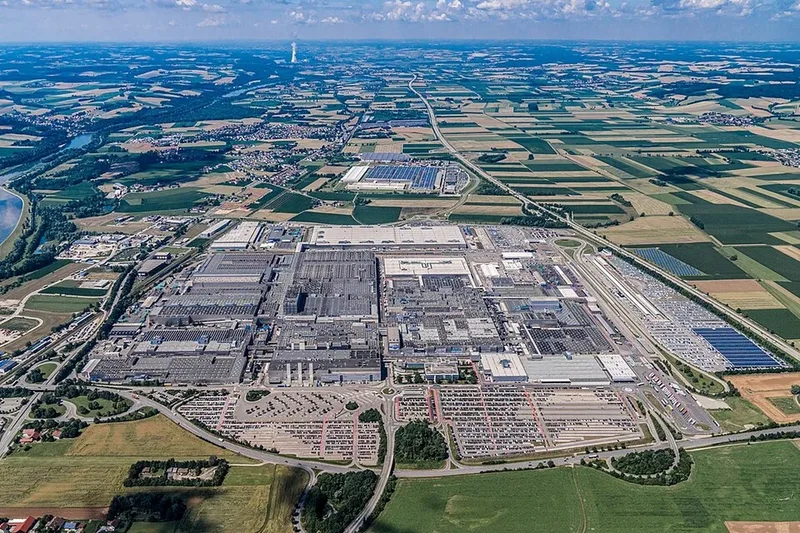
BMW is building a new plant at Debrecen in Hungary, investing more than €2 billion. It is designed to build about 150,000 all-electric cars a year, according to BMW.
In August 2024 the paint shop became the first part of the plant to go into operation, ahead of pre-series production at the end of the year.
BMW said the paint shop uses a power-to-heat process, supplying heat entirely from electricity rather than natural gas. It became the first paint shop in BMW’s global network to operate without fossil fuels.
It was designed to paint 30 car bodies an hour in a fully automated process, a figure that can be increased later.
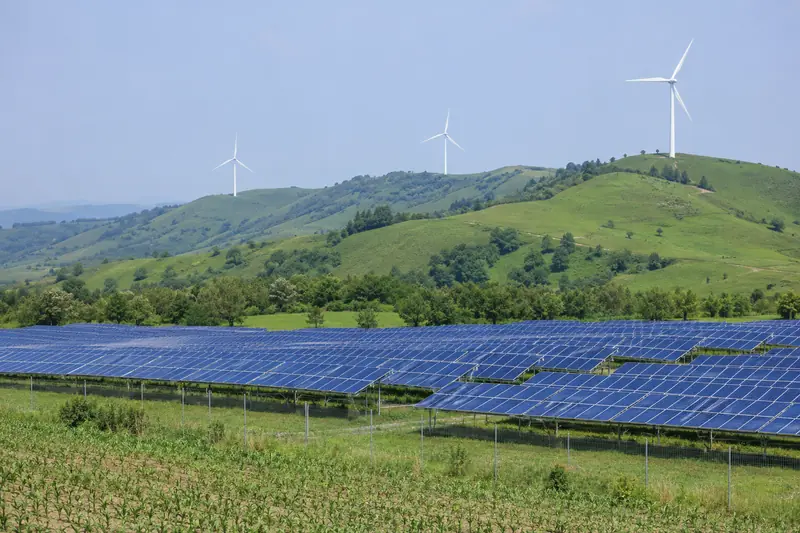
To supply renewable power, BMW contracted E.ON Hungária to build a 43-megawatt solar park on the site, covering about 500,000 square metres and due to start operating at the end of 2025.
BMW said Debrecen would be its first car plant to rely entirely on renewable electricity in normal operation.
Series production of the new iX3, the first Neue Klasse model, began at Debrecen in late October 2025.
The exhibit shows the scale of the Debrecen project. A 43-megawatt solar park on site supplies part of the plant’s renewable power.
Electrifying industrial heat is one of the hardest parts of decarbonisation, because many processes need high temperatures.
Paint shops are good candidates because their temperatures are moderate compared with steelmaking or glassmaking.
Building a new plant without gas avoids the cost of converting it later.
Higher electricity demand means the plant depends heavily on reliable and affordable power supply.
Electricity prices in Europe rose sharply in 2022, showing that this dependence carries cost risk.
On the other hand, gas prices also rose, and carbon prices in the EU add to the cost of burning fossil fuels.
Investors following ESG factors watch such projects closely as signs of credible climate plans.
Other carmakers are also working to remove gas from their paint shops.
For students, the case shows how energy choices shape a factory’s costs for decades.
Key concept: capital versus operating spending. Capital expenditure, or capex, buys long-lived assets such as factories, machines and tooling; its cost is spread over many years through depreciation. Operating expenditure, or opex, covers day-to-day costs such as wages, energy and materials.
The distinction matters because capex commits a company for years. Once a plant or production line is built, it must be used at high volume to earn back its cost, so capex decisions are among the most important a manager makes.
Key concept: ESG investing. ESG stands for environmental, social and governance factors. Many investors now consider how companies manage emissions, resources, workers and communities alongside financial results.
For manufacturers, energy use, water, materials and supply-chain emissions are major ESG issues, and credible measurement is essential so that claims can be checked.
Key concept: operating leverage. A business with high fixed costs and low variable costs has high operating leverage: once fixed costs are covered, each additional sale adds a large amount of profit. Car making is a classic example, with heavy spending on design, tooling and plants.
The flip side is that falling sales hit profits hard, because fixed costs remain. That is why car makers care so much about keeping factories busy.
Key concept: net present value. Net present value (NPV) compares the money an investment will bring in over its life with what it costs today, after adjusting future cash for the time value of money. A positive NPV suggests the investment adds value.
The internal rate of return (IRR) is the discount rate at which NPV equals zero. Both measures depend heavily on forecasts of future demand, which are uncertain for new technologies.
Key moments
The Hungarian site specifies gas-free paint operations
Paint shop comes on stream
The process supports vehicle preparation
Source: BMW Group, 2024.
The trade-offs at the heart of the case
A closer look
An electric oven changes the power the site must be able to draw during a cold start. Compare that peak with the average draw once production has settled. A favourable average price per kilowatt-hour can coexist with a costly connection upgrade or demand charge. The relevant comparison gives the paint shop enough heat to produce acceptable surfaces under both conditions.
The alternative on the table
For comparison, consider the option to use conventional gas-fired heat in the paint process. The related case “A paint shop built for a water-constrained site” supplies a useful reference point. BMW opened its San Luis Potosí factory in 2019 to build the 3 Series. Another site’s water-saving paint system cannot establish the return on Hungarian electric heat. Price local grid capacity, seasonal demand and rejected paintwork. The finish standard is the common output that makes the alternatives comparable.
For your seminar, paper or interview
- Q1
What power costs appear during a paint oven’s cold start?
- Q2
Which finding in the records on heat delivered at operating temperature per unit of electricity would persuade you to use conventional gas-fired heat in the paint process?
- Q3
Compare this decision with “A paint shop built for a water-constrained site”. Which difference between the cases would change your recommendation?
- Electrification of heat
- Energy strategy
- Greenfield plants
- Decarbonisation
How we would approach it
Simplifying Finance’s opinion, offered as a starting point for debate, not as fact or investment advice.
We think running the Debrecen paint shop on electricity instead of gas was a sound decision for a new plant. The paint shop is usually a factory’s largest energy user, so removing gas cuts emissions sharply and reduces exposure to gas prices. The trade-off is higher electricity demand, which makes renewable supply essential.
Electrify heat
Use power-to-heat instead of gas burners.
Secure clean power
Pair the plant with solar and renewable supply.
Design in from day one
Build new plants fossil-free.
What this plan gives up
Electric heat raises power demand and depends on grid supply.
The strongest counter-argument
Some argue gas is cheaper and more reliable for high-temperature processes.
Metrics to watch
- Energy cost per car
- CO2 per car
Propose your solution
Pick a discussion question and set out what you would do, why, and what it would cost. Strong, well-argued answers are reviewed and published below with your first name and programme.
Published solutions
Loading published solutions…
- BMW Group PressClub • Things get colourful in Debrecen – Paint shop becomes first technology to go on-stream at new BMW Group plant ↗
- BMW Group PressClub • Source document — Taking the gas boiler out of the paint-shop decision ↗
- BMW Group PressClub • Paint shop becomes first technology to go on-stream at Debrecen ↗
- BMW Group PressClub Hungary • Debrecen solar park ↗
- BMW Group PressClub UK • Debrecen set to begin series production of the iX3 ↗
- Photo: BMW iX3 NA5 IAA 2025 DSC 1685 by Alexander Migl, CC BY-SA 4.0 (cropped and resized) ↗
Figures are as reported by the companies or cited outlets as of 22 November 2026. Check the source before quoting. Corrections: let us know through the solution form.