What happened
The project engineer described an initial 450-litre-per-second module supplying Chañaral, Caldera, Copiapó and Tierra Amarilla, within a three-stage design for 1,200 litres per second. The industry inventory also records 450 litres per second as installed nominal capacity. The first module therefore represents 37.5% of the eventual design scale. The difference is possible future capacity. It cannot enter a present supply forecast as if equipment had already been commissioned.
The operational test begins at the household meter. Treatment capacity on the coast must be matched by pumping stations, storage, distribution and sufficient electricity. A litre sent out but lost in the network still incurs treatment and pumping costs. A leak-reduction programme can therefore compete with the next module for capital. Its output is water saved at the place and time of demand, which can have a different value from additional coastal production.
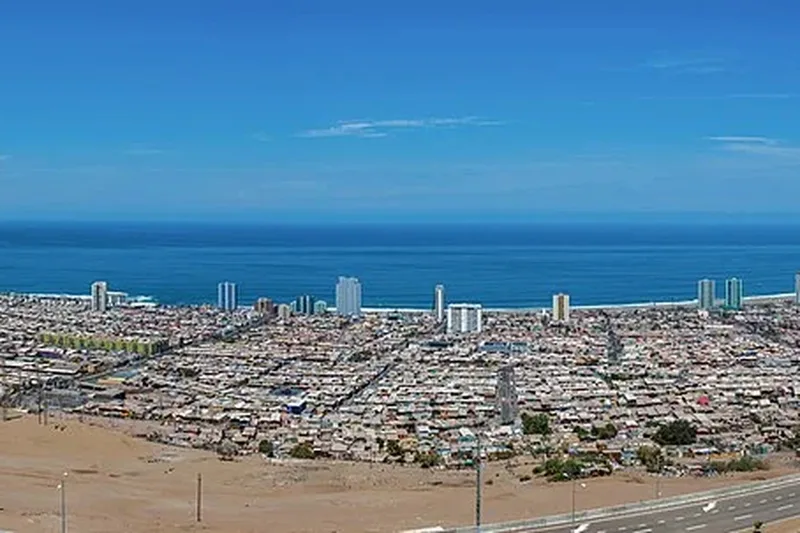
The Atacama region is one of the driest inhabited areas in the world. Its main city, Copiapó, has relied heavily on aquifers that have been severely depleted by farming, mining and urban use.
ECONSSA, a state-owned company, holds the water rights and infrastructure for several regional water services in Chile, including Atacama.
The desalination plant was designed in three stages, reaching an eventual capacity of 1,200 litres per second. The first module provides 450 litres per second for Chañaral, Caldera, Copiapó and Tierra Amarilla.
Staging capacity allows an operator to match investment with demand. The first module carries a lower initial cost, and later modules can be added when needed.
However, some shared infrastructure, such as seawater intakes, pipelines and power connections, may need to be built at full size from the start, which raises the cost of the first stage.
Desalinated water is usually more expensive than water from rivers or aquifers, mainly because of the energy needed to remove salt and pump water inland.
The plant reduces pressure on aquifers, giving them a chance to recover if extraction is also controlled.
Other arid regions, from Israel to Western Australia, rely on desalination for much of their urban water supply.
The cost per cubic metre is the key measure for comparing the plant with other water sources. It includes both the capital cost spread over the plant’s life and the operating cost of energy, chemicals and maintenance.
Energy prices in Chile have fallen with the growth of solar power, which could make desalination cheaper over time, especially if plants can operate when electricity is cheapest.
The brine left over after desalination must be returned to the sea carefully to avoid harming marine life, which adds design and monitoring costs.
Water tariffs in the region must cover the plant’s costs, but affordability is a concern for households, especially in poorer communities.
The Atacama region also suffered severe floods in 2015, which damaged water infrastructure and showed that dry regions can face extreme events in both directions.
For students, the case shows how staged investment can reduce risk while ensuring that infrastructure keeps pace with demand.
It also raises questions about who should pay for new water sources when aquifers have been depleted by many users, including mines and farms.
The plant’s operation provides a benchmark for other coastal towns in northern Chile considering desalination.
Over time, its reliability during dry years will be the clearest measure of its value.
Its long-term success will depend on stable operations and fair pricing for residents.
Both are key tests for the state company that owns it.
The experience will also inform later stages of the project.
Those stages will need careful planning.
Key moments
The project engineer reports the initial 450-litre-per-second module in operation.
Ultimate planned scale reaches 1,200 litres per second.
Source: project engineer, cited in the case.
The trade-offs at the heart of the case
One coast supplies two very different customers
A mine and a municipal utility can both describe desalination capacity in litres per second. Their revenue and welfare tests differ at the delivery point. Escondida can use dependable water to support ore processing, so the value of an interruption depends on the production it strands. The Atacama municipal system delivers a household service, and failure can impose costs on customers that the water tariff never captures. At both sites, counting output at the treatment plant can hide expensive pumping or losses inland. An analyst could compare the energy used to deliver a cubic metre and still reach opposite conclusions about the appropriate level of backup. The next question is who bears the loss in a critical hour, who is contractually entitled to compensation and how much of that loss justified the original investment.
Our assessment
I would stage the next investment around measured dry-period demand, network losses and lead time. Waiting for every apparent litre of spare capacity to vanish could leave customers exposed during construction. Building immediately could lock households into costs they will carry for years before needing the water. Reserve the land and interfaces needed for expansion while making the installation decision dependent on observables the utility can audit.
For your seminar, paper or interview
- Q1
Which shared facilities justify building ahead of demand?
- Q2
When would leak reduction displace the need for the next module?
- Q3
How would you compare a new coastal litre with a litre saved in Copiapó?
- Q4
Which observations would verify demand at the time and location the capacity is available?
- Q5
Would a smaller fixed commitment or a guaranteed unit margin give better downside protection?
- Desalination
- Staged capacity
- Public water companies
- Drought response
How we would approach it
Simplifying Finance’s opinion, offered as a starting point for debate, not as fact or investment advice.
We think building desalination in stages was a prudent approach for the Atacama region. Starting with one module limited the initial cost while securing water for several towns, but each later stage must be justified by demand and by the cost of desalinated water.
Build in stages
Add modules as demand grows.
Measure output
Compare actual flow with capacity.
Control costs
Monitor energy use per cubic metre.
What this plan gives up
Staged capacity reduces risk but may require costly later expansions.
The strongest counter-argument
Some argue aquifer recovery should come before new supply.
Metrics to watch
- Water delivered
- Cost per cubic metre
Propose your solution
Pick a discussion question and set out what you would do, why, and what it would cost. Strong, well-argued answers are reviewed and published below with your first name and programme.
Published solutions
Loading published solutions…
- GSI Ingeniería · Operation of the initial Atacama module ↗
- ACADES · Chilean desalination plant inventory ↗
- Photo: Bahia Inglesa by user:Dixjonny, Public domain (cropped and resized) ↗
Figures are as reported by the companies or cited outlets as of 22 November 2026. Check the source before quoting. Corrections: let us know through the solution form.