What happened
Start from the investment committee’s bank account. Cash paid to an existing owner cannot also pay a contractor unless it comes back as an explicit contribution. Cash subscribed into a project belongs on its funding schedule. A contingent amount belongs in the state of the world that activates it. A guarantee may carry real value even though nobody transfers cash on signing day. The same principle applies to future calls on shareholders if construction costs exceed budget.
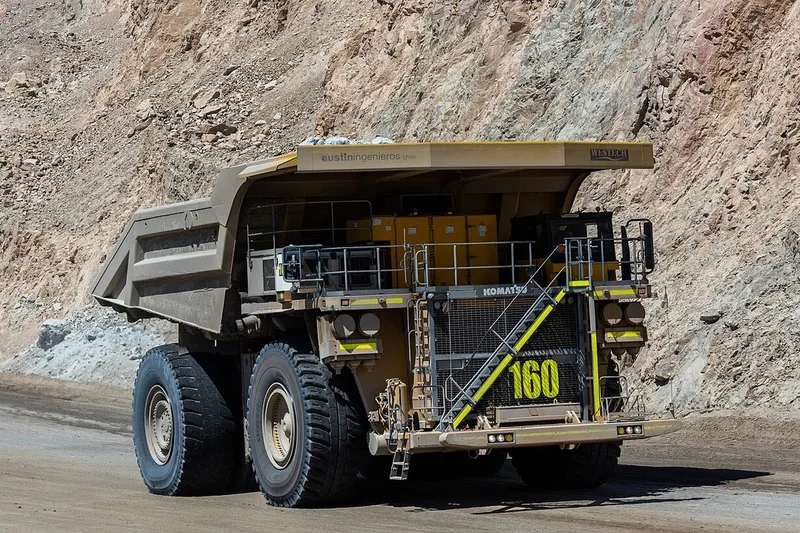
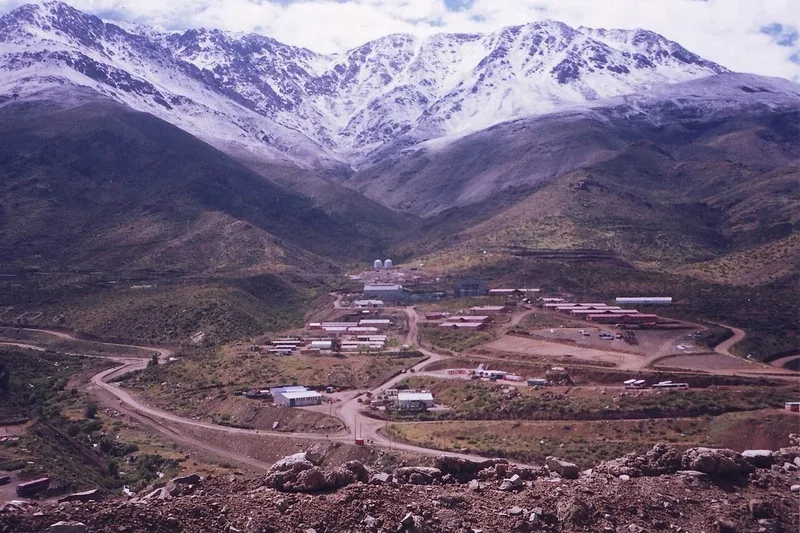
Quebrada Blanca is a copper mine in the Tarapacá region of northern Chile, high in the Andes. Its second phase, QB2, was designed to process large volumes of lower-grade sulphide ore and make it one of the world’s largest new copper operations.
In December 2018 Teck’s board approved full construction of QB2 and announced that Sumitomo Metal Mining and Sumitomo Corporation would acquire a 30 percent indirect interest in the project company.
The partners agreed to pay US$1.2 billion: an US$800 million earn-in contribution and a US$400 million matching contribution. They also agreed to pay Teck an extra US$50 million if the mill reached a target throughput of 154,000 tonnes per day by the end of December 2025.
After the deal Teck held 60 percent, the Sumitomo companies 30 percent and ENAMI, Chile’s state mining company, 10 percent as a carried interest that did not require funding.
Teck said the deal and planned project finance reduced its equity contribution towards the then-estimated US$4.739 billion capital cost to US$693 million.
The structure matters for analysis. Cash paid into the project funds construction, while cash paid to Teck as seller rewards existing shareholders. A conditional payment depends on future performance and should be valued accordingly.
Construction costs later rose well above the original estimate, and first concentrate was produced in March 2023, later than first planned.
Partnerships with Japanese trading and smelting companies are common in Chilean copper, where they provide funding and secure supplies of concentrate for Japan’s smelters.
Earn-in agreements are common in mining. A partner commits to fund a certain amount of project costs in exchange for an equity stake, which allows the original owner to keep developing the project without raising all the capital itself.
Matching contributions work differently. After the earn-in is spent, each partner contributes in proportion to its stake, so the cost of construction is shared from that point.
The conditional payment of US$50 million is a contingent consideration. Its value depends on the probability that the throughput target is met by the deadline, so analysts discount it rather than counting it at full value.
QB2 was expected to produce about 316,000 tonnes of copper equivalent a year in its first five years, which would roughly double Teck’s copper output.
When construction costs rise, the partners must decide how to fund the overrun. Under matching arrangements, each pays its share, which can strain budgets if increases are large.
The project also involved a desalination plant and a long pipeline to supply water from the coast, as well as a new port facility for shipping concentrate.
For students, the case shows how a headline deal value can combine very different kinds of payment, each with its own timing and risk.
Teck later agreed to merge with Anglo American, and QB2 remained one of its most important assets, underlining the strategic value of the project.
That makes the original partnership terms a useful reference point.
It shows how partnership choices made early can shape a company’s options for years.
Key moments
Teck approves full construction of QB2 and announces the partner financing.
Earn-in, matching contributions and conditional payments have different triggers.
Sources: Argus; Engineering News (December 2018).
The trade-offs at the heart of the case
An ownership percentage needs a funding history
The Quebrada Blanca and CSAV transactions both left a corporate investor with a large minority interest. At the copper project, new partners agreed to participate while construction still lay ahead. In container shipping, a business contribution and a subsequent capital subscription changed CSAV’s holding in two distinct steps. The appropriate comparison is the cash and assets committed per unit of future exposure, including contingent commitments. Comparing percentages alone loses the direction of payment and the date on which risk passes. A useful board exhibit would have a row for every transfer of cash or productive assets, with the transferor, recipient, rights acquired and resulting ownership. Then add a final column showing the next occasion on which the new owner could be asked to contribute again. That last column often contains the price of staying in the investment.
Our assessment
For the incumbent, accepting dilution can buy the ability to keep another investment alive. For the new shareholder, a small interest may offer exposure to decades of copper output but little unilateral influence over capital calls. I would price information rights and the process for approving overruns alongside the ownership percentage. Before treating the sale as a valuation comparable, reconstruct debt, cash, remaining expenditure and payment dates at the same point in time.
For your seminar, paper or interview
- Q1
Which party benefits if the project is delivered early?
- Q2
When would a guarantee be worth more than an equal cash contribution?
- Q3
What would have to be true before dividing the headline by 30% produced a useful valuation?
- Q4
Which operating-entity restriction would most reduce the money that can be moved upstream?
- Q5
Would retained earnings support long-run value while creating a short-term need for shareholder funding?
- Joint ventures
- Earn-in agreements
- Project finance
- Partner selection
How we would approach it
Simplifying Finance’s opinion, offered as a starting point for debate, not as fact or investment advice.
We think Teck’s partnership with Sumitomo was a smart way to fund QB2 while keeping control. Most of the money went into the project rather than to Teck directly, reducing Teck’s equity needs, though later cost increases showed that partnership terms cannot remove construction risk.
Structure contributions
Direct partner money into the project.
Keep control
Retain a majority to run operations.
Plan for overruns
Agree how extra costs are shared.
What this plan gives up
Partners reduce funding needs but share future profits.
The strongest counter-argument
Some argue Teck sold the stake too cheaply before the project proved itself.
Metrics to watch
- Project cost to completion
- Mill throughput versus target
Propose your solution
Pick a discussion question and set out what you would do, why, and what it would cost. Strong, well-argued answers are reviewed and published below with your first name and programme.
Published solutions
Loading published solutions…
- Sumitomo Metal Mining · Acquisition of an interest in Quebrada Blanca ↗
- Teck · QB2 construction approval and earn-in terms, filed with the SEC ↗
- Argus • Teck sells stake in Chile copper project to Sumitomo ↗
- Engineering News • Sumitomo buys $1.2bn stake in Teck’s Quebrada Blanca ↗
- Mining Technology • SMM and SC acquire Quebrada Blanca stake ↗
- Photo: Vista de Iquique, Chile, 2016-02-11, DD 01-06 PAN by Diego Delso, CC BY-SA 4.0 (cropped and resized) ↗
Figures are as reported by the companies or cited outlets as of 22 November 2026. Check the source before quoting. Corrections: let us know through the solution form.