What happened
Codelco inaugurated the first underground phase in August 2019 after more than a century of open-pit operation. Its project description puts the extension of the division’s life at a minimum of forty years and identifies block caving as the extraction method. In broad terms, broken ore is drawn from below. Access tunnels, material handling and ventilation must already be in place for that flow to reach a concentrator. The engineering choice therefore changes the timing of cash commitments as well as the mining cost.
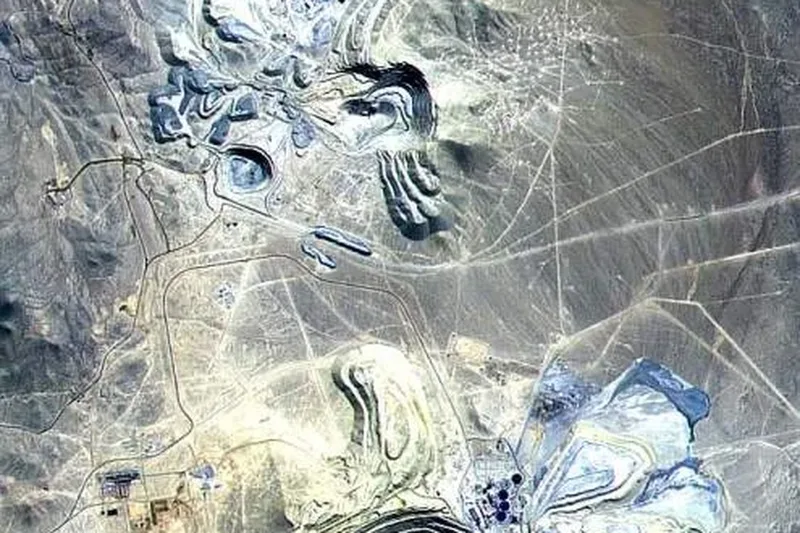
Chuquicamata, in Chile’s Antofagasta region, is one of the largest and oldest open-pit copper mines in the world. It reached commercial production in 1915 and has been operated by Codelco, the state copper company, since Chile nationalised its copper industry.
After a century of digging, the pit had become extremely deep. Haul trucks had to travel ever longer distances to bring ore to the surface, raising costs, while ore grades declined.
Codelco decided to convert the mine to underground operation using block caving, a method in which ore is undercut so that it breaks under its own weight and is drawn out from below.
The first underground phase was inaugurated in August 2019. Codelco said the conversion would extend the division’s life by at least forty years.
Costs rose over time. Industry reports described an estimate of about US$4.2 billion during development, around US$5.5 billion at inauguration and about US$5.7 billion spent by 2023, when Codelco planned a further US$720 million to help the mine reach its authorised capacity.
The ramp-up has been slower than planned, contributing to a fall in Codelco’s total output to its lowest level in about 25 years in 2023.
Automation was a major part of the plan. Bloomberg reported that machines would replace about a third of the workforce, and Codelco expected productivity per worker to rise.
Large underground conversions elsewhere, such as Grasberg in Indonesia and Palabora in South Africa, have also faced long ramp-ups and technical challenges.
The economics of block caving differ from open-pit mining. Upfront development costs are very high, because tunnels, drawpoints and ventilation must be built before large-scale production begins. Once running, however, operating costs per tonne can be lower than in a deep pit with long truck hauls.
Ramp-up risk is the main challenge. If the cave does not propagate as expected, or if rock conditions are worse than modelled, production can fall short for years. That delays the revenue needed to recover the investment.
For Codelco, which transfers its profits to the state, delays at Chuquicamata also affected public finances and the company’s ability to fund other projects without borrowing.
Codelco financed part of the conversion through bond issues, including long-term bonds sold to international investors.
For students, the case shows why the net present value of a project depends heavily on timing: the same total output delivered later is worth less today.
It also illustrates the sunk-cost problem. Once billions have been spent, the decision to invest more should depend on the future returns of the additional spending, not on the amount already spent.
The case also shows how an old asset can be renewed rather than abandoned. Chuquicamata’s smelter, workforce and infrastructure gave the underground project advantages that a completely new mine would not have had.
Its progress will remain an important indicator of Codelco’s overall recovery in production.
Few mining projects anywhere have attempted a transition on this scale.
Its lessons apply to ageing mines worldwide.
Key moments
More than a century of open-pit extraction precedes the change.
Codelco inaugurates the first underground phase.
Sources: E&MJ; Bloomberg (2019); Mining Technology (2023).
The trade-offs at the heart of the case
Two ways of replacing an industrial asset
Codelco’s underground transition and Arauco’s new pulp line each put a large new asset beside an older means of production. A board presentation that compares the new asset with zero makes either investment look better than a realistic alternative. At the mine, the old pit has a changing cost curve and may remain useful as a bridge. At the pulp mill, the old line’s retirement reduces the net capacity addition, and quality acceptance can delay sales from the new line. Ask each operator to identify the first month in which the old and new plans generate different cash receipts. Then identify the first month in which their cash payments diverge. The interval between those dates is where a superficially attractive replacement can put the company’s funding under the most pressure.
Our assessment
A defensible transition would protect the shared mill from a gap between fading pit output and a slow underground ramp. Keep the ability to blend ore or use a stockpile where engineering and safety permit. Put a price on that bridge, including the cost of tying up metal and rehandling it. An orderly decline in production can still be cheaper than paying indefinitely for two parallel operating systems.
For your seminar, paper or interview
- Q1
Which early operating measure would reveal a delay before annual copper sales show it?
- Q2
How would a higher copper price affect the last pit cut and the underground expansion differently?
- Q3
What evidence would justify eliminating the transition stockpile?
- Q4
Would paying to accelerate construction recover a full year of receipts or only change their timing?
- Mine life extension
- Capital allocation
- Cost overruns
- Automation and productivity
How we would approach it
Simplifying Finance’s opinion, offered as a starting point for debate, not as fact or investment advice.
We think going underground was the right choice for Chuquicamata, because the open pit had become too deep and costly. But rising costs and a slow ramp-up show that mine-life extensions must be judged on realistic schedules, not just on the size of the remaining ore body.
Plan the ramp-up
Budget for years of reduced output.
Control costs
Track spending against each phase.
Invest in people
Retrain workers for automated systems.
What this plan gives up
Extending a mine preserves jobs and output but at high upfront cost.
The strongest counter-argument
Some argue the capital could earn more in newer deposits.
Metrics to watch
- Ore processed per day
- Cost per pound of copper
Propose your solution
Pick a discussion question and set out what you would do, why, and what it would cost. Strong, well-argued answers are reviewed and published below with your first name and programme.
Published solutions
Loading published solutions…
- Codelco · Chuquicamata Underground project milestones ↗
- Codelco · Opening the underground phase ↗
- Presidency of Chile · Chuquicamata underground inauguration ↗
- International Mining · Underground mine opening and transition ↗
- E&MJ • Chuqui Underground: a huge transition ↗
- Bloomberg • Machines replace a third of workforce at giant copper mine (2019) ↗
- Mining Technology • Codelco plans additional $720m at Chuquicamata ↗
- Fastmarkets • Codelco starts underground phase at Chuquicamata ↗
- Photo: Mina de Chuquicamata, Calama, Chile, 2016-02-01, DD 115 by Diego Delso, CC BY-SA 4.0 (cropped and resized) ↗
Figures are as reported by the companies or cited outlets as of 22 November 2026. Check the source before quoting. Corrections: let us know through the solution form.