What happened
In August 2024 CAP announced that its steel subsidiary’s board had decided to suspend steelmaking indefinitely. The company explained that it had been unable to translate surcharges on competing Chinese steel into acceptable prices. CAP also indicated that non-steelmaking activities would continue. A shutdown model therefore needs a precise boundary. Payroll, land, shared utilities and obligations may sit across several activities, only some of which cease when steel production stops.
Take a customer buying an input for downstream production. It can accept a higher domestic quote, use inventory, negotiate a different specification or seek another supplier. A duty on one import flow changes one of those options. It does not remove the others. The mill’s relevant cash margin is the net selling price after customer terms less the avoidable cost of fulfilling the order. Allocated corporate overhead tells the board very little about the cash saved next month by pausing production.
A steel order might generate 100 in cash revenue, require 86 in avoidable production and freight, and attract 20 in allocated fixed overhead. It shows a six-unit accounting loss on a full-cost basis but contributes fourteen units toward costs that may continue through a short shutdown. If keeping the furnace running also triggers 22 of avoidable fixed costs for this order alone, accepting it instead destroys eight units. These are two different decisions. Managers must identify the batch of orders that jointly sustains a furnace campaign and compare its cash contribution with all costs that become avoidable over that same horizon.
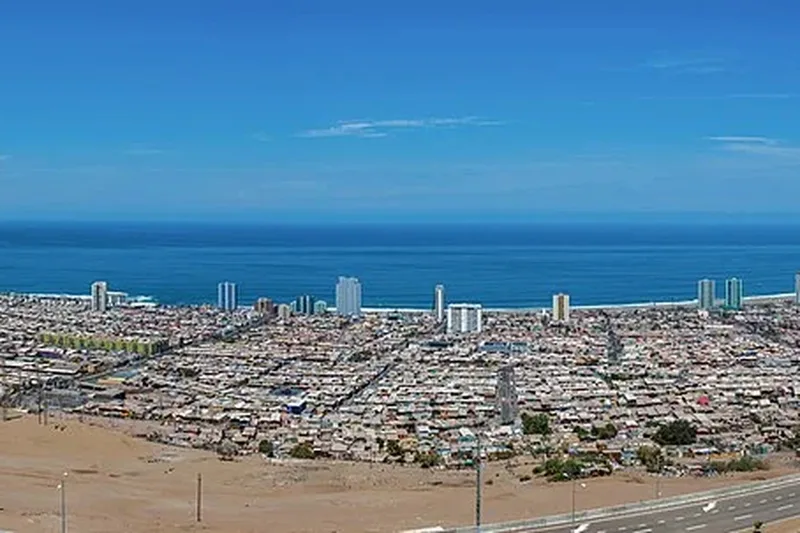
Compañía Siderúrgica Huachipato, owned by CAP, operated Chile’s only integrated steel mill, in Talcahuano in the Biobío region. It had been a major employer in the region for decades.
In recent years, large volumes of low-priced steel from China reached Latin American markets. Chinese steel exports to the region grew sharply, putting pressure on local producers.
Chile’s Anti-Distortion Commission investigated imports of Chinese steel bars and grinding balls, which are used by mining companies. Initial provisional duties were considered insufficient by Huachipato, which announced a suspension in March 2024.
In April 2024 the commission set provisional anti-dumping duties of 24.9 percent on steel bars for grinding balls and 33.5 percent on grinding balls, and Huachipato reversed its suspension plan.
In August 2024 the board decided to suspend steelmaking indefinitely, saying it had been unable to translate the surcharges into acceptable prices. AFP reported that at least 2,700 workers were directly affected and up to 20,000 jobs indirectly linked to the plant.
CAP said non-steelmaking activities, such as port and logistics operations, would continue. The government announced a plan to support workers, suppliers and the regional economy.
Steelmaking has high fixed costs. When prices fall below the level needed to cover those costs, losses grow quickly, a pattern known as operating leverage.
Steel producers in many countries, from the United Kingdom to South Africa, have faced similar pressures and closures.
Tariffs on imported steel also raise costs for buyers. Mining companies use large quantities of grinding balls, so higher prices for those products increase the cost of producing copper.
Governments must therefore weigh protection for one industry against higher costs for others, a common tension in trade policy.
The Anti-Distortion Commission later ended its investigation early after Huachipato withdrew its request, since the company was no longer producing steel.
For the Biobío region, the closure ended an era that began in 1950, when the mill started operating. The plant had shaped Talcahuano’s economy, schools and neighbourhoods for generations.
Chile now relies on imports for most of its steel, which raises questions about supply security that are debated in many countries.
Recovering from such a closure takes time and coordinated public and private effort.
It remains one of the most significant industrial closures in Chile’s recent history.
Key moments
Temporary trade measures change the backdrop for steel pricing.
CAP announces the board’s suspension decision.
Source: Chile’s Anti-Distortion Commission, via AmericaEconomía.
The trade-offs at the heart of the case
Closing an industrial site and advancing a closure are different decisions
Huachipato faced a choice about whether its steel business could sustain operations when protection failed to translate into workable customer prices. Tarapacá already had a scheduled retirement, so Enel was choosing what to do with a limited number of remaining months. A comparison based on lifetime accounting losses would confuse those decisions. In both cases some workers, obligations and shared facilities remain after shutdown, while the benefit of continuing depends on demand during a particular window. Ask the steelmaker for orders it can actually fulfil profitably and the generator for hours in which it could actually be dispatched. Then estimate the cost of keeping each option open. The private decision can be rational even if a community loses an important employer, making a separate, transparent public appraisal essential.
Our assessment
A temporary loss can be worth bearing if it buys a credible path to profitable contracts. I would seek binding volume, price and duration commitments before counting that path as a recovery plan. Preserve an explicit estimate of restart costs, closure obligations and the cost borne by workers and suppliers. A government assessing intervention has a wider objective than the mill’s board, and should state whose losses it proposes to absorb.
For your seminar, paper or interview
- Q1
What evidence would demonstrate that buyers accepted the surcharge?
- Q2
How should restart costs influence a temporary operating loss?
- Q3
Who bears the cost if a minimum-volume customer agreement ends early?
- Q4
Would paying to accelerate construction recover a full year of receipts or only change their timing?
- Trade remedies
- Import competition
- Plant closures
- Regional economics
How we would approach it
Simplifying Finance’s opinion, offered as a starting point for debate, not as fact or investment advice.
We think the Huachipato case shows the limits of trade protection. Temporary tariffs could not offset a deep cost gap with imported steel, and a plant that cannot cover its costs at market prices faces difficult choices regardless of short-term relief.
Assess competitiveness
Compare costs with global producers.
Support workers
Plan retraining and transition.
Redeploy assets
Use port and land for new activities.
What this plan gives up
Tariffs protect jobs short term but raise costs for steel users.
The strongest counter-argument
Supporters argue a domestic steel industry has strategic value.
Metrics to watch
- Steel import prices
- Regional employment
Propose your solution
Pick a discussion question and set out what you would do, why, and what it would cost. Strong, well-argued answers are reviewed and published below with your first name and programme.
Published solutions
Loading published solutions…
- CAP · Board decision to suspend Huachipato steelmaking ↗
- CAP · Integrated Annual Report 2024 ↗
- AmericaEconomía • Huachipato suspends operations (August 2024) ↗
- AmericaEconomía • Huachipato will reverse suspension plan after surcharges (April 2024) ↗
- AFP via MENAFN • Chile’s largest steelmaker suspends production ↗
- Photo: Empresa Huachipato by User:Daga, CC BY 2.5 (cropped and resized) ↗
Figures are as reported by the companies or cited outlets as of 22 November 2026. Check the source before quoting. Corrections: let us know through the solution form.