What happened
The 2025 environmental-assessment notice for Puerto Exterior describes two terminals and five operating growth phases, with an eventual capacity of up to six million twenty-foot equivalent units per year. A TEU is a measure of container capacity. An ultimate design figure in an environmental submission is a proposal rather than a traffic forecast, a concession award or a completed facility.
Separate common marine works from equipment that can be installed as demand arrives. Breakwaters and access channels can have large minimum efficient sizes. Cranes and yard equipment can be added in smaller increments. Building common works early may preserve an option to expand. The option has value only if later demand, environmental compliance, road or rail access and terminal productivity make exercise financially sensible.
A vessel shifts 50,000 annual TEU from a neighbouring Chilean terminal to the new port. The new terminal has 50,000 units of activity on its books. The country has no additional international trade volume from the transfer alone. National benefits may still arise through shorter inland journeys, less waiting or reduced handling cost, net of congestion and environmental effects. Another group of shipments might be genuinely new because the improved service makes an export competitive. Keep both groups in the operator’s revenue case, then value the distinct changes in resources and user welfare in the public appraisal.
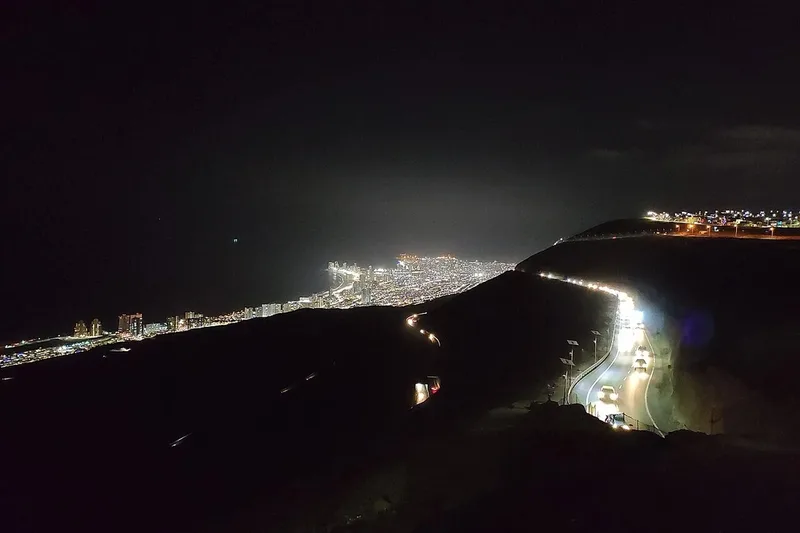
San Antonio, about 110 kilometres west of Santiago, is Chile’s busiest port by cargo. It handles containers, vehicles and bulk goods for the central region.
Container ships have grown much larger in recent decades. The biggest vessels now exceed 400 metres in length and need deep berths and large cranes. San Antonio’s existing terminals cannot handle the largest ships at full capacity.
Puerto Exterior is a planned new port built outside the existing harbour. The 2025 assessment documents describe two terminals and five operating growth phases, with an eventual capacity of up to six million twenty-foot equivalent units a year.
The project is estimated to cost about US$4.45 billion, making it the largest port investment in Chile’s history. The state port company, Empresa Portuaria San Antonio, would fund about US$1.95 billion for breakwaters and basic infrastructure, with private concessionaires building and operating the terminals.
The first phase, with an 865-metre berth and capacity of about 1.5 million TEU, is expected to enter service around 2036.
In May 2026 the regional environmental commission unanimously approved the project after about six years of assessment.
Competition is increasing on South America’s Pacific coast. Peru’s Chancay port, opened in 2024, aims to attract cargo from the region, and some commentators have questioned whether San Antonio is the best location for such a large investment.
Ports in Asia and the Middle East have shown how large, efficient terminals can become regional hubs.
Port investment decisions depend on long-term forecasts of trade volumes, ship sizes and the competitiveness of rival ports. Errors in those forecasts can leave expensive infrastructure underused or, conversely, cause congestion.
Building in phases reduces this risk. Each new terminal can be added when demand justifies it, and concession tenders can reveal how much private operators are willing to invest.
Inland connections are equally important. A large port needs efficient road and rail links to move containers to Santiago and other regions.
Breakwaters and dredging, which the state port company will fund, are long-lived assets that benefit all terminals, which is why they are often publicly financed.
Environmental and social considerations were part of the long assessment, including effects on the coast, fishing communities and the town of San Antonio.
For students, the case illustrates scenario analysis: comparing the project’s value under high, medium and low trade growth helps decide when and how much to build.
Key moments
EPSA reports submitting a complementary environmental addendum.
The published notice describes the two-terminal, five-phase proposal.
Sources: Marca Chile; gCaptain.
The trade-offs at the heart of the case
Paying for information before installing capacity
At Cerro Pabellón the risk beneath the project is geological. At San Antonio the uncertainty includes ship calls, customer volumes and the timing of permission to expand. Both developers can spend money to learn before buying the next major item of capacity. A well test gives physical evidence from a specific location, while a shipper survey can collect answers from parties that benefit from having more port options without ever promising to use them. The test must therefore be judged by what constrains the respondent. A measured flow sustained under realistic operating conditions and a binding minimum-volume agreement carry more weight than an enthusiastic estimate. Even strong evidence has a finite life. Reservoir performance can evolve, trade routes can change and delayed infrastructure can render yesterday’s demand commitment commercially irrelevant.
Our assessment
I would compare the outer port with productivity improvements at existing facilities and demand displaced from other ports. A shipping line’s interest is useful evidence, but a commitment specifying volumes, vessel calls or minimum payments is stronger. Account for community and environmental impacts in the public appraisal, including mitigation and monitoring. Set separate triggers for proceeding with a shared breakwater and for fitting out the next terminal phase. The two commitments become irreversible at different moments.
For your seminar, paper or interview
- Q1
Which investment is difficult to stage and which can wait?
- Q2
How much diverted cargo should count as a national economic benefit?
- Q3
What sort of shipping commitment would justify the next phase?
- Q4
What would you need to observe for the next commitment to become irreversible?
- Q5
How would a weaker signal, or a lost selling season during testing, change the value of waiting?
- Port planning
- Public-private partnerships
- Staged capacity
- Trade growth
How we would approach it
Simplifying Finance’s opinion, offered as a starting point for debate, not as fact or investment advice.
We think Puerto Exterior is a necessary long-term investment for Chile’s main port, given rising trade and larger ships. Building it in phases is sensible, because demand forecasts decades ahead are uncertain and competition from other Pacific ports is growing.
Phase investment
Build terminals as demand grows.
Attract operators
Run competitive concession tenders.
Connect inland
Invest in road and rail links.
What this plan gives up
Large port projects secure future capacity but risk being built too early.
The strongest counter-argument
Some question whether San Antonio is the most efficient location.
Metrics to watch
- Container volumes
- Concession bids
Propose your solution
Pick a discussion question and set out what you would do, why, and what it would cost. Strong, well-argued answers are reviewed and published below with your first name and programme.
Published solutions
Loading published solutions…
- Diario Oficial · Puerto Exterior environmental assessment notice ↗
- Senate of Chile · Puerto Exterior and regional logistics, 2025 budget follow-up ↗
- Marca Chile • Puerto Exterior attracts global port players ↗
- gCaptain • Chile approves $4.45 billion outer port expansion ↗
- Ex-Ante • Environmental authority approves Puerto Exterior (May 2026) ↗
- Photo: San Antonio Port (Chile) by Patricio Mecklenburg (Metronick), CC BY-SA 3.0 (cropped and resized) ↗
Figures are as reported by the companies or cited outlets as of 22 November 2026. Check the source before quoting. Corrections: let us know through the solution form.