What happened
Enel and ENAP inaugurated Cerro Pabellón in 2017 with an initial 48 MW at an altitude of about 4,500 metres. At inauguration Enel Green Power Chile held 83.65% of the project company and ENAP 16.35%. The opening established that the initial plant could operate. It gives a later investment committee evidence about one part of the reservoir, while leaving the productivity and cost of an additional well uncertain.
A megawatt of installed turbine capacity creates little value without sufficient fluid at the right temperature and pressure. A new well may unlock output from existing equipment, replace decline in an older well or prove unsuitable. Each outcome has a different incremental cash flow. A production increase is especially valuable when it fills an existing power contract. A disappointing well may still generate information useful in locating the next one, provided the company retains that option and can afford to exercise it.
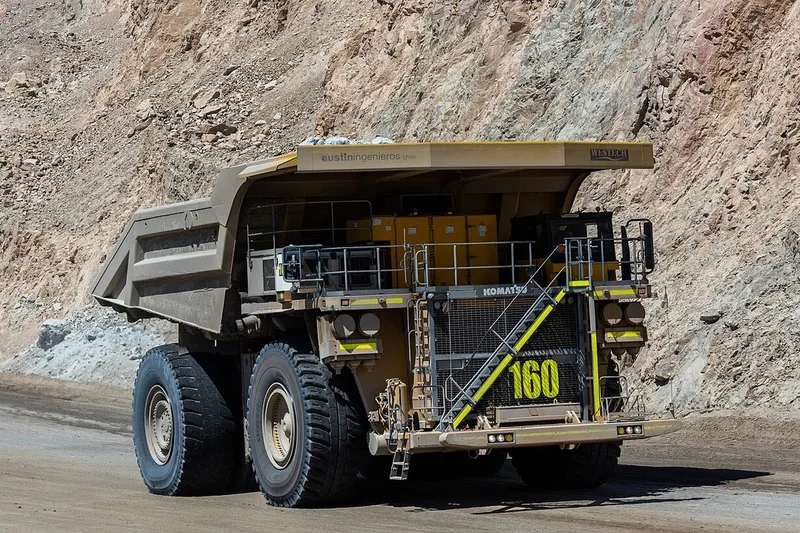
Cerro Pabellón, in the Antofagasta region near the Bolivian border, was South America’s first geothermal power plant. It sits at about 4,500 metres above sea level, making it one of the highest geothermal plants in the world.
Geothermal plants use heat from underground reservoirs of hot water and steam to drive turbines. Unlike solar and wind, they can produce power around the clock.
The plant was developed by Geotérmica del Norte, a company owned by Enel Green Power Chile and ENAP, Chile’s state oil company. At inauguration in 2017, Enel held 83.65 percent and ENAP 16.35 percent.
The initial plant had an installed capacity of 48 MW. A later unit expanded capacity further.
Geothermal development is risky because the size and quality of a reservoir are uncertain until wells are drilled and tested. Each well can cost millions of dollars, and some produce little steam.
The extreme altitude added challenges, including harsh weather, low oxygen for workers and difficult logistics.
Chile lies along the Pacific Ring of Fire and has considerable geothermal potential, but development has been slow because of high upfront costs and the long lead times of exploration.
Countries such as Iceland, Kenya, Indonesia and New Zealand have built large geothermal industries, often with state support for early exploration.
The economics of geothermal power differ from solar and wind. Most of the cost is incurred before production, in exploration and drilling. Once a plant is running, fuel costs are zero and operating costs are relatively low.
Geothermal plants also have high capacity factors, often running more than 90 percent of the time, which means each megawatt of capacity produces much more electricity over a year than a solar or wind plant.
This makes geothermal valuable for grid stability, since it provides constant output that does not depend on the weather.
Reservoir management is critical. If too much steam is extracted, pressure can fall and output decline. Operators often reinject water to maintain the reservoir.
ENAP’s participation brought state support to a high-risk project, while Enel contributed technical expertise from its geothermal operations in Italy, where the world’s first geothermal power plant was built.
For investors, the case illustrates exploration risk: money spent on wells that do not produce is lost, so the expected value of a project must account for the probability of failure.
Policies such as public exploration funds or risk-sharing mechanisms can encourage geothermal development by reducing this upfront risk.
Cerro Pabellón’s performance at extreme altitude has made it a reference for geothermal projects in other high Andean regions.
Its experience shows that renewable energy is not limited to sun and wind in Chile, and that the country’s volcanic geology could support further projects if risks can be shared.
Key moments
Enel Green Power Chile and ENAP participate through Geotérmica del Norte.
The initial 48 MW facility is inaugurated at Ollagüe.
Source: Enel, cited in the case.
The trade-offs at the heart of the case
Paying for information before installing capacity
At Cerro Pabellón the risk beneath the project is geological. At San Antonio the uncertainty includes ship calls, customer volumes and the timing of permission to expand. Both developers can spend money to learn before buying the next major item of capacity. A well test gives physical evidence from a specific location, while a shipper survey can collect answers from parties that benefit from having more port options without ever promising to use them. The test must therefore be judged by what constrains the respondent. A measured flow sustained under realistic operating conditions and a binding minimum-volume agreement carry more weight than an enthusiastic estimate. Even strong evidence has a finite life. Reservoir performance can evolve, trade routes can change and delayed infrastructure can render yesterday’s demand commitment commercially irrelevant.
Our assessment
I would separate exploration expenditure, replacement drilling and capacity expansion in the capital request. Require a reservoir model that reconciles new flow with the decline expected elsewhere, and a logistics allowance for a high-altitude site. The strongest reason to drill early is to learn before a contracted supply shortfall. The strongest reason to wait is that operating data from existing wells might resolve much of the same uncertainty at lower cost.
For your seminar, paper or interview
- Q1
How would you distinguish replacement output from genuine growth?
- Q2
What is the information value of an unsuccessful well?
- Q3
How should a power contract change the timing of the next drilling decision?
- Q4
What would you need to observe for the next commitment to become irreversible?
- Q5
How would a weaker signal, or a lost selling season during testing, change the value of waiting?
- Geothermal energy
- Exploration risk
- Joint ventures
- Baseload renewables
How we would approach it
Simplifying Finance’s opinion, offered as a starting point for debate, not as fact or investment advice.
We think Cerro Pabellón shows the value of geothermal power as a steady renewable source, but also its high exploration and development risk. Drilling at 4,500 metres is costly, and only careful testing reveals whether a reservoir can sustain production.
Test the reservoir
Monitor steam output over time.
Share risk
Partner with state companies on exploration.
Plan expansions
Add units once performance is proven.
What this plan gives up
Geothermal gives constant output but requires costly, risky drilling.
The strongest counter-argument
Some argue solar and batteries are now cheaper ways to decarbonise.
Metrics to watch
- Plant capacity factor
- Reservoir pressure
Propose your solution
Pick a discussion question and set out what you would do, why, and what it would cost. Strong, well-argued answers are reviewed and published below with your first name and programme.
Published solutions
Loading published solutions…
- Enel and ENAP · Cerro Pabellón inauguration ↗
- Enel and ENAP · Project announcement and ownership ↗
- Photo: Ollague Volcano from Chile by Barryalanwalker, CC BY-SA 3.0 (cropped and resized) ↗
Figures are as reported by the companies or cited outlets as of 22 November 2026. Check the source before quoting. Corrections: let us know through the solution form.