What happened
Enel disconnected the 158 MW coal plant at the end of December 2019. It said the closure had originally been scheduled for May 2020 and described the unit as a quarter of its Chilean coal capacity. The decision under examination is the acceleration. Crediting it with all the benefits of closing a plant that would otherwise have operated forever would dramatically overstate the choice available to the company.
Construct two short calendars. In one, the unit remains available through the planned closing date. In the other, it stops in December. Enter expected dispatch, fuel, staffing, maintenance and any contract replacement purchases under each. Some closure work merely moves forward in time. Some operating costs disappear. A fixed cost may continue until a supplier contract ends, even with zero generation. Financial statement depreciation can change with the revised asset life without producing a matching cash saving.
In June 2019 Chile’s government announced an agreement with the main generators, Enel, AES Gener, Colbún and Engie, to retire all coal-fired power plants by 2040. At the time there were 28 coal plants in six communes.
In 2018 coal plants accounted for about 17 percent of installed capacity but nearly 40 percent of electricity generation, showing how heavily the system relied on them.
The first phase targeted the eight oldest plants, totalling about 1,047 MW, to be closed by 2024.
Enel’s Tarapacá plant in Iquique, with 158 MW of capacity, was originally scheduled to close in May 2020. Enel brought the closure forward and disconnected it at the end of December 2019.
Retiring a plant early is a decision about future cash flows, not past investment. If the plant’s remaining profits are small and its risks rising, closing it can make financial sense even though the original investment is written off.
Enel later closed its Bocamina units, and in 2022 it became the first company in Chile to stop using coal for electricity generation, eighteen years ahead of the 2040 target.
The phase-out has been accelerated overall, with the initial target for retiring eight units achieved years early.
Other countries, including the United Kingdom and Spain, have closed most of their coal plants, while many emerging economies still depend heavily on coal.
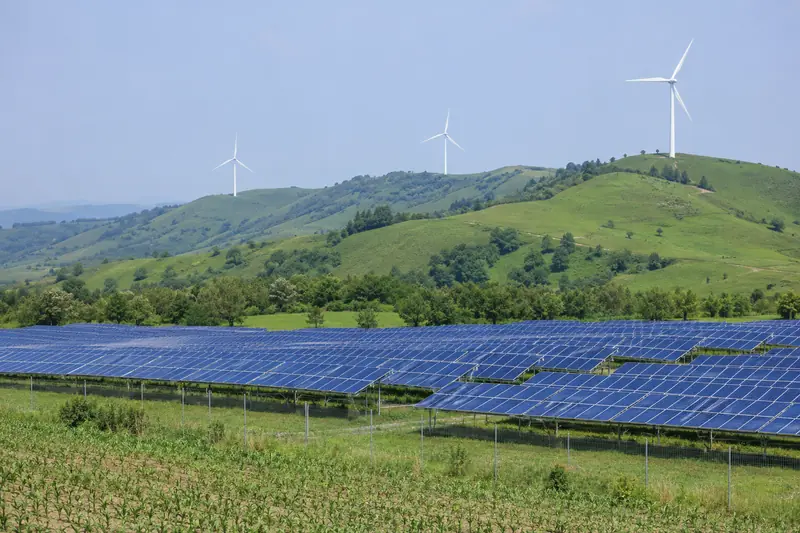
Chile’s rapid growth in solar and wind power made coal plants less necessary. As renewable output increased, coal plants ran less often, which reduced their revenue and made them harder to justify.
Older coal plants are also less efficient, burning more fuel per unit of electricity and emitting more pollution, so they are usually the first candidates for retirement.
The closure of coal plants raises questions about grid reliability. Coal plants can run at any time, while solar and wind depend on the weather. Grid operators must ensure there is enough flexible capacity, such as gas plants, hydropower or batteries, to replace them.
Communities that host coal plants, such as Tocopilla, Mejillones and Puchuncaví, have long suffered from air pollution. In some areas, such as Quintero and Puchuncaví, pollution episodes caused serious public concern and health complaints.
Closing plants can improve local air quality but can also reduce jobs and tax revenue in those towns, so transition plans must consider both effects.
For investors, the case shows the concept of stranded assets: plants that lose value before the end of their expected life because of policy or market changes.
Some coal plants in Chile have been considered for conversion to other uses, such as gas or energy storage, rather than full demolition.
For students, the case is a clear example of how policy, technology and economics interact in decisions about ageing assets.
The Tarapacá closure was one of the first steps in that process.
Key moments
Enel signs the national decarbonisation plan.
Tarapacá disconnects, ahead of the former May 2020 date.
Source: Enerdata (2019). The generation share is approximate.
The trade-offs at the heart of the case
Closing an industrial site and advancing a closure are different decisions
Huachipato faced a choice about whether its steel business could sustain operations when protection failed to translate into workable customer prices. Tarapacá already had a scheduled retirement, so Enel was choosing what to do with a limited number of remaining months. A comparison based on lifetime accounting losses would confuse those decisions. In both cases some workers, obligations and shared facilities remain after shutdown, while the benefit of continuing depends on demand during a particular window. Ask the steelmaker for orders it can actually fulfil profitably and the generator for hours in which it could actually be dispatched. Then estimate the cost of keeping each option open. The private decision can be rational even if a community loses an important employer, making a separate, transparent public appraisal essential.
Our assessment
A public evaluation needs another column for system effects. If another fossil unit replaces the output, avoided emissions differ from a case with surplus renewable output. If the plant was rarely dispatched, the loss of emergency availability may matter more than lost annual energy. I would base the acceleration decision on the expected value of those particular months and publish a separate plan for affected workers and the site.
For your seminar, paper or interview
- Q1
Which cash costs genuinely disappear at disconnection?
- Q2
How would you choose the replacement generator for an emissions estimate?
- Q3
What value should the grid assign to a plant kept available but seldom dispatched?
- Q4
How would the decision change if the two adverse events were correlated or could occur together?
- Q5
What additional value should the decision maker assign to avoiding a cash shortage during the severe event?
- Energy transition
- Asset retirement
- Coal phase-out
- Stranded assets
How we would approach it
Simplifying Finance’s opinion, offered as a starting point for debate, not as fact or investment advice.
We think Enel’s early closure of the Tarapacá coal plant was a reasonable decision. The plant was old and its role was shrinking as renewables expanded, so bringing forward retirement cost little and supported the country’s decarbonisation plan.
Plan replacements
Add renewable capacity before closing.
Support workers
Offer retraining and redeployment.
Ensure reliability
Coordinate with the grid operator.
What this plan gives up
Early closure cuts emissions but removes dispatchable capacity.
The strongest counter-argument
Some argue coal plants should stay available as backup.
Metrics to watch
- Grid reliability
- Emissions from power generation
Propose your solution
Pick a discussion question and set out what you would do, why, and what it would cost. Strong, well-argued answers are reviewed and published below with your first name and programme.
Published solutions
Loading published solutions…
- Enel Chile · Tarapacá disconnection and closure ↗
- Enel Chile · Authorisation for early withdrawal ↗
- Enerdata • Chile will close coal plants by 2040 ↗
- Mining.com • Chile begins closing first eight coal-fired power stations ↗
- Enel • First company in Chile to stop using coal (2022) ↗
- Photo: Iquique Vista Nocturna by PipeNacho1985, CC BY-SA 4.0 (cropped and resized) ↗
Figures are as reported by the companies or cited outlets as of 22 November 2026. Check the source before quoting. Corrections: let us know through the solution form.