What happened
In April 2021 Bahia Mineração won the auction for the section linking Caetité and Ilhéus. The federal government reported a R$32.7 million fixed grant and a variable amount of 3.43 percent of gross revenue. ANTT described approximately 537 kilometres. Track length and grant price describe the scope of the award. They do not measure the remaining construction cost or prove that a mine and export terminal will be ready together.
For a mine, a reliable rail route can lower delivered cost and expand the set of buyers. For the railway, an anchor mine can make early operations financially plausible. Those dependencies are useful until the same tonnes are counted as independent support for every loan. A delay at the port can reduce mine exports, undermine ticketed rail volumes and slow cash collection at the same time.
Contract design can make the dependencies visible. An anchor customer might reserve a minimum volume, but its ability to honour the reservation depends partly on financing and selling its own output. A port might commit to a date while still requiring permits or work by another party. A bank reviewing each contract independently could conclude that every risk has been transferred while the combined system has merely passed the risk in a circle.
The Ferrovia de Integração Oeste-Leste, FIOL, is a railway planned to cross Bahia state from the west to the coast at Ilhéus. Construction of the first section, between Caetité and Ilhéus, began years earlier but stalled. On 8 April 2021 the government auctioned a 35-year concession for this 537-kilometre section.
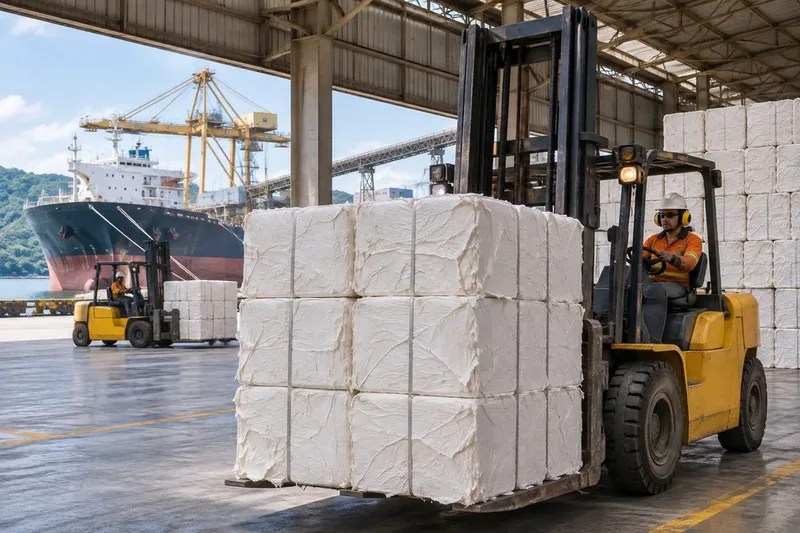
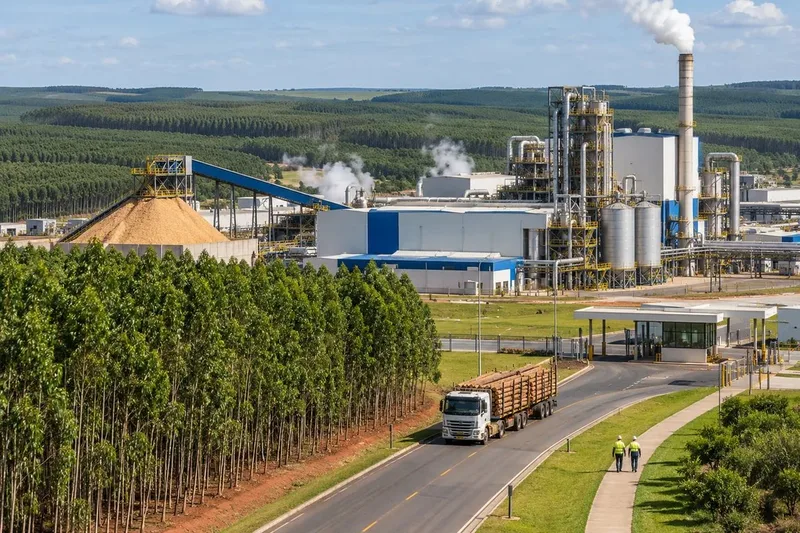
Bahia Mineração, or Bamin, owned by Eurasian Resources Group, was the only bidder, offering a fixed grant of R$32.73 million, about R$30,000 above the minimum. It agreed to invest about R$3.3 billion, including R$1.6 billion to finish works that were about 80% complete. Bamin planned to use the railway to export iron ore from its Pedra de Ferro mine near Caetité through a new port, Porto Sul, with a total investment of about R$14.3 billion across mine, railway and port.
The case shows how integrated projects carry completion risk: each part has value only when the others are ready.
Key moments
The first FIOL section is brought to auction.
Bahia Mineração wins the Caetité–Ilhéus rail section.
Total about R$14.3bn. Bamin paid a fixed grant of R$32.73m, just R$30,000 above the minimum, for a 35-year concession of the 537km Caetité–Ilhéus section, which was about 80% built. Sources: Reuters (via IstoÉ); BNews; Correio Braziliense.
The trade-offs at the heart of the case
Three promises for one tonne of ore
Imagine that construction at the mine and rail line is complete while a port connection is delayed. The mineral asset may be ready to produce, and a train may be ready to run, yet neither can generate the forecast export receipt. Building inventory can bridge a small delay. It costs money, and there is a limit to how much material can be safely stored. Beyond that limit the mine may have to slow or stop even though its own operations are functioning well. A take-or-pay contract can improve a railway lender’s position only if its counterparty can pay when it cannot ship. If the counterparty is a related mining project relying on the same port, the contract may move the loss from one company to another without improving liquidity for the combined project. Look for independent credit support, diversified customers or remedies available even when the chain is interrupted. The name of the clause alone supplies no credit protection. A public authority can bring an additional perspective by examining non-mineral freight. Farmers may value rail access, but a mineral terminal and heavy train schedule do not automatically offer the loading equipment, storage or timings grain needs. Test a specific shipper’s journey from origin to port and compare its total cost with the road alternative. A railway can serve a public development objective while still needing a dedicated investment to make that objective attainable.
For your seminar, paper or interview
- Q1
How much protection does an affiliated shipper’s minimum-volume promise really provide?
- Q2
Which delay would simultaneously impair the mine and the railway?
- Q3
What separate facilities would another class of shipper need before it could use the line?
- Q4
How would you verify cash left after the concession charge and operating costs using information available at the time?
- Q5
Which finding about end-to-end service readiness and collected freight revenue would most change your recommendation, and why?
- Integrated mine–rail–port projects
- Captive infrastructure
- Completion risk
- Single-bidder auctions
How we would approach it
Simplifying Finance’s opinion, offered as a starting point for debate, not as fact or investment advice.
To compare a completed railway with an unfinished corridor, include the cost of time as well as the remaining civil works. Interest accrues while waiting, committed customers may choose another route and equipment may need maintenance before the first commercial service. An alternative that costs more per kilometre but synchronises completion across the chain can be economically superior. That judgement requires dated interfaces rather than a single percentage reported as overall progress. Stage construction spending against independently verified readiness at both ends of the route. Protect the option to carry other cargo only where loading facilities and customer commitments make it commercially realistic. Completing a short isolated segment can satisfy a construction target yet leave no usable freight service. The decisive milestone is the first repeatable end-to-end movement under conditions that cover its incremental costs.
Control the whole chain
Own the mine, railway and port to move ore to export.
Finish existing works
Complete a railway already mostly built by the government.
Open the line to others
Carry grain and other cargo to improve utilisation.
What this plan gives up
Owning the railway secures an export route for Bamin’s iron ore, but the mine, railway and port must all be finished together, and a delay in one leaves the others idle.
The strongest counter-argument
A construction dashboard can improve the analysis by placing an expected operating date beside each physical interface. The bridge across one section, access to the loading point and completion of the unloading system need separate owners. A project may report high overall physical completion while the item preventing any revenue remains unfinished. Identify that item and attach its remaining cost and uncertainty. The value of paying for faster work elsewhere is limited until it ceases to be the critical constraint. On the public side, future use of the line for different products may have a development rationale. The relevant comparison is with roads or other links that those customers would realistically use. Estimate changes in transport costs, reliability and access for an identified producer. Deduct the cost of terminals or connections required to make that movement feasible. This avoids counting the same hoped-for regional development as justification for each element of a project that cannot operate independently. A milestone measured in kilometres can conceal a missing connection. A variable grant follows revenue under its specific contract terms.
Metrics to watch
- Porto Sul construction
- Railway completion
Propose your solution
Pick a discussion question and set out what you would do, why, and what it would cost. Strong, well-argued answers are reviewed and published below with your first name and programme.
Published solutions
Loading published solutions…
- Casa Civil announcement of the FIOL I auction result (Brazilian public authority) ↗
- ANTT description of the awarded section and route (Brazilian public authority) ↗
- Reuters (via IstoÉ): Bahia Mineração offers minimum price and wins FIOL auction ↗
- BNews: Bahia Mineração wins FIOL section for R$32.7 million ↗
- Correio Braziliense: Mining company wins Bahia railway concession ↗
- Image: Simplifying Finance · AI-generated editorial illustration
Figures are as reported by the companies or cited outlets as of 22 November 2026. Check the source before quoting. Corrections: let us know through the solution form.