What happened
The Model A was introduced in December 1927 after nineteen years of Model T production. Replacing the old car meant retooling facilities and interrupting the flow of vehicles to dealers. The company faced a choice between extending an ageing product and accepting a period in which customers could go elsewhere.
Model T production ended in May 1927. Hagley Museum and Library dates the end to 27 May, and The Henry Ford notes the 15 millionth Model T came off the line on 26 May.
Ford then halted production to retool. The Henry Ford says workers and factories sat idle for six months while Ford prepared the new car.
The pause was costly. Mac’s Motor City Garage reports that stopping Model T production threw 60,000 people out of work and left Ford dealers without new cars to sell while the successor was developed.
Production of the new Model A began on 20 October 1927, according to Hagley, and the car was introduced to the public on 2 December 1927.
Ford promoted the launch heavily. Mac’s Motor City Garage says a five-day media campaign starting on 28 November 1927 ran $2 million of advertising in 2,000 newspapers.
Demand was strong. Ford says it made almost two million Model A cars in 1929, but after the stock market crash of October 1929 sales fell, reaching 620,000 in 1931.
Sources give different totals for the Model A. The Automotive History Preservation Society reports 4,320,446 built worldwide between late 1927 and December 1931, while Ford describes the total as almost five million.
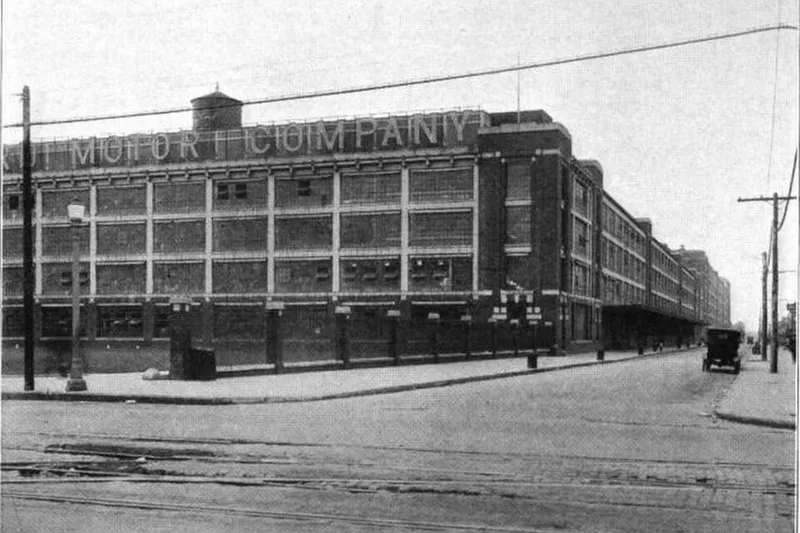
The changeover also moved final assembly. During the switch, vehicle assembly shifted from the Highland Park plant to the Rouge complex, Mac’s Motor City Garage reports.
The exhibit compares the Model T’s record year with the Model A’s best and worst years.
The sunk cost fallacy is the habit of sticking with something because of what has already been spent on it.
Ford’s long loyalty to the Model T may partly reflect this, as the company had invested heavily in its design and factories.
The opportunity cost of waiting was the market share Ford lost to Chevrolet as buyers wanted more modern cars.
A six-month shutdown also hurt dealers, who had few new cars to sell and still had costs to pay.
Modern carmakers usually overlap old and new models to avoid such gaps, building the new model while the old one is still selling.
The Model A’s quick success shows that loyal customers may wait for a strong product, but rivals still gain during the gap.
Students can compare this with product changes in phones or software, where companies try to launch successors before demand fades.
Key concept: opportunity cost. Opportunity cost is the value of the best alternative given up when making a choice. Money and time spent on one project cannot be spent on another.
Good decisions compare options against each other, not just against doing nothing.
Key concept: the sunk-cost fallacy. A sunk cost is money already spent that cannot be recovered. The fallacy is to keep investing in a project because so much has already gone into it, rather than because future benefits justify future costs.
Good decisions look forward: they compare the extra money still to be spent with the value still to be gained. Past spending matters only for the lessons it offers.
Key concept: risk and return. In business and investing, higher potential returns usually come with higher risk. Entering a new market or launching a new kind of product can bring large rewards, but the chance of failure is also greater.
Managers weigh the size of the possible gain against the likelihood and cost of failure, and they often reduce risk by testing ideas on a small scale before committing large sums.
Key concept: unit economics. Unit economics looks at the revenue and costs linked to a single unit, such as one car or one customer. If each unit earns more than it costs to make and sell, growth adds profit; if not, growth adds losses.
Key moments
Model T introduced
Ford winds down Model T production and retools
Model A is introduced
Sources: Mac’s Motor City Garage (1923); Ford Motor Company (1929, 1931).
The trade-offs at the heart of the case
A closer look
A family needing a car during the changeover could buy another make and remain loyal to it for years. That loss differs from a postponed order that Ford eventually fills with a Model A. Search later dealer records for evidence of both outcomes before pricing the shutdown. Some missing production returns as later demand, while customers lost permanently can cost considerably more than one foregone sale.
The alternative on the table
For comparison, consider the option to keep the existing model in production during a gradual replacement. The related case “What does a factory give up when its last Fiesta leaves?” supplies a useful reference point. The final Fiesta came off the Cologne line in July 2023. Ending Fiesta production released a factory for another use. The Model A changeover interrupted a very different product system, one heavily concentrated on a single model. The exposure of the dealer network was correspondingly important.
For your seminar, paper or interview
- Q1
Which undelivered Model T orders might become permanent losses during a changeover?
- Q2
Which finding in the records on unfilled orders and the weeks dealers could cover from stock would persuade you to keep the existing model in production during a gradual replacement?
- Q3
Compare this decision with “What does a factory give up when its last Fiesta leaves”. Which difference between the cases would change your recommendation?
- Product replacement
- Retooling
- Competitive response
- Product life cycle
How we would approach it
Simplifying Finance’s opinion, offered as a starting point for debate, not as fact or investment advice.
We think Ford waited too long to replace the Model T, which made the eventual changeover far more painful than it needed to be. Stopping production for about six months gave rivals an open field. Still, the strong demand for the Model A shows that a clearly better product can win buyers back.
Replace before decline
Plan the successor while the old product still sells.
Overlap where possible
Keep some output running during a changeover.
Ignore sunk costs
Judge the old model on future returns only.
What this plan gives up
A clean break allows a better design but leaves dealers and workers idle.
The strongest counter-argument
Some argue the long pause built excitement and made the launch more successful.
Metrics to watch
- Weeks without production
- Dealer stock during the changeover
Propose your solution
Pick a discussion question and set out what you would do, why, and what it would cost. Strong, well-argued answers are reviewed and published below with your first name and programme.
Published solutions
Loading published solutions…
- The Henry Ford • Henry Ford: Post-Model T ↗
- The Henry Ford • Henry Ford and Innovation ↗
- pbs.org • The Life of Henry Ford | American Experience | Official Site | PBS ↗
- The Henry Ford • Ford Model A Tudor on Assembly Line, Ford Rouge Plant, 1927 ↗
- Mac’s Motor City Garage • December 2, 1927: Henry Ford Introduces the Model A ↗
- Automotive History Preservation Society • December 7, 1931: The last Ford Model A ↗
- Hagley Museum and Library • Ford ceases Model T production, May 27, 1927 ↗
- Photo: 1928 Ford Phaeton, front right, 06-08-2024 by MercurySable99, CC BY-SA 4.0 (cropped and resized) ↗
Figures are as reported by the companies or cited outlets as of 22 November 2026. Check the source before quoting. Corrections: let us know through the solution form.