What happened
Ford and Sunrun described a way for an F-150 Lightning to supply power to a suitably equipped home during an outage. The truck’s battery became a household asset as well as transport. Purchasing the vehicle alone did not install the home integration equipment, and a truck away on a journey cannot simultaneously support the house.
Ford unveiled the F-150 Lightning electric pickup on 19 May 2021, pv-tech reported, and chose Sunrun as its installation partner for home charging and backup equipment.
Ford calls the feature Intelligent Backup Power. When the grid goes down, a connected Lightning automatically powers the home and then switches back to utility power when it returns, InsideEVs reports.
The extended-range battery can store 131 kilowatt-hours of energy and deliver up to 9.6 kilowatts, according to pv magazine.
Based on an average US home using about 30 kilowatt-hours a day, Ford says the extended-range truck can provide full home power for up to three days, or up to ten days with rationing or solar power.
Ford says a fully charged Lightning with the standard-range battery can power a home for up to two days, or run an individual item such as a refrigerator for up to ten days.
Extra equipment is required. Customers need the Ford Charge Station Pro and the Home Integration System, which is sold through Sunrun and allows electricity to flow both ways, Ford explains.
Ford also works with GenerLink to offer essential home backup through a transfer switch for some F-150 Lightning and PowerBoost hybrid owners, according to Ford’s support pages.
Ford’s home backup support pages cover 2022–2025 F-150 Lightning models.
The exhibit shows how a large truck battery compares with typical daily home electricity use.
Unit economics improve when one battery serves two purposes, transport and home backup.
The extra equipment and installation add cost, so buyers must value backup power to justify it.
Partnerships with solar companies like Sunrun help deliver the home side of the offer.
Investors following ESG factors watch such features as signs of how electric vehicles can support the grid.
Backup power is especially valuable in areas with storms, wildfires or frequent outages.
Other carmakers are developing similar bidirectional charging features.
Students can ask what other uses an electric car battery could serve when the car is parked.
Key concept: unit economics. Unit economics looks at the revenue and costs linked to a single unit, such as one car or one customer. If each unit earns more than it costs to make and sell, growth adds profit; if not, growth adds losses.
Fixed costs such as development and tooling are spread across all units, so the cost per unit falls as volume rises. That is why low-volume products need high prices, and why volume matters so much in the car industry.
Key concept: ESG investing. ESG stands for environmental, social and governance factors. Many investors now consider how companies manage emissions, resources, workers and communities alongside financial results.
For manufacturers, energy use, water, materials and supply-chain emissions are major ESG issues, and credible measurement is essential so that claims can be checked.
Key concept: opportunity cost. Opportunity cost is the value of the best alternative given up when making a choice. Money and time spent on one project cannot be spent on another.
Good decisions compare options against each other, not just against doing nothing.
Key concept: risk and return. In business and investing, higher potential returns usually come with higher risk. Entering a new market or launching a new kind of product can bring large rewards, but the chance of failure is also greater.
Managers weigh the size of the possible gain against the likelihood and cost of failure, and they often reduce risk by testing ideas on a small scale before committing large sums.
Key concept: economic moats. An economic moat is a lasting advantage that protects a company’s profits from competitors, much as a moat protects a castle. Sources include strong brands, patents, cost advantages, networks and high switching costs for customers.
Key moments
Ford prepares the electric F-150
Ford and Sunrun describe home backup integration
A compatible residential system enables the service
Sources: Ford; pv magazine; Cars.com.
The trade-offs at the heart of the case
A closer look
Compare two households with identical F-150 Lightning trucks. One has the necessary home equipment and usually parks at home during outages. The other uses the truck away from home throughout the day. Their batteries can have the same capacity while their practical backup value differs considerably. A dealer estimating that value should ask about time at home, usable stored energy and the loads the household needs to support.
The alternative on the table
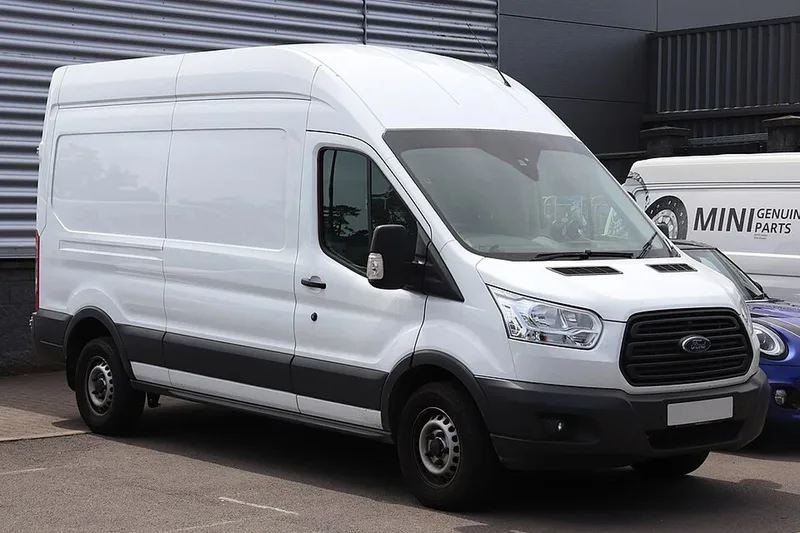
For comparison, consider the option to sell home backup through a separate stationary battery. The related case “Which delivery routes suit an electric Transit?” supplies a useful reference point. The E-Transit connected the choice of a van with the choice of a route and charging arrangement. A commercial E-Transit at its depot and a Lightning parked at home have predictable windows of availability. Neither can supply a stationary use while away. Model actual presence as well as stored energy.
For your seminar, paper or interview
- Q1
What determines whether a Lightning is available to power a home during an outage?
- Q2
Which finding in the records on households with compatible installations and usable stored energy would persuade you to sell home backup through a separate stationary battery?
- Q3
Compare this decision with “Which delivery routes suit an electric Transit”. Which difference between the cases would change your recommendation?
- Bidirectional charging
- Bundled offers
- Partnerships
- Energy resilience
How we would approach it
Simplifying Finance’s opinion, offered as a starting point for debate, not as fact or investment advice.
We think home backup power was a clever way to give an electric pickup extra value that petrol trucks cannot match. The battery already exists, so using it during outages adds benefit without adding much cost to the truck itself. But the full feature needs extra equipment and installation, and it only works when the truck is at home.
Sell the bundle clearly
Explain the equipment and cost needed.
Partner for installation
Use a specialist like Sunrun for home work.
Target the right buyers
Focus on homes with frequent outages.
What this plan gives up
Home backup adds value but requires extra spending and planning.
The strongest counter-argument
Some argue a stationary home battery is simpler and always available.
Metrics to watch
- Share of buyers adding home equipment
- Outage hours covered
Propose your solution
Pick a discussion question and set out what you would do, why, and what it would cost. Strong, well-argued answers are reviewed and published below with your first name and programme.
Published solutions
Loading published solutions…
- Ford Motor Company • Bring It Home: ↗
- sunrun.com • Ford F-150 Lightning Home Integration System ┃Sunrun ↗
- mi-psc.my.site.com • U-21619_Final Request for Declaratory Ruling_Sept13 ↗
- Ford Motor Company • Ford Home Backup Power ↗
- pv magazine • Ford, Sunrun to back up US solar homes with the electric F-150 ↗
- Electrek • Ford shares details on F-150 Lightning Intelligent Backup Power ↗
- Cars.com • How the 2022 Ford F-150 Lightning Can Power Your Home for Days ↗
- Photo: 2022 Ford F-150 Lightning Lariat in Atlas Blue Metallic, Front Right, 08-06-2022 by Elise240SX, CC BY-SA 4.0 (cropped and resized) ↗
Figures are as reported by the companies or cited outlets as of 22 November 2026. Check the source before quoting. Corrections: let us know through the solution form.