What happened
IFC reported a project cost of US$179.5 million and an arranged debt package of US$125.7 million, including US$32.8 million from its own account. The own-account amount forms part of the debt package. Adding it again would overstate financing. The project company’s return depends on the payments specified for making the facility available and operating it. The gas buyer faces a different question about the landed cost of fuel and the ability of power plants or industries to use it.
An expensive cargo might be justified during a shortage if it prevents factories from closing. In a period of weaker demand, the same fuel price could exceed the value of the electricity it produces. A terminal can thus provide useful insurance while operating at low utilisation. Assessing it solely on average throughput would miss the value of supply at a critical hour. Assuming every available unit displaces an expensive alternative all year would inflate that value.
Stress the contract in two directions. Test a period when global fuel prices rise and the buyer wants fewer cargoes but capacity charges remain. Then test a period when gas is valuable but rough weather or downstream limits reduce deliveries. Those scenarios allocate losses differently between buyer, terminal and end user. The choice is whether the value of reliable access covers both the fixed commitment and the cost of exercising it when fuel is needed.
In July 2017 IFC and Excelerate Energy announced they had secured debt financing for the Moheshkhali floating LNG terminal, Bangladesh’s first LNG import facility. The project cost was US$179.5 million. IFC arranged a debt package of US$125.7 million, including US$32.8 million from its own account, with the rest from CDC Group, DEG, FMO and JICA.
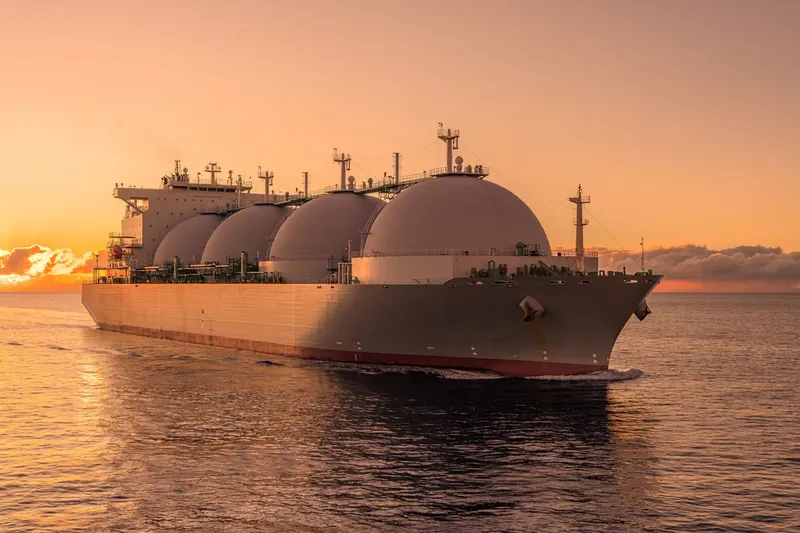
Equity came from IFC, with US$10.8 million, and Excelerate, with US$43.1 million. The terminal used one of Excelerate’s floating storage and regasification units, with 138,000 cubic metres of LNG storage, moored offshore Moheshkhali Island and connected to shore by a subsea pipeline. IFC’s disclosure describes a guaranteed base-load regasification rate of 500 million standard cubic feet a day.
At the time, the partners said the terminal would let Petrobangla raise natural gas supply by up to 20 percent, enough to support up to 3,000 MW of power generation. The financing structure used a build-own-operate model, with Excelerate providing the vessel and services under a single contract.
Floating terminals have become a popular way for countries to start importing LNG quickly, from South Asia to Latin America. They can be installed in a few years at lower cost than onshore plants. The financial risk, however, moves to the buyer, who usually pays fixed charges for the terminal whether or not it can afford cargoes. For any importer, the key question is not only whether the terminal can be built, but whether gas bought on world markets will remain affordable for power plants and factories.
Key moments
IFC arranged debt alongside other lenders and disclosed project equity.
Excelerate describes a floating terminal with up to 500 million standard cubic feet of daily regasification capacity.
Source: World Bank, World Development Indicators (EG.ELC.NGAS.ZS).
The trade-offs at the heart of the case
Separate fuel procurement from the floating asset
Write one monthly cash-flow statement for the terminal and another for the entity procuring LNG. Identify which party pays during planned maintenance, weather-related disruption and a decision to defer a cargo because of price. Then add the value to an industrial buyer of a day of dependable supply. This third perspective may support public involvement even when the terminal’s own income is contractually stable. I would evaluate a new commitment against the most expensive hours of unmet demand and the possibility of obtaining cheaper flexibility elsewhere. Average annual consumption can conceal precisely the high-value moments the terminal was intended to serve.
Two imports that expose different bills
Electricity transmitted from India and gas delivered through Moheshkhali can both meet Bangladesh’s energy needs, yet their cost structures differ. With LNG the domestic buyer also needs conversion, transmission and a user that can burn the gas when it arrives. With an electricity import the generating decision occurs elsewhere, and the buyer depends on the interconnector and its contract for delivery. A comparison should put both alternatives at a common delivery point and hour, such as dependable electricity supplied to a particular load. A fuel price per unit of heat cannot be compared directly with a price per unit of electricity. Add conversion efficiency, fixed capacity payments and reliability before drawing a conclusion about the cheaper source.
For your seminar, paper or interview
- Q1
Whose cash flow includes the price of buying LNG?
- Q2
How much of arranged debt came from lenders other than IFC?
- Q3
When could a low-utilisation terminal still have substantial value?
- Project finance
- Take-or-pay contracts
- Energy security
- Blended finance
How we would approach it
Simplifying Finance’s opinion, offered as a starting point for debate, not as fact or investment advice.
We see Moheshkhali as a successful example of project finance that shifted risk to the buyer. A floating terminal could be built quickly with development lenders, but its value to Bangladesh depends on whether the country can afford to buy LNG at world prices once the terminal is ready.
Match terminal and supply contracts
Secure long-term LNG supply on terms that fit the terminal’s capacity.
Hedge price exposure
Use a mix of long-term and spot contracts to limit price shocks.
Invest in domestic gas
Keep exploring local fields so imports remain a supplement, not a replacement.
What this plan gives up
Long-term supply contracts give price stability but lock the country into paying for gas even when cheaper options appear.
The strongest counter-argument
Without import terminals, gas shortages would cost far more in lost industrial output and power cuts, so the terminal’s value as insurance may outweigh any price risk.
Metrics to watch
- Terminal utilisation rate
- Share of gas supply from imports
Propose your solution
Pick a discussion question and set out what you would do, why, and what it would cost. Strong, well-argued answers are reviewed and published below with your first name and programme.
Published solutions
Loading published solutions…
- Excelerate Energy: Moheshkhali terminal operating capacity ↗
- IFC: Moheshkhali project financing and lender contributions ↗
- World Bank: World Development Indicators, Electricity produced from natural gas ↗
- IFC: IFC and Excelerate secure financing for Bangladesh’s first LNG project ↗
- IFC: Project disclosure, Bangla LNG ↗
- Hydrocarbon Engineering: Financing secured for Bangladesh’s first LNG project ↗
- Excelerate Energy: Moheshkhali floating LNG ↗
- Photo: Methanier aspher LNGRIVERS.jpg by Pline, CC BY-SA 3.0 (cropped and resized) ↗
Figures are as reported by the companies or cited outlets as of 22 November 2026. Check the source before quoting. Corrections: let us know through the solution form.