What happened
Bursa reported that its first carbon auction took place on 16 March 2023, with fifteen local buyers purchasing a combined 150,000 Verra-registered credits. Its disclosure identifies separate technology-based and nature-based contract categories. The number of units sold does not indicate how evenly purchases were distributed or whether a deep secondary market existed. Registration and an auction price answer different questions from whether a particular buyer’s environmental claim is justified.
Bursa’s sustainability report says it did not participate in bidding and purchased credits at the clearing price. It also identifies a common supplier for the two projects. The roles of auction organiser, supplier and buyer matter to any inference about competition or independent price formation. The exchange reported that its technology-based contract cleared at RM18.50 per contract. That was the price of a specified auction product.
Bursa Malaysia launched the Bursa Carbon Exchange (BCX), described as the world’s first Shariah-compliant carbon exchange, to let companies buy standardised contracts backed by carbon credits. Its first auction, on 16 March 2023, offered 150,000 Verra-registered credits from two foreign projects, both supplied by the trading firm Vitol. Fifteen Malaysian buyers, mainly government-linked companies and banks such as Petronas, Maybank and CIMB, bought all of them, for a total of about RM7.7 million.
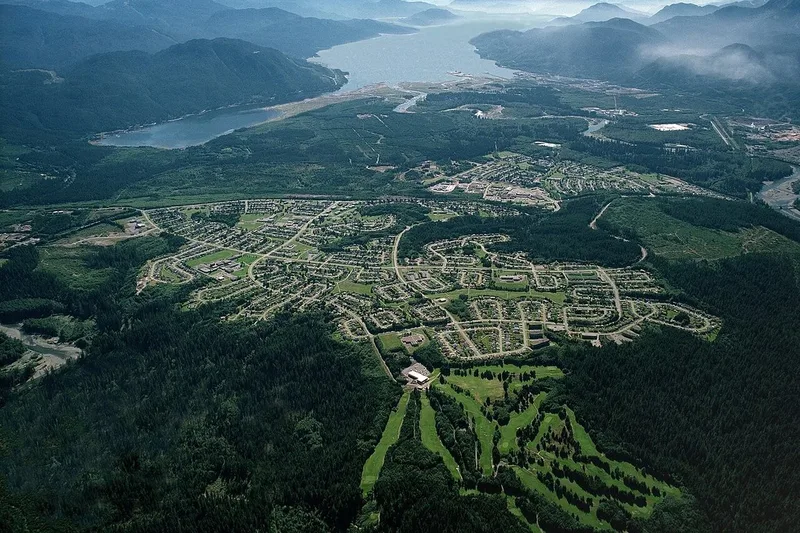
Two contracts were sold. Technology-based credits from the Linshu biogas project in China were oversubscribed and cleared at RM18.50 a tonne. Nature-based credits from the Southern Cardamom forest protection project in Cambodia cleared at RM68 a tonne. To avoid conflicts during price discovery, Bursa said it did not bid but bought some credits at the clearing price. The exchange described the auction as proof of a working price-discovery mechanism.
Commentators noted the limits: there were no Malaysian credits on offer, domestic demand was modest and buyers were mainly state-linked. The government later offered RM10 million in seed funding to bring Malaysian-generated credits to the exchange, and in 2024 credits from a Malaysian palm-oil biogas plant were auctioned. Malaysia has also signalled a future emissions trading system or carbon tax, which would create compliance demand.
Key moments
Bursa Carbon Exchange launched as a Shariah-compliant platform
First carbon credit auction
Government announces RM10 million seed fund for Malaysian credits
First Malaysian-generated credits auctioned
Possible domestic emissions trading or carbon tax
150,000 Verra-registered credits sold to 15 local buyers on 16 March 2023. Sources: The Edge; Free Malaysia Today; Argus.
The trade-offs at the heart of the case
Ask what a quoted price actually buys
Read the contract specification, project documents, vintage, eligibility rules and the conditions for retirement. A company buying for eventual retirement has a different objective from a trader needing a liquid resale market. Low turnover can make yesterday’s clearing price a poor estimate of what a large holder could receive today. A purchased credit also does not directly reduce the emissions of the purchaser’s factory. Operational abatement needs its own cost curve.
Buy the evidence with the credit
Before placing an order, specify the project attributes, intended claim, holder of record and party authorised to retire the credits. Ask the trader for a firm executable quote for the entire order and the sustainability team for the evidence it will stand behind publicly. A cheap unit inappropriate for the intended claim is an expensive procurement mistake. The first auction created an observable Malaysian market event. It did not remove the buyer’s responsibility to know precisely what it had purchased.
For your seminar, paper or interview
- Q1
What limits the comparison between two contract categories?
- Q2
How would you mark a large holding in a thin market?
- Q3
What documentation connects retirement to a buyer’s stated claim?
- Q4
What role can a small clearing trade play in a larger procurement?
- Q5
Which claims still require verification after a credit is bought?
- Voluntary carbon markets
- Price discovery
- Market design
- Corporate climate commitments
How we would approach it
Simplifying Finance’s opinion, offered as a starting point for debate, not as fact or investment advice.
The first BCX auction created a transparent price for carbon credits in Malaysia and gave local companies a regulated way to offset emissions. Its long-term value depends on bringing in domestic projects and broader demand.
Develop local supply
Support Malaysian projects to generate credits.
Raise quality standards
Require strong verification and disclosure for listed credits.
Link to policy
Prepare for compliance demand from a carbon price.
What this plan gives up
Early auctions build awareness but thin trading can give misleading price signals.
The strongest counter-argument
A one-off auction with few buyers and foreign credits says little about a liquid market. Voluntary credits also vary widely in quality, so a low price may reflect doubts about real emission reductions.
Metrics to watch
- Trading volumes on BCX
- Malaysia’s carbon tax or emissions trading plans
Propose your solution
Pick a discussion question and set out what you would do, why, and what it would cost. Strong, well-argued answers are reviewed and published below with your first name and programme.
Published solutions
Loading published solutions…
- Bursa Malaysia: inaugural carbon auction results, March 2023 ↗
- Bursa Malaysia: sustainability report 2023, role in auction price discovery ↗
- The Edge: Bursa Carbon Exchange holds inaugural auction ↗
- Argus: Bursa Malaysia completes first carbon credit auction ↗
- Business Today: BCX completes Malaysia’s first carbon auction ↗
- Eco-Business: Malaysia’s new voluntary carbon market ↗
- Eco-Business: first Malaysian tech-based credits on BCX ↗
- Image: The Bursa Malaysia building in Kuala Lumpur. Photograph: Travelpleb, CC0 (cropped and resized) ↗
Figures are as reported by the companies or cited outlets as of 25 November 2026. Check the source before quoting. Corrections: let us know through the solution form.