What happened
PETRONAS reported that PFLNG Satu loaded its first cargo at Kanowit, offshore Sarawak, on 1 April 2017. In March 2019 it announced relocation from the Kumang cluster to the Kebabangan cluster offshore Sabah. These are distinct milestones. Loading a first cargo demonstrates an operating chain at one location. Redeployment demonstrates physical mobility. Neither observation alone establishes the financial return earned over the facility’s life.
PETRONAS described Satu’s processing capacity as 1.2 million tonnes per annum. Nameplate capacity measures what the plant is designed to process at a suitable site. It cannot be carried across a relocation as if gas supply, utilisation and sale price were guaranteed.
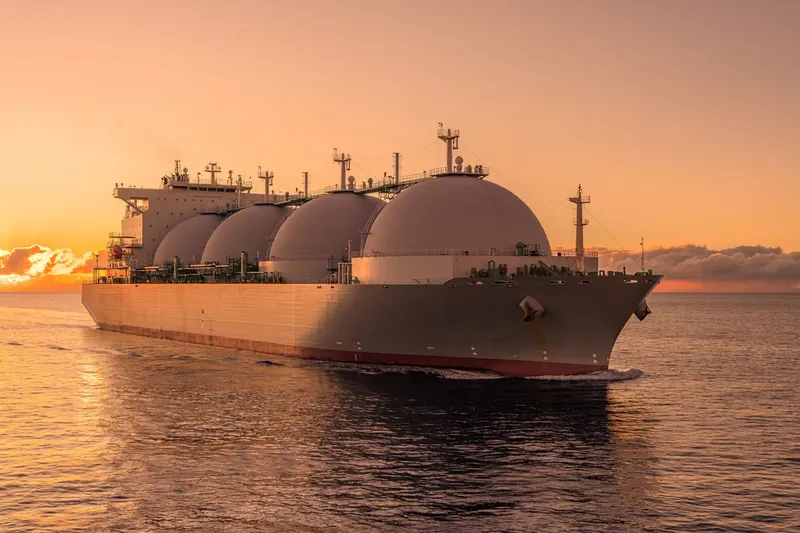
PFLNG Satu was the world’s first floating liquefied natural gas facility to ship a cargo. Built in South Korea by Daewoo Shipbuilding & Marine Engineering under a Technip-led contract signed in 2012, the 365-metre vessel can process about 1.2 million tonnes of LNG a year and operate in water 70 to 200 metres deep. It was towed to the Kanowit field, about 180 km off Bintulu in Sarawak, and loaded its first cargo in April 2017.
The concept’s main selling point was mobility. Small offshore gas fields are often too small to justify a pipeline and an onshore plant; a floating plant can produce from one field and then move to another. In March 2019, after delivering 19 cargoes, PETRONAS moved PFLNG Satu to the Kebabangan cluster field, about 90 km off Kota Kinabalu in Sabah. First gas arrived on 4 May 2019 through a 5-km flexible pipeline and the first LNG was produced three days later, making it the first floating LNG facility to produce from two different fields.
By September 2021 the facility had loaded its 50th cargo, having exported nearly 3.18 million tonnes of LNG from the two fields. PETRONAS followed with a second, larger unit, PFLNG Dua, which shipped its first cargo in 2021 from the Rotan field.
Key moments
Construction contract signed with Technip–Daewoo consortium
Facility towed to the Kanowit field, offshore Sarawak
First cargo loaded, the world’s first from a floating LNG plant
Relocation to Kebabangan, offshore Sabah, announced
First LNG produced at the new site
50th cargo loaded
About 3.18 million tonnes of LNG exported by October 2021 from two fields. Sources: PETRONAS; Gas Processing News; LNG Prime.
The trade-offs at the heart of the case
Give mobility a price and a calendar
The comparison is between two complete development plans. A fixed facility might cost less to operate per tonne while it is full. A floating facility can avoid leaving a useful asset stranded when the first resource declines. That advantage depends on another economically deliverable resource, compatible connections and a window when a move is feasible. A list of fields on a map is a set of possibilities. It is worth considerably less than a sequenced portfolio with confirmed access.
Build a calendar for the vessel, not just a reserve list
Place the last economic month at the existing field, the first month of available gas at the next field and the mobilisation interval on a single calendar. Identify what the owner can do if those dates miss each other. A spare field without a usable connection date offers little protection. A short extension at an existing field, even on less attractive operating terms, can be valuable if it keeps the facility productive while the next resource is confirmed.
For your seminar, paper or interview
- Q1
Which costs disappear when a floating asset moves?
- Q2
What makes the second field a credible option?
- Q3
How would a longer commissioning period alter the move date?
- Q4
Which site-development costs survive a relocation?
- Q5
What information would justify postponing the move?
- Real options
- Stranded-asset risk
- Technology first-mover risk
- Modular infrastructure
How we would approach it
Simplifying Finance’s opinion, offered as a starting point for debate, not as fact or investment advice.
PFLNG Satu proved that a floating LNG plant could be built, operated and relocated, turning small offshore fields into exportable gas. The real value of the design lies in the option to move, which PETRONAS exercised within two years of first production.
Plan the next field early
Line up a second resource before the first declines.
Track utilisation
Measure output against nameplate capacity at each site.
Learn for later units
Apply lessons to PFLNG Dua and future vessels.
What this plan gives up
A movable plant avoids stranding but costs more per tonne than a large fixed facility.
The strongest counter-argument
Floating plants are small, so their unit costs can be higher than large onshore trains. The option to relocate is only valuable if a suitable next field is ready when the first one declines.
Metrics to watch
- PFLNG Satu output at Kebabangan
- Plans for further floating LNG units
Propose your solution
Pick a discussion question and set out what you would do, why, and what it would cost. Strong, well-argued answers are reviewed and published below with your first name and programme.
Published solutions
Loading published solutions…
- PETRONAS: PFLNG Satu loads its first cargo ↗
- PETRONAS: PFLNG Satu relocation to Kebabangan ↗
- PETRONAS: PFLNG Satu relocated to Kebabangan ↗
- PETRONAS: first LNG drop post relocation ↗
- Natural Gas World: PETRONAS ships 50th cargo from PFLNG Satu ↗
- Ship Technology: PFLNG Satu construction ↗
- Image: Marine loading arms at Bintulu LNG port in Sarawak illustrate the LNG export chain. Satu itself operated offshore. Photograph: Ahmad Afif Isa from Kuala Lumpur, Malaysia., CC BY 2.0 (cropped and resized) ↗
Figures are as reported by the companies or cited outlets as of 25 November 2026. Check the source before quoting. Corrections: let us know through the solution form.