What happened
LNG Canada’s partners announced the final investment decision at Kitimat in October 2018. In July 2025 PETRONAS reported departure of its own first cargo and identified its 25 percent equity holding through North Montney LNG Limited Partnership. The dates bracket a period of capital at risk. Equity ownership is a claim on the venture under its agreements. It does not mean that the entire sales price of one quarter of all cargoes is distributable profit.
The 2018 decision announcement names five joint-venture participants and places the project in the traditional territory of the Haisla Nation. Responsibility for local engagement and execution belongs within the investment appraisal alongside shipping economics. A shareholder’s equity percentage alone does not define those obligations.
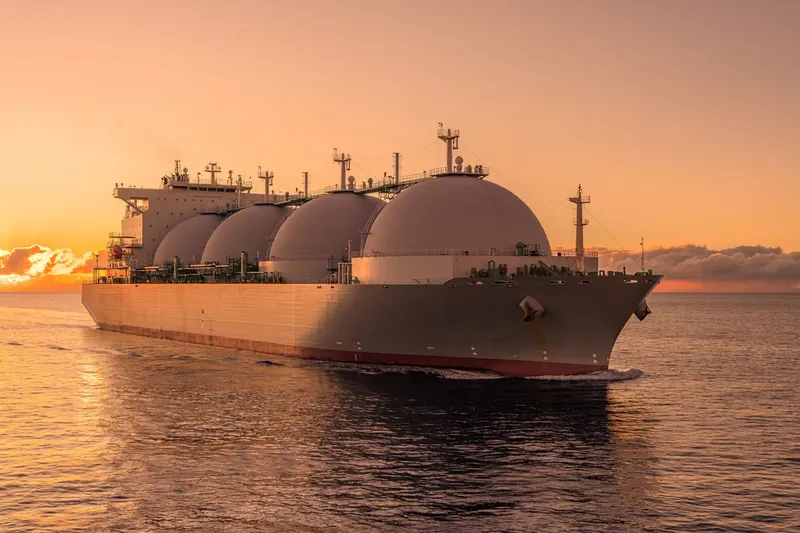
LNG Canada, at Kitimat on British Columbia’s coast, is Canada’s first large-scale LNG export plant. Its partners took a final investment decision in October 2018: Shell (40 percent), PETRONAS through North Montney LNG (25 percent), PetroChina (15 percent), Mitsubishi (15 percent) and Korea Gas (5 percent). The project, including the linked pipeline, was reported to cost about C$40 billion, which the Canadian government described as the largest private-sector investment in the country’s history.
Phase 1 has two trains with combined capacity of 14 million tonnes a year, with the option to double to 28 million. Gas comes from the Montney formation in north-east British Columbia, where PETRONAS has owned upstream assets since acquiring Progress Energy. Production began in June 2025 and the first cargo sailed on 30 June, bound for South Korea. PETRONAS loaded its own first cargo from the plant in July 2025.
For PETRONAS, the plant adds a Pacific-coast supply source with much shorter shipping times to Asia than US Gulf Coast plants, complementing its Malaysian LNG complexes at Bintulu and its floating units. The project sits on the traditional territory of the Haisla Nation, and the partners report more than C$5.8 billion of contracts with local and Indigenous-owned businesses.
Key moments
PETRONAS buys Canadian gas producer Progress Energy
Final investment decision on LNG Canada
Construction begins at Kitimat
First LNG produced
First cargo leaves Kitimat
PETRONAS ships its own first cargo
Phase 1 has two trains with 14 million tonnes a year of capacity. Sources: Shell; LNG Canada; Energy Institute.
The trade-offs at the heart of the case
Price a destination after freight
For each cargo, start at the delivery location and work back through shipping, liquefaction, feed gas and transport to the plant. A higher destination price may still produce a lower net return. The option to divert volume also depends on customer commitments and vessel availability. A lender values predictable receipts. A trading desk values flexibility. The board needs a valuation that recognises both without treating the same sale as two sources of profit.
Follow one delivery obligation from both coasts
Ask the commercial team to serve the same buyer twice on paper, once from its ordinary supply and once using Kitimat. For each version specify the vessel, freight cost, quality, arrival week and the destination for the cargo displaced elsewhere. Include any separate revenue that would be lost. If the advantage remains after those constraints, it is credible portfolio value. A comparison between two headline destination prices alone cannot show why a Malaysian investor should have capital tied up in Canada.
For your seminar, paper or interview
- Q1
Which cash flows belong to the Canadian venture?
- Q2
What limits the right to redirect a cargo?
- Q3
How would you prevent double counting the trading benefit?
- Q4
What does joint-venture profit omit about portfolio delivery choices?
- Q5
When would lifting a cargo earlier do little for liquidity?
- Portfolio diversification
- Joint venture structures
- Long-cycle investment
- Market access and shipping
How we would approach it
Simplifying Finance’s opinion, offered as a starting point for debate, not as fact or investment advice.
LNG Canada gives PETRONAS a long-life, low-shipping-cost source of LNG close to its Asian customers. Taking a 25 percent stake alongside experienced partners spread the very large construction risk while securing a meaningful share of output.
Integrate the value chain
Link Montney gas, liquefaction and marketing.
Decide on Phase 2 carefully
Test expansion against long-term price scenarios.
Use the Pacific route
Market cargoes where shorter voyages give an advantage.
What this plan gives up
A large equity stake brings more volume but also more exposure to cost overruns and price cycles.
The strongest counter-argument
The project took seven years from investment decision to first cargo and its cost is very large. Its returns depend on long-term LNG prices, which may soften as new supply from the US and Qatar arrives.
Metrics to watch
- LNG Canada Phase 2 investment decision
- Asian LNG prices
Propose your solution
Pick a discussion question and set out what you would do, why, and what it would cost. Strong, well-argued answers are reviewed and published below with your first name and programme.
Published solutions
Loading published solutions…
- LNG Canada: joint-venture final investment decision, October 2018 ↗
- PETRONAS: first PETRONAS cargo from LNG Canada, July 2025 ↗
- Shell: first cargo leaves LNG Canada ↗
- CBC: LNG Canada achieves first production ↗
- Energy Institute: first cargo and partners ↗
- LNG Canada: final investment decision ↗
- Image: Kitimat and Douglas Channel in British Columbia, the Canadian setting for PETRONAS’s overseas investment. Photograph: District of Kitimat, CC BY-SA 4.0 (cropped and resized) ↗
Figures are as reported by the companies or cited outlets as of 25 November 2026. Check the source before quoting. Corrections: let us know through the solution form.