What happened
DP World announced completion of the US$400 million Bicentennial Pier expansion in June 2024. It reported that quay length increased from 650 to 1,050 metres and handling capacity rose by about 80% to 2.7 million TEU annually. Quay length grew about 62%. The percentages differ because a terminal’s capacity also depends on berth combinations, ship sizes, cranes, storage and the speed with which boxes leave the site.
Savings can come from serving two large vessels together that previously had to queue. They need not appear as higher crane productivity during a particular shift. Conversely, faster berth service can move the queue inland if importers lack appointments or trucks cannot clear the gate. Record ship arrival and departure, crane moves, yard dwell and gate turnaround for the same set of calls. These records identify which party saves time and whether any saving becomes terminal revenue.
Two ships may need slightly more continuous quay than is free even when total idle berth-hours over the week look generous. A longer quay can fit both and prevent a delay that would otherwise propagate to several later calls. Test this by replaying the old schedule under the new physical layout, with the same vessel sizes and arrival times. Then vary weather delays and the time required by each lift. A projection based on simple average capacity cannot capture this effect. For the port authority, ask whether the improvement also changes traffic at nearby gates and roads. Terminal throughput can rise while importers experience unchanged door-to-door time if inland clearance does not keep pace.
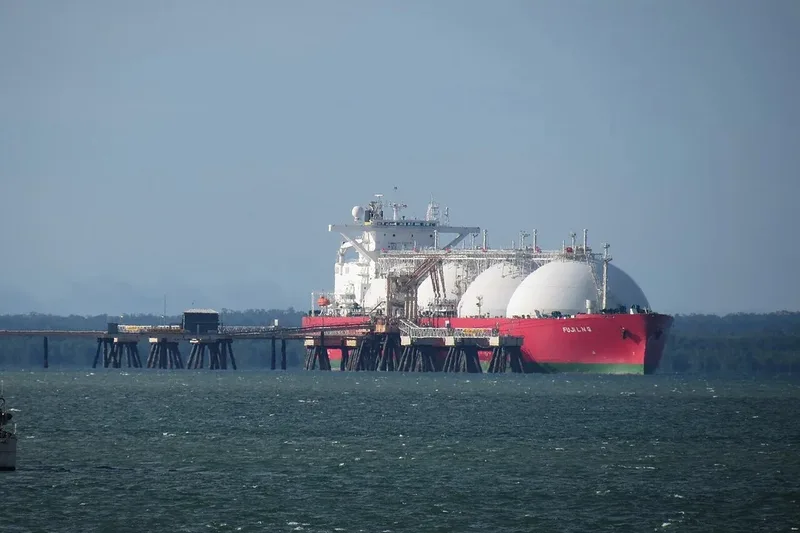
Callao, next to Lima, is Peru’s main port. DP World, the Dubai-based port operator, has run the South Pier container terminal there under a concession since 2006.
In June 2024 DP World announced completion of the US$400 million Bicentennial Pier expansion. Quay length increased from 650 metres to 1,050 metres, and handling capacity rose by about 80 percent to 2.7 million TEU a year.
Quay length grew by about 62 percent, less than the increase in capacity. The difference reflects investments in cranes, yard equipment and systems that allow more containers to be moved per metre of quay.
Port capacity depends on several linked elements: the number of berths, the cranes that load and unload ships, the yard where containers are stored and the gates where trucks enter and leave. A bottleneck at any point limits the whole terminal.
Callao handles most of Peru’s container trade and competes with other Pacific ports in the region. The opening of Chancay to the north adds new competition.
Under a concession, the operator invests in exchange for the right to collect fees for a set period, while the state retains ownership of the land and infrastructure.
Concession models like this are used at ports worldwide, from Rotterdam to Santos, as governments seek private investment and expertise.
For students, the case shows why capacity figures should be read alongside the investments that produce them.
The expansion was named after the bicentenary of Peru’s independence, celebrated in 2021, and was inaugurated in a ceremony with the transport ministry in 2024.
Larger and more efficient terminals can attract bigger ships, which lowers the cost of transporting each container. For Peruvian exporters and importers, that can mean lower freight costs and more direct connections to world markets.
The investment also reflects competition. With Chancay opening to the north and other Pacific ports expanding, Callao’s operators must keep improving to retain shipping lines and cargo. Competition between nearby ports can benefit shippers through lower prices and better service.
For the concession holder, the return depends on how quickly volumes grow to fill the new capacity. If traffic grows slowly, the fixed costs of the expansion weigh on profits, an example of operating leverage.
Port expansions are typically financed with a combination of the operator’s own funds and loans repaid from future fees, so the pace of traffic growth affects how quickly the investment pays back.
For Peru, efficient ports are part of the infrastructure that supports trade-led growth, and port costs feed directly into the competitiveness of exports such as fruit, minerals and fishmeal.
Comparing Callao’s expansion with the new port at Chancay offers a useful lesson in how existing and new infrastructure compete and complement each other within one national market.
Key moments
The South Terminal had a 650-metre quay.
Completion of the Bicentennial Pier expansion took quay length to 1,050 metres.
Source: DP World announcement (June 2024).
The trade-offs at the heart of the case
Two different queues in the same port
Callao’s South Terminal added quay length for container ships. Its North Terminal added grain storage and improved discharge rates. Counting extra port capacity conceals the distinction between a vessel that cannot find berth space and a vessel that cannot unload because the silos are full.
Our assessment
I would look for shipping services retained or won because the port could offer a dependable window. Test the value of an expansion at the busiest hours using vessel schedules known before the change. Comparing average utilisation before and after can reward a terminal for idling less while missing the more valuable outcome of keeping a ship’s next call on time.
For your seminar, paper or interview
- Q1
Which cost does a shipping line avoid by retaining its berth window?
- Q2
Why can capacity rise faster than quay length?
- Q3
What yard measure would warn that the queue has moved inland?
- Q4
Would paying to accelerate construction recover a full year of receipts or only change their timing?
- Port concessions
- Capacity expansion
- Productivity
- Trade infrastructure
How we would approach it
Simplifying Finance’s opinion, offered as a starting point for debate, not as fact or investment advice.
We think DP World’s expansion at Callao shows how productivity, not just size, drives port capacity. Quay length rose about 62 percent while capacity rose about 80 percent, reflecting better equipment and yard operations as well as more berth space.
Invest in equipment
Add cranes and yard machinery.
Improve yard flow
Speed container movements.
Coordinate with inland transport
Avoid congestion at the gates.
What this plan gives up
Expansion raises capacity but requires steady volume growth to pay off.
The strongest counter-argument
Some argue new ports such as Chancay could divert cargo from Callao.
Metrics to watch
- Containers handled
- Crane productivity
Propose your solution
Pick a discussion question and set out what you would do, why, and what it would cost. Strong, well-argued answers are reviewed and published below with your first name and programme.
Published solutions
Loading published solutions…
- DP World — Completion of the Callao Bicentennial Pier expansion ↗
- Ministry of Transport and Communications — Callao pier inauguration ↗
- Photo: Puerto-del-callao by Alex E. Proimos, CC BY 2.0 (cropped and resized) ↗
Figures are as reported by the companies or cited outlets as of 22 November 2026. Check the source before quoting. Corrections: let us know through the solution form.