What happened
IFC’s appraisal described a greenfield liquefaction train at Pampa Melchorita, a 408-kilometre pipeline and marine facilities. The train’s stated design was 4.45 million tonnes annually. That figure would represent about 12,200 tonnes per calendar day if the plant produced evenly throughout a 365-day year. It is a scale check. Maintenance, gas availability, ship scheduling and the contractual definition of delivery affect what can be sold in a particular month.
Peru LNG, at Pampa Melchorita about 170 kilometres south of Lima, is the first natural gas liquefaction plant in South America. It was officially inaugurated in June 2010.
At US$3.8 billion, it was described by its owners as the largest investment in a single project ever made in Peru. The facility includes the liquefaction plant, two storage tanks of 130,000 cubic metres each, a marine terminal stretching more than a kilometre into the sea, and a 408-kilometre pipeline from the Camisea gas region.
The plant has a nominal capacity of about 4.4 to 4.5 million tonnes of LNG a year and can process about 620 million cubic feet of gas a day.
The project was led and operated by Hunt Oil Company with partners SK Energy of South Korea, Repsol of Spain and Marubeni of Japan. Repsol held the right to market the plant’s entire output for 18.5 years.
Of the US$3.8 billion investment, about US$2.25 billion was raised in June 2008 from third parties, including export credit agencies, multilateral institutions such as IFC and commercial banks.
Long-term marketing arrangements were central to the financing. Lenders were willing to provide billions of dollars because the plant’s output had a committed buyer, which reduced the risk that it would sit idle.
The plant allowed Peru to become a net exporter of hydrocarbons for the first time since the 1960s, according to industry reports at the time.
LNG projects worldwide, from Australia to Qatar and the United States, rely on similar structures: long-term contracts, project finance and consortiums of energy companies and trading houses.
The construction phase had a large economic footprint. The consortium reported that Peru’s gross domestic product expanded by 2 percent during construction between 2006 and 2010 and that more than 30,000 jobs were generated.
The project also created debate about the allocation of Camisea gas between export and domestic use. Gas supplied to the plant comes from fields developed near Camisea, and critics argued that domestic needs should take priority over exports.
For the owners, the plant’s value depends on the spread between the cost of gas supplied and the prices received for LNG cargoes, after liquefaction and shipping costs. Global LNG prices have been volatile, rising sharply after 2021.
The plant’s nominal capacity of about 4.45 million tonnes a year implies roughly 12,200 tonnes a day if it ran evenly all year, a useful scale check, though maintenance, gas availability and ship scheduling mean actual output varies.
The case shows how project finance can unlock very large investments in countries where no single company would carry the full risk alone.
Peru LNG also changed the country’s position in global energy markets. Before 2010, Peru imported more hydrocarbons than it exported; the plant allowed it to sell gas to buyers in Asia, Europe and the Americas.
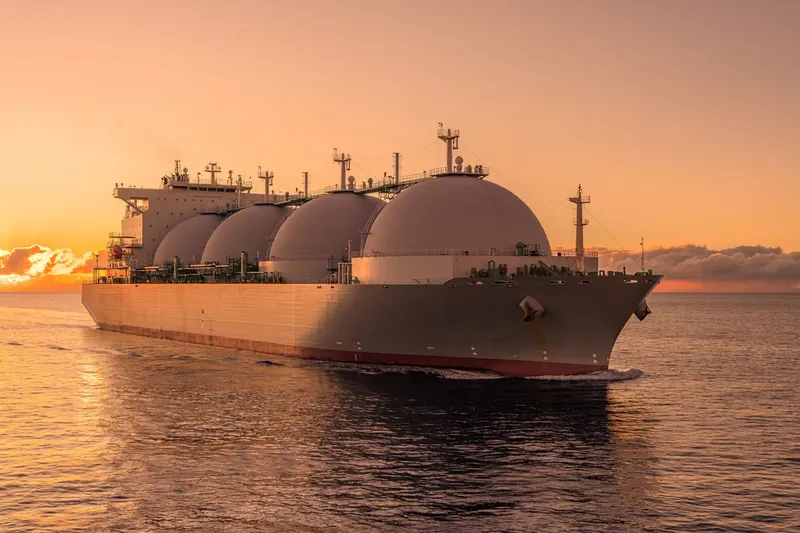
Cargoes are shipped in specialised tankers from the marine terminal, and the destination can change depending on where prices are highest, a flexibility that has grown as global LNG trading has expanded.
The plant’s long-term future depends on the remaining gas reserves dedicated to it and on the terms of supply agreements with the Camisea producers.
From a finance perspective, Peru LNG is a classic example of matching long-lived assets with long-term contracts and debt. The plant was designed to operate for decades, the marketing agreement covered most of that period, and lenders were repaid from the steady cash flows those contracts supported. This alignment of asset life, revenue contracts and debt maturity is one of the core principles of infrastructure finance, and it explains why lenders were prepared to commit more than half of the project’s cost.
It remains one of the largest foreign investments in Peru’s history.
Key moments
IFC described the liquefaction train, pipeline and marine components together.
IFC published the proposed investment disclosure for project 25390.
Sources: Oil & Gas Journal; Offshore Technology.
The trade-offs at the heart of the case
A supply chain that can stand ready and still earn little
The LNG case asks what happens when one link misses a vessel window. The anchoveta case asks what happens when an industrial supply chain is ready before fishing may begin. Both distinguish keeping an asset available from having the right and ability to make a sale.
Our assessment
For the lender I would prepare a calendar of cargo receipts against debt payments, then remove one vessel from the busiest month. Ask how much headroom remains after paying fixed costs and whether storage can accommodate the resulting inventory. A project can have a profitable full year and still require a credit line on the scheduled repayment date.
For your seminar, paper or interview
- Q1
Which contract bears a missed loading window?
- Q2
When does a delay become a permanent loss of output?
- Q3
What evidence would justify treating tank storage as a financial buffer?
- Q4
How far before the projected low point must a funding commitment become unconditional?
- Q5
Which payment could be rescheduled without weakening the receipts expected later in the forecast?
- Project finance
- Export infrastructure
- Long-term offtake
- Natural gas markets
How we would approach it
Simplifying Finance’s opinion, offered as a starting point for debate, not as fact or investment advice.
We think Peru LNG shows how a large export project can be financed when long-term sales contracts reduce risk for lenders. It turned surplus gas from Camisea into exports, though its value depends on gas supply and global LNG prices.
Lock in offtake
Sign long-term sales agreements before building.
Secure gas supply
Agree reserves dedicated to export.
Share risk with lenders
Use export credit agencies and multilaterals.
What this plan gives up
Exporting gas earns foreign revenue but uses reserves that could serve domestic demand.
The strongest counter-argument
Some argue Peru’s gas should be prioritised for domestic industry and households.
Metrics to watch
- Plant utilisation
- Export revenue
Propose your solution
Pick a discussion question and set out what you would do, why, and what it would cost. Strong, well-argued answers are reviewed and published below with your first name and programme.
Published solutions
Loading published solutions…
- IFC — Peru LNG investment disclosure, project 25390 ↗
- World Bank — Peru LNG project evaluation and infrastructure ↗
- Oil & Gas Journal • Peru LNG undergoes commissioning (2010) ↗
- LNG Industry • Peru LNG produces first LNG cargo (2010) ↗
- Offshore Technology • Peru LNG project ↗
- Photo: LNG Carrier Fuji Lng by Ken Hodge, CC BY 2.0 (cropped and resized) ↗
Figures are as reported by the companies or cited outlets as of 22 November 2026. Check the source before quoting. Corrections: let us know through the solution form.