What happened
At the November 2024 inauguration, COSCO described two container berths and two multipurpose berths in the first phase and design capacity of one million twenty-foot equivalent units per year. That measures potential container handling. It is a different quantity from loaded export boxes, which compete for space with imports and empty equipment. A new port can build a viable business with cargo diverted from another terminal even when Peru’s total trade does not grow.
Follow a shipment from the packhouse to the buyer’s door. Add road travel, time waiting for a vessel, the voyage, transshipment if needed and inland delivery overseas. Compare identical goods for the same destination and week. The value of a shorter journey includes lower inventory interest and, for perishables, more saleable life at destination. The latter should be measured using prices for the quality actually received. It may easily exceed the interest saving on the cargo.
Chancay is a new deep-water port about 80 kilometres north of Lima, built and operated by COSCO Shipping Ports, the Chinese state-owned port operator, which holds 60 percent, with Peru’s Volcan Compañía Minera holding 40 percent.
The first phase was inaugurated in November 2024. COSCO described two container berths and two multipurpose berths, with design capacity of one million twenty-foot equivalent units a year.
The first phase cost about US$1.315 billion out of a total planned investment of about US$3.4 billion. The full plan envisages up to 15 berths and an industrial park.
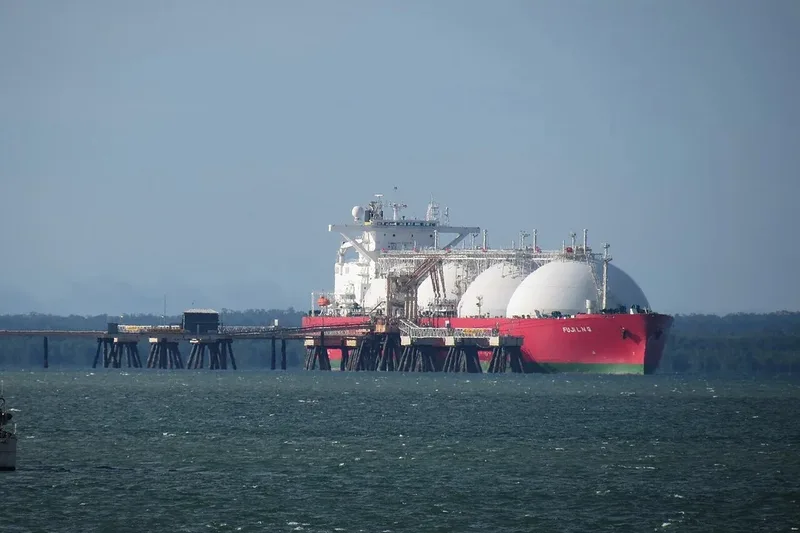
With a depth of about 17 metres, the port can receive the largest generation of container ships, with capacity of around 18,000 containers, which many existing Pacific ports in South America cannot accommodate.
Promoters argue that direct services from Chancay can reach Asian ports in about 23 days, compared with 35 to 40 days for many current routes, making Peru a potential hub for cargo from Chile, Ecuador and Colombia.
The project was developed as a private port for public use, the first of its kind in Peru. During construction it was reported to generate about 1,300 direct jobs and around 8,000 indirect jobs.
A port’s design capacity is not the same as its traffic. To earn a return, Chancay must attract shipping lines and cargo owners, which depends on costs, reliability and connections to inland markets.
Ports such as Piraeus in Greece, also operated by COSCO, show how a well-connected hub can grow quickly once major shipping lines commit to it.
The project has a long history. It began in 2011 as a private initiative, and Volcan later took full ownership before bringing in COSCO as the majority partner and operator, a structure that combined local knowledge with the financial strength and shipping network of a global operator.
Shipping economics favour large vessels because the cost per container falls as ship size rises. A port that can receive the biggest ships can therefore offer lower transport costs per box, but only if enough cargo is available to fill those ships regularly. That is why the early years of operation, when volumes are still building, are critical for the port’s finances.
The port’s success also depends on links to the rest of Peru. Trucks must be able to reach Chancay efficiently from Lima and from agricultural and mining regions, and roads and logistics parks around the port will shape its competitiveness.
Early operating reports indicated that the port moved hundreds of thousands of containers and more than a million tonnes of cargo in its initial period of activity, a promising start against a design capacity of one million TEU a year.
Chancay has also become a symbol of China’s growing economic presence in Latin America, drawing attention from governments and analysts concerned about strategic infrastructure. For students, the case is a reminder that large infrastructure investments often carry geopolitical as well as financial dimensions.
Its future second phase, reported to involve more than US$1.3 billion of further investment and an expansion towards 15 berths, will test whether early demand justifies the full plan.
For investors, the key indicators will be annual container volumes, the number of shipping services calling at the port and the share of cargo coming from neighbouring countries.
Key moments
The plan provided for two container and two multipurpose berths.
The port’s inauguration took place.
Source: Andina (May 2023).
The trade-offs at the heart of the case
Price a shipping route from the packhouse door
Chancay’s new route and Paita’s first expansion stage can benefit exporters through shorter or more dependable journeys. For a perishable shipment, extra saleable life may matter more than the interest saved on goods in transit. Both benefits depend on delivery to the buyer.
Our assessment
I would ask for repeat bookings at commercial rates, broken down by origin, destination and sailing frequency. An inaugural call verifies that the ship can berth. A second season of recurring cargo is stronger evidence that the route meets shippers’ needs. Early success should be judged both from the terminal’s cash perspective and from the exporter’s net return after every leg of the journey.
For your seminar, paper or interview
- Q1
Which cargo can move to Chancay without increasing national exports?
- Q2
When can a faster voyage leave door-to-door time unchanged?
- Q3
What rate of repeat bookings would justify another berth?
- Q4
Which observations would verify demand at the time and location the capacity is available?
- Q5
Would a smaller fixed commitment or a guaranteed unit margin give better downside protection?
- Port economics
- Trade routes
- Foreign direct investment
- Network effects
How we would approach it
Simplifying Finance’s opinion, offered as a starting point for debate, not as fact or investment advice.
We think Chancay could reshape trade between South America and Asia, but its value depends on attracting enough cargo, not just on its capacity. Shorter shipping times are a real advantage, yet shippers will compare total costs, including inland transport to the port.
Build inland links
Improve roads and logistics to the port.
Attract regional cargo
Market the port to neighbouring countries.
Track utilisation
Compare volumes with design capacity.
What this plan gives up
A deep-water hub offers scale advantages but needs time to build volume.
The strongest counter-argument
Some raise strategic concerns about foreign control of key infrastructure.
Metrics to watch
- Containers handled per year
- Share of capacity used
Propose your solution
Pick a discussion question and set out what you would do, why, and what it would cost. Strong, well-argued answers are reviewed and published below with your first name and programme.
Published solutions
Loading published solutions…
- COSCO SHIPPING Ports — Chancay inauguration and facility specifications ↗
- Presidency of Peru — Chancay port opening ↗
- Andina • From Chancay to Shanghai (May 2023) ↗
- Maritime Executive • Opening of Chancay megaport ↗
- El Peruano • Chancay–Shanghai direct connection ↗
- Photo: Juan Brignardello Vela en el Puerto de Chancay Al Culminar las Obras-cut by Lamder, CC0 (cropped and resized) ↗
Figures are as reported by the companies or cited outlets as of 22 November 2026. Check the source before quoting. Corrections: let us know through the solution form.