What happened
The World Bank-backed Sindh Flood Emergency Housing Reconstruction Project was approved in December 2022 with US$500 million. Its design supports beneficiary-driven reconstruction of resilient core housing in selected flood-affected districts. The May 2024 implementation report assigned US$470 million to reconstruction grants within the original design. In December 2024 the Bank approved a further US$450 million. Those amounts record project financing and allocations, rather than the number of completed, occupied houses.
Owner-driven reconstruction gives households influence over labour, timing and practical design choices. It also asks families to coordinate builders and materials in markets disrupted by a disaster. A family with savings can bridge a payment delay. A poorer family may have to dismiss a mason or borrow at a high rate. The identical inspection timetable therefore imposes very different effective costs.
In December 2022 the World Bank approved US$500 million for the Sindh Flood Emergency Housing Reconstruction Project, implemented by the Sindh People’s Housing for Flood Affectees. It aimed to provide reconstruction grants for 350,000 housing units, about 20 percent of Sindh’s housing needs, plus rainwater harvesting systems and twin-pit latrines.
Rather than build houses itself, the project pays owners in instalments as they complete stages such as foundations, walls and roof, and trains masons in multi-hazard resilient building. Non-governmental organisations help verify progress. By December 2024, when the Bank added US$450 million, the original project had supported over 410,000 core housing units. The Asian Development Bank financed a parallel project for 250,000 homes, with conditional grants of Rs300,000 per household.
Reports in 2025 said the World Bank-financed project had disbursed more than US$630 million and reached over 1.5 million people. The Sindh government’s wider goal is to rebuild about 2.1 million homes.
Key moments
World Bank approves US$500 million
First grant instalments paid
US$450 million additional financing
ADB approves parallel project for 250,000 homes
Grants paid in instalments tied to construction stages. Sources: World Bank press releases (Dec 2022, Dec 2024).
The trade-offs at the heart of the case
Core tensions
Centralised contracting could simplify engineering control and bulk purchasing. It can also result in standard designs poorly suited to livelihoods or local sites. A staged grant gives households more discretion, but works best when engineering advice and inspections arrive while builders can still correct a defect economically.
Inspections are most valuable before the work is hidden
A household may have to decide whether to pour concrete before the inspector arrives. Waiting risks higher material prices and losing a work crew. Proceeding risks being unable to document construction when the next instalment is approved. Simple, understood criteria and predictable visits make it possible to protect technical quality without forcing every family to finance an administrative delay. A grant tied to an individual house also has limits when safe occupancy depends on drainage, paths and shared access. A household can complete its walls and roof but remain unable to move back safely if those communal works are absent. Separate structural completion from habitable occupancy in reporting. Ask who controls the missing inputs and at what cost they can be supplied. A programme may get more families into usable homes by resolving one shared drainage obstruction than by issuing the next round of completion certificates. That is a concrete choice between uses of scarce implementation capacity.
Paying by stage protects quality but slows the poorest
Releasing money only after each stage is inspected ensures funds go to safer houses. But the poorest families may lack savings to start a stage before the next payment arrives, and may borrow at high cost or stall. Advance payments and quick inspections reduce that barrier.
Owner choice versus standard design
Owners who build their own homes choose layouts and materials that suit their needs and spend money locally. But without supervision, some may cut corners on the resilient features that justify the subsidy.
For your seminar, paper or interview
- Q1
What is the cash cost to a household of a late inspection?
- Q2
What evidence would justify relaxing a verification requirement without compromising structural quality?
- Q3
How would you distinguish an inspection delay from a household’s inability to finance the next stage?
- Owner-driven reconstruction
- Conditional cash transfers
- Staged payments
- Building standards
How we would approach it
Simplifying Finance’s opinion, offered as a starting point for debate, not as fact or investment advice.
Owner-driven reconstruction with staged payments has reached hundreds of thousands of households faster than contractor-built housing could. Speeding inspections and offering small advances would help the poorest families keep building.
Inspect quickly
Reduce waiting between stages.
Offer advances to the poorest
Help families start each stage.
Train local masons
Build skills that stay in villages.
What this plan gives up
Staged payments ensure quality but can delay construction for cash-poor families.
The strongest counter-argument
Rs300,000 may not cover the full cost of a resilient house given inflation in building materials, leaving families with incomplete homes or debt.
Metrics to watch
- Share of houses completed to roof level
- Average time between instalments
Propose your solution
Pick a discussion question and set out what you would do, why, and what it would cost. Strong, well-argued answers are reviewed and published below with your first name and programme.
Published solutions
Loading published solutions…
- World Bank: May 2024 housing implementation report ↗
- World Bank: December 2024 additional financing ↗
- World Bank: $1.692 billion for Sindh ↗
- World Bank: $450 million additional financing ↗
- World Bank blog: Stronger after the storm ↗
- ADB: collaborative procurement ↗
- Business Recorder: disburses over US$630m ↗
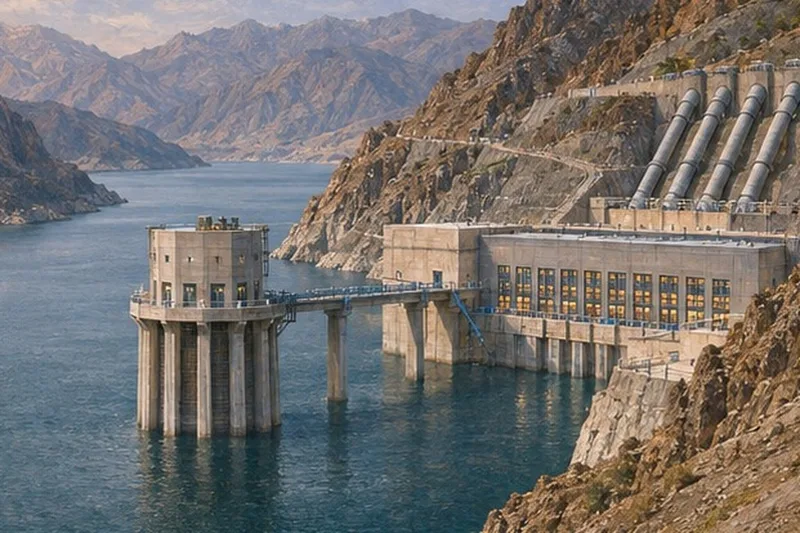
- Image: AI-generated editorial illustration · Simplifying Finance
Figures are as reported by the companies or cited outlets as of 22 November 2026. Check the source before quoting. Corrections: let us know through the solution form.