What happened
Bridge condition and network importance are different measures. A bridge in poor condition can carry little traffic because people already avoid it. Using present traffic alone could permanently penalise the community most harmed by deterioration. Conversely, a sound bridge on a critical route may justify preventive work because failure would be very expensive. A risk-based plan combines the likelihood of loss of service with its consequences and the ability to restore access.
For a market-bound farmer the cost of a detour includes time, vehicle expense and the chance that goods arrive too late for the day’s sale. For an ambulance or school transport, normal traffic counts say even less about the cost of a lost crossing. A local survey should identify seasonal routes, persons with few alternatives and restrictions on certain vehicle types. Its findings can change priorities without ignoring the engineering assessment.
A manager deciding between preventive maintenance and reconstruction should examine the life extended per taka and the cost of service interruption during works. Narrowly targeting new construction can leave a network with impressive additions and a growing backlog on older assets. An inventory can help if condition ratings are updated, defects produce funded work orders and completed repairs are checked. The crucial result is dependable access across a network through the seasons when villages need it. The number of spans entered into a database is only a means of getting there.
The World Bank approved the Operation for Supporting Rural Bridges on 25 October 2018 with a US$425 million IDA credit, and the credit became effective in January 2019. The Local Government Engineering Department is responsible for the programme, and the World Bank lists a total cost of about US$615 million.
The programme planned to maintain 85,000 metres of rural bridges, widen or rehabilitate 29,000 metres, and build 20,000 metres of new bridges. The World Bank said it would also generate about 5.5 million person-days of employment through long-term maintenance work.
It uses a programme-for-results approach, in which funds are released as agreed results are achieved, alongside support to strengthen LGED’s planning, design and management of rural bridges. The programme also emphasised climate resilience, given the exposure of rural infrastructure to floods and cyclones.
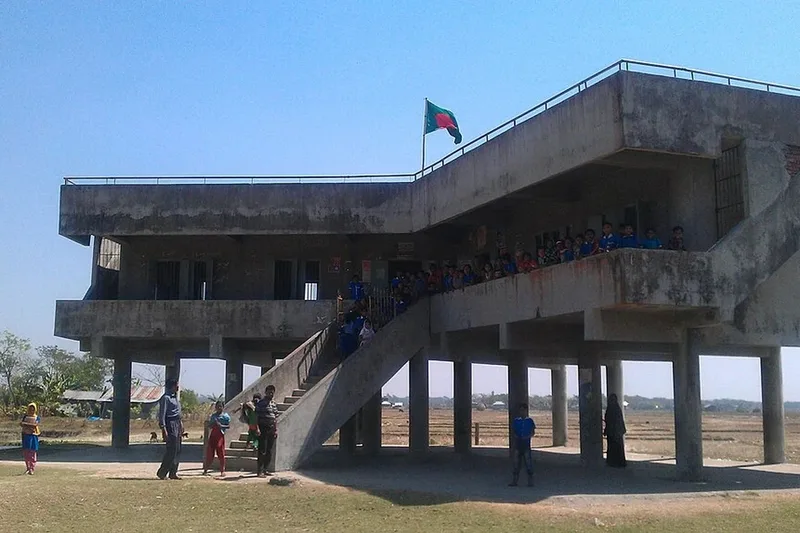
Infrastructure everywhere suffers from a bias towards building new assets rather than looking after old ones. Accountants record this through depreciation: assets wear out, and unless money is spent to maintain them, their value and usefulness decline. For governments, protecting maintenance budgets is one of the most cost-effective ways to keep economies connected. For Bangladesh, where rivers and canals cross almost every rural road, bridges are often the weakest link in a journey. A single closed bridge can add hours to a trip to market, school or a clinic. Regular inspections, quick small repairs and clear records of each structure’s condition help keep those links open, and they cost far less than rebuilding a bridge that has been allowed to fail, which is why maintenance deserves a protected budget.
Key moments
IDA credit approved.
Credit became effective.
World Bank project profile described the rural network and bridge-management rationale.
Source: World Bank, World Development Indicators (SP.RUR.TOTL.ZS).
The trade-offs at the heart of the case
Spend one market day on the alternative road
Record the detour, vehicle types, fares, waiting time and seasonal limits. Ask households who never make the trip at all, since low measured traffic can be an effect of poor access. Compare the direct economic saving from preventive repair with the expected cost of a closure and deferred reconstruction. I would set aside a maintenance allocation for critical routes and publish the condition thresholds that trigger work. This gives less visible repairs a fair comparison with new construction. A decision can then be revised when a new nearby crossing opens, a market moves or wet-season traffic patterns change.
A wage programme is not automatically a maintenance budget
Seasonal public works can create useful local assets and income at a time when households need it. Some bridge tasks, however, require engineering supervision, specific materials and intervention at a time dictated by structural condition. Scheduling all maintenance when an employment programme opens may be convenient for the budget office and wrong for a bridge. A workable division could use local labour for suitable approach or drainage tasks while assigning structural decisions to qualified maintenance teams. Record the value of wages delivered separately from the reduction in detour and closure costs. That preserves the legitimate social objective of the work programme without encouraging managers to label a busy worksite a successful structural repair before the crossing has actually been inspected.
For your seminar, paper or interview
- Q1
When is a lightly used bridge a high-priority repair?
- Q2
How should an alternative route enter the appraisal?
- Q3
Which evidence shows that maintenance restored useful access?
- Asset life-cycle management
- Maintenance versus new build
- Results-based financing
- Climate resilience
How we would approach it
Simplifying Finance’s opinion, offered as a starting point for debate, not as fact or investment advice.
We think the programme’s focus on maintaining existing bridges is its most valuable feature. New bridges attract attention, but keeping thousands of existing ones safe and open often protects more journeys per taka, and neglect turns small repair bills into costly replacements.
Keep a bridge inventory
Record the condition of every bridge and update it regularly.
Ring-fence maintenance funds
Protect routine maintenance budgets from being shifted to new projects.
Pay for results
Release funds as verified maintenance and rehabilitation targets are met.
What this plan gives up
Spending on maintenance delivers quiet benefits that are hard to showcase, while new bridges are more visible to voters and leaders.
The strongest counter-argument
Some argue that in fast-growing rural areas, new connections create more economic value than maintaining low-traffic bridges, so priorities should follow traffic growth.
Metrics to watch
- Share of bridges in good condition
- Maintenance spending as a share of total bridge budget
Propose your solution
Pick a discussion question and set out what you would do, why, and what it would cost. Strong, well-argued answers are reviewed and published below with your first name and programme.
Published solutions
Loading published solutions…
- World Bank: Rural Bridges Connecting for a Better Life ↗
- World Bank: Operation for Supporting Rural Bridges, financing and effectiveness ↗
- World Bank: World Development Indicators, Rural population share ↗
- World Bank: $425 million to improve rural bridges in Bangladesh ↗
- World Bank: Loans and credits, Operation for Supporting Rural Bridges ↗
- World Bank: Project page (P161928) ↗
- World Bank: Rural bridges, connecting for a better life ↗
- Photo: Guftasara Bridge.jpg by S.M.Tanim, CC BY-SA 4.0 (cropped and resized) ↗
Figures are as reported by the companies or cited outlets as of 22 November 2026. Check the source before quoting. Corrections: let us know through the solution form.