What happened
The port authority’s results record a 19 November 2021 auction and a winning grant fee of R$558.3 million. The original operation period was twenty-five years. The authority discussed possible extensions under conditions and at the granting authority’s discretion. An extension is not equivalent to an unconditional term the bidder can use to recover every late investment. The base model should stop at the contracted expiry.
A cubic metre of storage can support many cubic metres of annual throughput if inventory turns quickly. Different products may require separate tanks, maintenance windows or dedicated connections. A full terminal is not necessarily an efficient one. It may be holding stock awaiting a delayed customer or working around a berth unavailable at the right time. The valuable resource is an available combination of tank, berth and onward route.
For an integrated fuel supplier, terminal access can prevent a costly interruption elsewhere in the group. An independent customer may instead care about getting an equivalent loading slot on transparent terms. If all premium windows are consumed by the owner, published spare capacity at unattractive hours may have limited commercial value. The access discussion should therefore address timing and grade alongside total capacity.
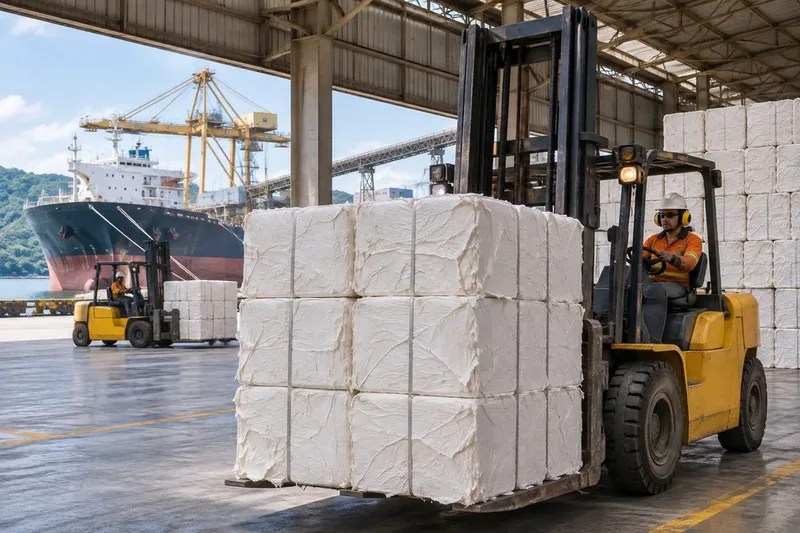
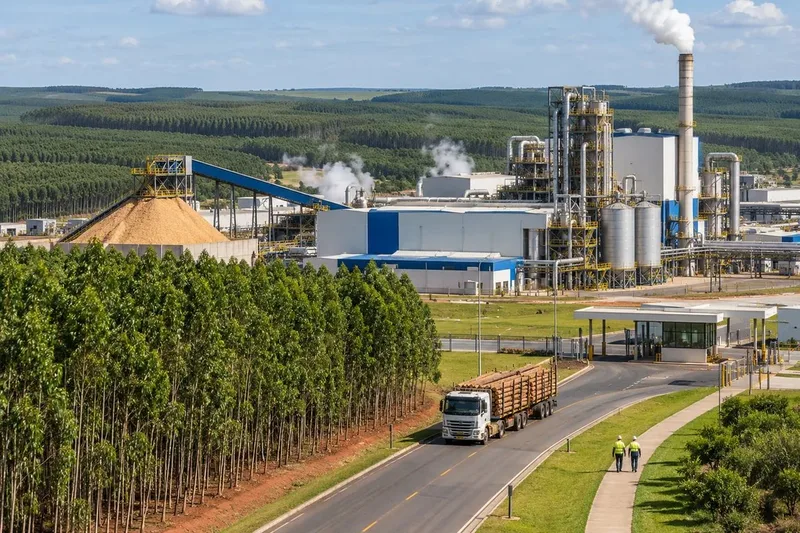
The Port of Santos in São Paulo state is Latin America’s busiest port. The STS08A area, about 297,000 square metres, is used to store and move liquid fuels and had been operated by Transpetro, Petrobras’s logistics subsidiary. The government auctioned a new 25-year lease on 19 November 2021.
Petrobras was the only bidder and offered a grant fee of R$558.25 million, although the minimum was just R$1. The contract required about R$678 million of investment, including two new berths, plus about R$1.3 billion of operating spending. The infrastructure minister said the terminal would serve four Petrobras refineries. No one bid for a second area, STS08.
Why would a sole bidder offer so much? Possible reasons include uncertainty about rivals, the strategic value of the terminal and rules that rewarded the highest offer. The case shows how auction design shapes prices.
Key moments
The government offers the Santos liquid-bulk area on a lease framework.
Petrobras wins STS08A at auction.
The minimum bid was R$1; Petrobras was the only bidder. The lease runs 25 years. Sources: InvestNews; Tank Terminals; Exame.
The trade-offs at the heart of the case
When the cheapest tank is the expensive option
A storage tank dedicated to a fast-moving fuel may generate more throughput than a larger tank reserved for a slow-moving product. The buyer should distinguish working capacity from total shell volume, allowing for operating constraints and product compatibility. A nominally empty tank cannot always switch grade immediately. Cleaning, inspection and pipe configuration take time and can make a quick commercial opportunity impossible to serve. The demand for a berth is peaked in time. A ship that misses its window can incur waiting cost while vehicles collecting inland face product delays. A leaseholder might profit from prioritising an integrated supply schedule even if an outside customer would pay a higher explicit storage fee. Price the avoided downstream interruption and compare it with the external contribution sacrificed. This makes the allocation of scarce access a business decision that can be audited rather than a preference buried in operating schedules. The investment horizon creates a further test. Imagine a new pumping system that would generate worthwhile operating savings in its later years. If those years come after the lease expiry, the operator needs evidence of compensation, transfer terms or a plausible renewal before treating all the savings as its own. The public authority may value the system beyond the existing lease. If the parties share that value, a contractual mechanism is more dependable than an optimistic terminal assumption.
For your seminar, paper or interview
- Q1
Which physical constraint determines usable storage for a particular product?
- Q2
How would an integrated owner compare a group vessel with a third-party booking?
- Q3
Who receives the benefit of a pump installed near lease expiry?
- Q4
How would you verify throughput achievable at commercially usable loading windows using information available at the time?
- Q5
Which finding about unserved nominations and contribution per tank day would most change your recommendation, and why?
- Port leases
- Strategic bidding
- Single-bidder auctions
- Incumbent advantage
How we would approach it
Simplifying Finance’s opinion, offered as a starting point for debate, not as fact or investment advice.
A reliable access contract should specify what happens when maintenance removes a tank or berth from service. Does the operator offer another window, arrange an alternative terminal or pay a defined amount? A general promise of availability is harder to value than a defined remedy on a realistic schedule. Compare the value of that protection to the additional price a customer would pay. This is one route by which an infrastructure owner can turn genuine operational resilience into income while exposing the cost of failing to deliver. Separate the value of third-party fees from the value of improving Petrobras’s own supply chain. Verify that the same avoided delay is not counted in both categories. Consider additional pumps or scheduling changes before building a new tank. If a future extension is necessary to justify an investment, identify whose approval is required and what happens if the extension is never granted.
Secure critical logistics
Bid to keep control of a terminal that serves four refineries.
Invest in new berths
Build two new berths to remove bottlenecks.
Bid only for what is needed
Skip the adjoining STS08 area to avoid extra cost.
What this plan gives up
Paying R$558 million secured Petrobras’s fuel logistics at Brazil’s busiest port, but as the only bidder it arguably paid far more than the minimum price required.
The strongest counter-argument
For an external customer, storage and access can substitute for costly inventory elsewhere. A dependable loading window might enable a customer to hold less stock at an inland depot. The terminal could charge for that reliability or earn a longer customer commitment. It cannot automatically claim the full customer saving as its own revenue. Ask what alternative the customer has and how much of the benefit competitive negotiation leaves with each side. A public assessment can examine an especially congested week. Compare the allocation of storage, ship windows and truck loading slots across customers with similar technical requirements. Record the requests that could not be served, including those discouraged from bidding by unavailable timings. Accepted bookings alone give a misleading picture of spare capacity. A terminal can appear fully commercial and still be missing profitable traffic because the service interface prevents customers from asking for the combination they actually need. Higher turnover can improve throughput without creating more storage. A tank dedicated to one fuel may have little immediate value for another.
Metrics to watch
- Terminal throughput
- Completion of new berths
Propose your solution
Pick a discussion question and set out what you would do, why, and what it would cost. Strong, well-argued answers are reviewed and published below with your first name and programme.
Published solutions
Loading published solutions…
- Santos Port Authority, 2021 results and STS08A auction (Santos Port Authority) ↗
- Federal government description of the Santos liquid-bulk leases (Brazilian public authority) ↗
- InvestNews: Petrobras offers R$558m for Santos area ↗
- Tank Terminals: Port of Santos terminal sold for R$558 million ↗
- Exame: Petrobras wins Santos terminal auction ↗
- Image: Simplifying Finance · AI-generated editorial illustration
Figures are as reported by the companies or cited outlets as of 22 November 2026. Check the source before quoting. Corrections: let us know through the solution form.