What happened
A city can reach the limit of a water source long before it reaches the limit of its demand. For Gauteng, new supply involved storage and tunnels in another country. A useful financial question is which point in the system demonstrates delivery. The completion of a wall, arrival of water and reliable operation over dry years occur on different dates.
Phase I of the Lesotho Highlands Water Project connected storage and transfer infrastructure to deliver water toward South Africa’s Vaal system and generate hydroelectricity in Lesotho. Katse and Mohale form parts of the system. Mohale provides additional storage linked by tunnel to Katse, so the value of each component depends on the rest.
Water deliveries started in January 1998. The development authority reports completion of Phase I in 2003 and inauguration in 2004. Those dates are compatible. They mark first delivery, completion of a broader package and formal inauguration. Reporting only a completion year would obscure several years in which water was already moving.
The Lesotho Highlands Water Project transfers water from the mountains of Lesotho to South Africa’s Vaal River system, which supplies Gauteng, the country’s economic heartland, and generates hydropower for Lesotho.
Phase I included the Katse Dam, about 185 metres high, the Mohale Dam, 145 metres high and the largest of its type in Africa when built, along with tunnels linking the reservoirs and delivering water to South Africa. The first water reached Gauteng in January 1998.
Phase I delivers about 780 million cubic metres a year. By April 2019, Phase I had supplied a total of 15,240 million cubic metres, generating R9.711 billion in income for Lesotho.
Phase II, centred on the Polihali Dam, will raise transfers to about 1,270 million cubic metres a year, as agreed by the two governments.
The project is often cited as a model for cross-border water cooperation, showing how upstream and downstream countries can share benefits from a common resource.
The project rests on a treaty between Lesotho and South Africa signed in 1986. South Africa pays royalties to Lesotho for the water it receives, while Lesotho uses the system to generate hydroelectricity at Muela.
Financially, large transfer schemes involve high upfront costs, long construction periods and decades of operation. Their value depends on demand in the receiving region and the reliability of supply in dry years. Phase II, centred on the Polihali Dam, has a full supply capacity of 2,325 million cubic metres.
Cross-border projects also need clear governance. The Lesotho Highlands Water Commission oversees the project on behalf of both governments, and South Africa’s Trans-Caledon Tunnel Authority manages its financing and operation obligations on the South African side.
Around the world, from the Nile to the Indus, shared rivers create both tension and opportunity. The Lesotho Highlands project is often studied as an example of how a treaty can turn a shared resource into mutual benefit.
Phase I also shows the value of designing for future expansion. The Katse Dam was deliberately configured to remain the common link to later phases, so that Phase II water from Polihali can flow through the existing system to South Africa. This reduces the cost of expansion and illustrates how early design choices can create options for the future.
The project has faced criticism over its social and environmental effects, including the resettlement of communities in Lesotho and changes to downstream river flows. These concerns are a reminder that large infrastructure creates both winners and people who bear costs, and that compensation and monitoring are part of a project’s true cost.
Mohale Dam alone can hold about 950 million cubic metres at full supply level, storage that lets the system keep delivering water to South Africa through dry spells, which is where much of the project’s value lies.
Key moments
First water delivered to Gauteng.
Phase I completed and inaugurated.
Phase II Polihali Dam under construction.
Source: Lesotho Highlands Development Authority, Polihali Dam update.
The trade-offs at the heart of the case
Our assessment
Evaluate water delivery and electricity generation separately before combining their benefits. A decision to maintain a tunnel can protect both outputs, but they have different units and beneficiaries. Ask what happens to each during scheduled maintenance and how the alternative sources perform in a dry year. A transfer scheme can support two countries while leaving each with a different reason to maintain it. Water users care about dependable delivery into their supply system. Electricity users care about generation at the relevant time. People living near the infrastructure also experience changes at a location far from the final urban water customer. Combining benefits into a single number can hide who would need to fund a repair, whose service would be interrupted and how alternatives differ. A useful funding table places each cost and benefit beside the institution or community experiencing it, with separate physical units before any common valuation.
For your seminar, paper or interview
- Q1
Who could be missing from the reported measure of water delivered at the agreed transfer point?
- Q2
Which part of maintenance of linked storage and transfer assets must be financed every year?
- Q3
How would evidence on delivery during maintenance and dry periods affect your choice?
- Cross-border infrastructure
- Water transfer
- Royalty agreements
- Project phasing
How we would approach it
Simplifying Finance’s opinion, offered as a starting point for debate, not as fact or investment advice.
We think the Lesotho Highlands Water Project is a successful example of cross-border cooperation that benefits both countries. Gauteng gains a reliable water supply, and Lesotho earns royalties and hydropower, showing how shared infrastructure can create value for neighbours.
Stick to agreed phasing
Complete Phase II on schedule.
Share benefits fairly
Maintain transparent royalty arrangements.
Manage demand too
Pair new supply with water savings in Gauteng.
What this plan gives up
Large transfers secure supply but involve high costs and long construction periods.
The strongest counter-argument
Some argue Gauteng should invest more in reuse and leak reduction before new transfers.
Metrics to watch
- Annual volume delivered
- Royalties paid to Lesotho
Propose your solution
Pick a discussion question and set out what you would do, why, and what it would cost. Strong, well-argued answers are reviewed and published below with your first name and programme.
Published solutions
Loading published solutions…
- Lesotho Highlands Development Authority • Phase I components and dates ↗
- Lesotho Highlands Development Authority • project overview ↗
- LHDA • Polihali Dam update ↗
- TCTA • Lesotho Highlands Water Project profile ↗
- OUTA • LHWP Phase II report (Phase I deliveries and royalties) ↗
- ORASECOM • Katse Dam infrastructure catalogue ↗
- Wikipedia • Lesotho Highlands Water Project ↗
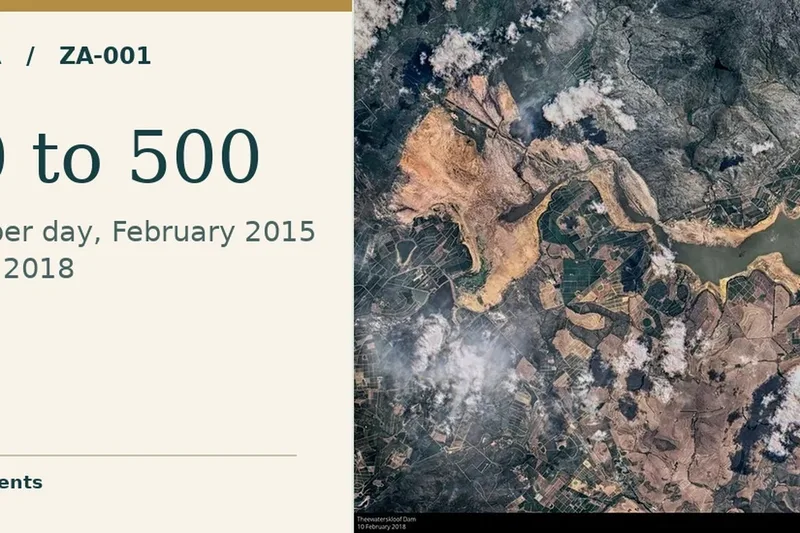
- Photo: Katse Dam satellite by Júlio Reis, CC BY-SA 3.0 (cropped and resized) ↗
Figures are as reported by the companies or cited outlets as of 22 November 2026. Check the source before quoting. Corrections: let us know through the solution form.