What happened
The value of rural electricity is not exhausted by the amount a meter sells. If households can perform some domestic tasks differently, the time available for paid work may change. Yet electricity networks are more likely to reach some places than others, and employment might already be developing faster in the areas easiest to connect.
Taryn Dinkelman studied the rollout to rural households, combining information on connections and employment with features such as geography that affected the cost of extension. The analysis used more than one way of comparing areas. Its reasoning depends on distinguishing changes made possible by electrification from other differences between places.
The study found that rural electrification raised female employment within five years. This is a community labour-market finding under the rollout studied. It does not imply that each connected woman obtained a job, that jobs were available immediately or that every future extension would have the same effect.
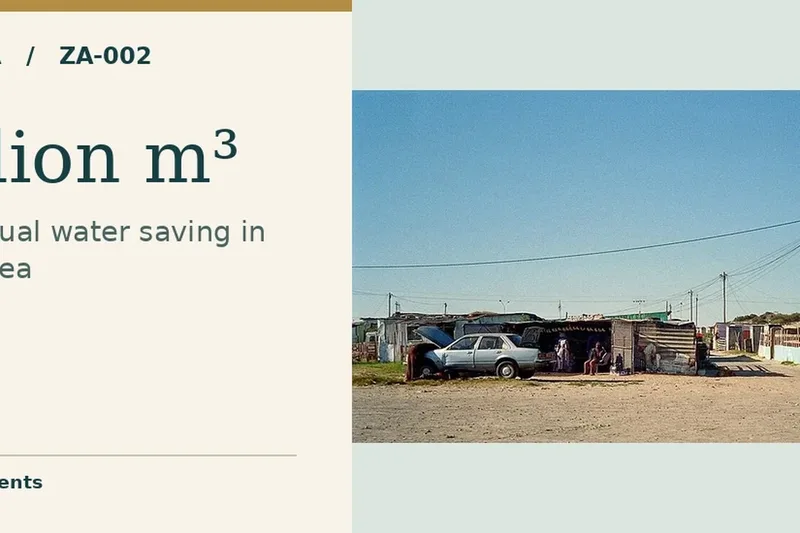
After 1994, South Africa launched a mass rollout of electricity to households that had been excluded under apartheid. Taryn Dinkelman studied the effects in rural KwaZulu-Natal, where around 470,000 households were connected for free between 1996 and 2001.
The challenge for any study of infrastructure is that projects are not placed at random. Electricity may reach areas that were already growing faster. To address this, Dinkelman used land gradient as an instrument, because flatter areas were cheaper to connect, and also applied a fixed-effects approach.
She found that electrification significantly raised female employment within five years. Later summaries describe increases of about 9 to 9.5 percentage points, and an earlier version estimated 13.5 percentage points. There were no significant effects on male employment.
The evidence suggests that electricity released women from time-consuming home production, such as collecting firewood and cooking with wood, allowing them to take paid work or run small businesses. Households shifted sharply towards electricity for cooking and lighting.
The study also found that the new infrastructure appeared to increase hours of work for both men and women, while reducing female wages and increasing male earnings. More women entering the labour market may have pushed down wages for women.
The research has been widely cited in debates about energy access in Africa and Asia, where hundreds of millions of people still lack electricity.
For students, the case is a good introduction to how economists separate correlation from causation when evaluating public investment.
The study’s methods are worth noting for anyone who wants to evaluate infrastructure. Comparing connected and unconnected areas directly would overstate or understate the effect, depending on why some places were connected first. Using geography as an instrument helps isolate the effect of electricity itself.
The finding that women’s wages fell even as employment rose is a reminder that benefits are not always shared evenly. More people competing for similar jobs can push down pay, so the full welfare effect depends on how earnings and household time use change together.
The paper also found evidence that electrification enabled microenterprises and may have affected migration, showing that new infrastructure can reshape local economies in several ways at once.
Key moments
Study period begins in rural KwaZulu-Natal.
Census data used to measure changes.
Study published in the American Economic Review.
Source: Dinkelman, ESMAP presentation (2015).
The trade-offs at the heart of the case
Work through the evidence
Construct two timelines. One marks when electricity became available in a locality. The other follows employment and related household choices. A connection in the final survey year creates a shorter opportunity for change than a connection several years earlier. Also examine whether work was taken locally or elsewhere. A meter in one home and an employment outcome in that home’s wider labour market need not share a geographic boundary. Classify a new hour of paid work alongside changes in travel, unpaid care and other work. More paid employment and a shorter unpaid workday can occur together, but they need not. To understand welfare, ask what filled the hours before electricity arrived and whether the new activity was available to people lacking complementary transport or skills.
Our assessment
Include a time-use and employment follow-up if a new network extension is justified partly as an employment intervention. First establish reliable household use. Then ask whether domestic time changed and whether reachable paid work existed. Those observations can distinguish a working mechanism from an optimistic forecast. The author reports evidence consistent with time released from work in the home and with new opportunities for small-scale activity. The interpretation is plausible without implying that every additional job used electricity directly. A woman could use a changed daily schedule to work at a location without a new connection. Conversely, a household could connect equipment and still find no additional employment opportunity nearby. These distinctions affect the comparison with a transport subsidy or training program. A municipality deciding among them needs to establish which constraint limits paid work in the proposed service area.
For your seminar, paper or interview
- Q1
Who could be missing from the reported measure of paid work and time use among comparable adults?
- Q2
Which part of network extension and continued household access must be financed every year?
- Q3
How would evidence on changes by initial access to jobs and care arrangements affect your choice?
- Infrastructure impact
- Instrumental variables
- Time use
- Gender and work
How we would approach it
Simplifying Finance’s opinion, offered as a starting point for debate, not as fact or investment advice.
We think Dinkelman’s study shows that infrastructure can change how families use their time. Electricity freed women from some household tasks and helped them enter paid work, a benefit that a narrow cost-benefit analysis based on electricity sales would miss.
Count wider benefits
Include employment effects in project appraisal.
Support small enterprises
Pair electrification with business support.
Target underserved areas
Prioritise places with high gains.
What this plan gives up
Rural grids are costly per connection, but benefits extend beyond the meter.
The strongest counter-argument
Some argue off-grid solar can deliver similar benefits at lower cost.
Metrics to watch
- Female employment rates
- Household fuel use
Propose your solution
Pick a discussion question and set out what you would do, why, and what it would cost. Strong, well-argued answers are reviewed and published below with your first name and programme.
Published solutions
Loading published solutions…
- Dinkelman • The Effects of Rural Electrification on Employment ↗
- Dinkelman • rural electrification research paper ↗
- ESMAP • Dinkelman, Measuring impacts of new access to electricity (2015 presentation) ↗
- Dinkelman • Job market paper version (2008) ↗
- Photo: Rural area life by Big Steppar, CC BY-SA 4.0 (cropped and resized) ↗
Figures are as reported by the companies or cited outlets as of 22 November 2026. Check the source before quoting. Corrections: let us know through the solution form.