What happened
ENGIE’s 2019 accounts record the acquisition of a 90 percent interest by a consortium for US$8.6 billion and completion on 13 June. TAG had approximately 4,500 kilometres of gas pipelines. Petrobras retained 10 percent at this stage. A kilometre of pipe describes the footprint. It says little about the revenue attached to spare capacity or the cost of keeping an isolated stretch available for the next nomination.
The buyer must understand what happens if its largest shipper wants less gas. A contract that pays for reserved capacity can preserve revenue despite weak physical use, subject to payment and performance terms. At renewal, the relationship can change dramatically. An idle pipeline with a solvent customer paying for availability is economically different from the same pipe after the reservation expires. A financing plan that treats those years as interchangeable can create a refinancing problem.
For Petrobras, a sale can exchange ownership risk for persistent transport commitments. For an industrial user, a change of shareholder matters mainly through access, reliability and tariffs. A new shipper may value a connection to a city that has ample trunk capacity but lacks the final link to its premises. Additional kilometres outside the bottleneck can increase the regulated footprint without helping that user obtain gas.
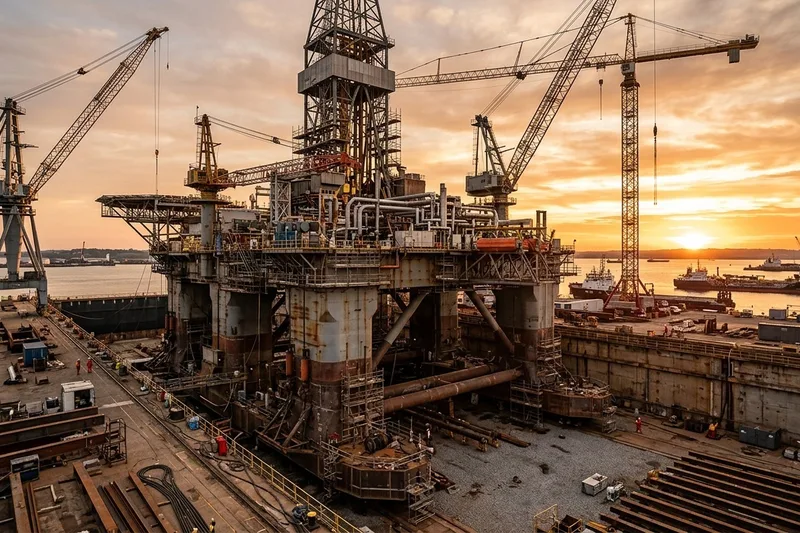
TAG, Transportadora Associada de Gás, is Brazil’s largest natural gas pipeline company, with about 4,500 kilometres of pipes along the south-east and north-east coasts and a stretch from Urucu to Manaus in the Amazon. It represents about 47% of Brazil’s gas transport infrastructure. Petrobras sold it as part of a programme to cut debt and open the gas market.
In April 2019 a consortium of France’s ENGIE and Canada’s Caisse de dépôt et placement du Québec won a competitive process with a US$8.6 billion offer for 90%. ENGIE took 58.5% and CDPQ 31.5%. The deal was financed with a US$2.45 billion international loan and R$14 billion of local debentures, described as the largest acquisition financing in Brazil. In July 2020 the partners bought Petrobras’s remaining 10% for R$1.0 billion, leaving ENGIE with 65% and CDPQ 35%.
TAG’s capacity was fully contracted on ship-or-pay terms, with an average remaining life of about 11 years, after which it will be regulated. Investors in such assets focus on what happens when those contracts end.
Key moments
The consortium wins the bidding process for 90 percent of TAG.
The acquisition closes.
ENGIE and CDPQ paid US$8.6bn for 90% in June 2019 and R$1.0bn for Petrobras’s remaining 10% in July 2020. Sources: CDPQ; ENGIE; LAVCA.
The trade-offs at the heart of the case
Who buys access when capacity falls vacant?
ENGIE’s accounts also illustrate the difference between a consortium’s stake and a particular investor’s effective holding. The consortium acquired ninety percent. Its own participants split that stake, and ENGIE also had an indirect interest through ENGIE Brasil Energia. Reporting the consortium’s entire purchase as ENGIE’s economic holding would confuse the vehicle making the purchase with a shareholder financing the vehicle. The same distinction matters when calculating what portion of the debt or distributions an individual investor ultimately bears. Imagine the retirement of an industrial plant served by a branch. The pipeline may retain technical capacity on the main trunk. A replacement customer in another district cannot use that branch without a connection, a supplier of gas and a delivery arrangement at its own premises. Under these circumstances the best predictor of post-contract cash is a realistic replacement booking for the same part of the network. National growth in gas demand offers little protection if it occurs far from the released capacity. The public value of an open transmission network can nevertheless exceed the cash value of an immediately available new customer. A producer may only develop a field once it knows access is possible, and an industrial investor may only build once it knows a producer can deliver. Consider an option agreement that shares the cost of establishing feasibility without making existing customers subsidise every speculative connection. For the pipeline owner the difficult judgement is how much to spend before the future shipper makes a binding commitment of its own.
For your seminar, paper or interview
- Q1
Who bears renewal risk when the reservation agreement expires before the acquisition debt matures?
- Q2
Why can unused capacity on one branch be worthless to a shipper on another?
- Q3
Which evidence would justify financing a new industrial connection?
- Q4
How would you verify capacity invoiced under binding contracts using information available at the time?
- Q5
Which finding about renewal terms and unplanned unavailability would most change your recommendation, and why?
- Infrastructure privatisation
- Ship-or-pay contracts
- Acquisition finance
- Regulated returns
How we would approach it
Simplifying Finance’s opinion, offered as a starting point for debate, not as fact or investment advice.
Stable contractual income does not remove reinvestment risk. A compressor may need replacement to maintain the availability the shipper has already purchased. The corresponding expenditure protects existing revenue and should not be justified by assuming new sales. In the debt model it belongs ahead of discretionary distributions, with timing informed by the condition of the actual equipment. Assess the acquisition contract by contract, identifying expiry dates, customer concentration, inflation adjustments and specifications for availability. Stress the largest renewal separately. A buyer that values predictable income might reject a speculative expansion today and still fund a short branch backed by a credible customer commitment. The decision belongs at the intersection of contract duration, credit quality and the physical ability to deliver.
Buy contracted cash flows
Acquire pipelines whose capacity is fully contracted on ship-or-pay terms.
Finance with long-term debt
Use project-style debt in dollars and reais to fund the purchase.
Buy out the seller
Acquire the remaining stake once the seller decides to exit completely.
What this plan gives up
The pipelines offered stable, contracted income, but the returns depend on what happens when contracts expire and the network becomes fully regulated.
The strongest counter-argument
A buyer can price two seemingly identical sections very differently. One may connect a producer with several industrial users and offer alternative sources of business. Another may terminate at a single plant. The cost of maintaining pipe can be comparable in each case while the residual value after the anchor reservation expires is quite different. Split the network into cash-generating routes before applying a multiple to the total contracted income. At financing, match the loan amortisation to the contractual revenue schedule. A loan that appears comfortably covered in its early years may still leave a large balance outstanding just when the shipper can renegotiate. Paying down some debt faster reduces distributions in the near term but can improve the owner’s bargaining position at renewal. The sensible trade depends on real alternative shippers and on whether a creditworthy incumbent would still need that corridor if its own production or customer contracts changed. Unused capacity needs a customer as well as a physical opening. Financing should identify the last year secured by a binding booking.
Metrics to watch
- Contract renewals
- Regulated tariff decisions
Propose your solution
Pick a discussion question and set out what you would do, why, and what it would cost. Strong, well-argued answers are reviewed and published below with your first name and programme.
Published solutions
Loading published solutions…
- ENGIE 2019 consolidated accounts, acquisition of TAG (ENGIE) ↗
- ENGIE transaction presentation at closing (ENGIE) ↗
- CDPQ: ENGIE and CDPQ make winning bid for TAG ↗
- CDPQ: ENGIE and CDPQ to acquire remaining 10% of TAG ↗
- Jones Day: ENGIE-led consortium’s US$8.6bn TAG acquisition ↗
- Image: Simplifying Finance · AI-generated editorial illustration
Figures are as reported by the companies or cited outlets as of 22 November 2026. Check the source before quoting. Corrections: let us know through the solution form.