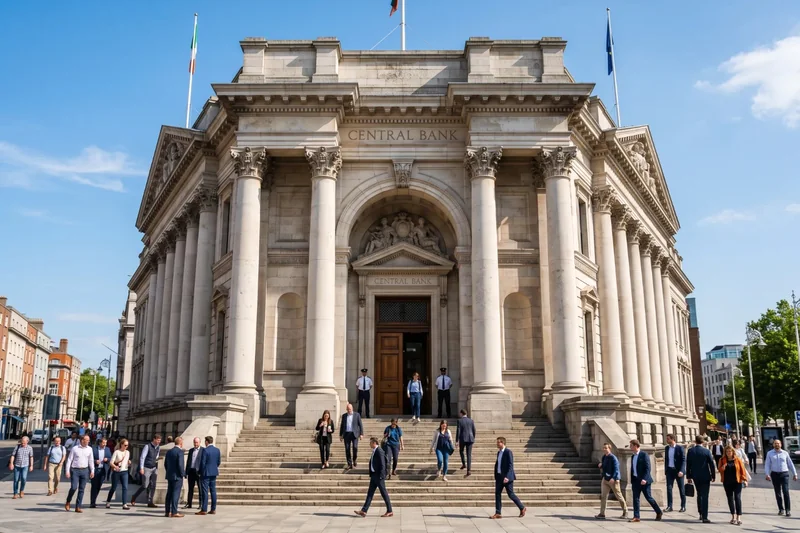
What happened
A pension fund can become better funded on paper while urgently needing cash. Higher gilt yields generally reduce the present value of long-dated pension obligations. They can also trigger collateral calls on hedges designed to protect the fund against falling yields. In September 2022 the speed of the move forced some liability-driven investment arrangements to raise cash as other investors were trying to sell similar assets.
A pension cheque due decades from now cannot be postponed to meet a margin call due this afternoon, and a fall in the present value of liabilities does not produce spendable sterling. A trustee needs to see both a funding-ratio calculation and a liquidity ladder. The second must include who may authorise transfers and whether assets settle before a collateral deadline.
The Bank of England bought £12.1 billion of long-dated conventional gilts and £7.2 billion of index-linked gilts, totalling £19.3 billion. These were purchases of securities that could later be sold. Treating the entire sum as an expense confuses the size of an intervention with its net financial result. Its immediate purpose was to help restore market functioning.
The two gilt categories represented about 63% conventional and 37% index-linked securities by purchase amount. Their market sensitivities differ; equal pound amounts would not necessarily supply equal interest-rate or inflation exposure. The total therefore describes the scale of assets acquired more directly than it describes risk. To assess the intervention’s financial result, match actual disposal receipts and financing to purchases. To assess market functioning, examine trading conditions separately.
Many British defined benefit pension schemes used liability-driven investment, or LDI. They borrowed through derivatives and repo to buy more long-dated gilts, so that their assets would move with their liabilities when interest rates changed. That strategy worked when yields moved slowly but required cash collateral whenever gilt prices fell sharply.
On 23 September 2022 Chancellor Kwasi Kwarteng’s mini-budget announced about £45 billion of unfunded tax cuts. Gilt yields soared: by 28 September the 30-year yield had risen by 130 basis points in three days, a move three times larger than any previous one over a similar period. LDI funds faced huge collateral calls and sold gilts to raise cash, pushing yields higher still. The Bank later said that without intervention a large number of pooled LDI funds would have been left with negative net asset value.
On 28 September the Bank announced it would buy up to £65 billion of long-dated gilts over 13 days. In the end it bought £19.3 billion, comprising £12.1 billion of conventional and £7.2 billion of index-linked gilts. The 30-year yield fell more than 100 basis points after the announcement. The Bank later sold the gilts and regulators required LDI funds to hold larger buffers.
The fiscal plans were soon reversed and Liz Truss resigned as prime minister in October 2022.
Key moments
Temporary purchases begin to restore orderly gilt markets.
Purchase operations end.
The Bank reports completion of the unwind.
Purchases ran from 28 September to 14 October 2022. LDI funds sold about £25bn of gilts in the five weeks after the mini-budget. Sources: Bank of England; Yahoo; Bank Underground.
The trade-offs at the heart of the case
A comparison with Queensferry Crossing: The distinction between a spare route and an available route
The Queensferry case asks whether an alternative route works on the day the main connection is unavailable. A pension scheme faces the same operational test with collateral. A balance held by the sponsoring employer, an asset held by a fund and a gilt settling tomorrow can all look like resources in a consolidated presentation. Only some will pay the call at the required time. Construct a highly specific failure. The call arrives after a dealing cutoff, several managers are attempting to sell the same gilt and a trustee normally authorised to release cash is unavailable. Ask what can settle before close of business. Then compare the answer with the quantity that appeared as liquid in the previous report. For a bridge, a substitute route can be limited by road capacity or common weather conditions. For a fund, the limiting factors can include delegated authority, custody arrangements and market depth. A stress test that names these dependencies can justify the cost of genuine redundancy. A stress test that simply assigns an unchanged price to every sale may provide the opposite impression at precisely the moment trustees need an honest liquidity assessment.
What to watch
Liquidity stress is collective as well as individual. An asset that one fund can normally sell easily may become difficult to sell when many funds need the same cash by the same deadline. Stress tests should therefore change market depth along with prices. A plausible funding plan identifies a buyer, a settlement time and a person authorised to send the money. Calling a security liquid addresses only the first part of that operational chain.
For your seminar, paper or interview
- Q1
Which asset is available before the first collateral deadline?
- Q2
How should a trustee value extra liquidity against less complete interest-rate hedging?
- Leverage and margin calls
- Liquidity vs solvency
- Liability-driven investment
- Lender of last resort
How we would approach it
Simplifying Finance’s opinion, offered as a starting point for debate, not as fact or investment advice.
Model collateral calls under a fast move over several days as well as under a single change in long-term rates. Use cash that can genuinely be delivered on time. Agree beforehand which hedges can be reduced if selling other assets would worsen a disorderly market.
Buy long-dated gilts
Offer to buy up to £65bn over 13 days.
Set a firm end date
Stop purchases on 14 October to force funds to rebuild buffers.
Sell the gilts back
Unwind holdings through demand-led sales.
What this plan gives up
Temporary purchases stopped a self-reinforcing fire sale, but they rescued leveraged strategies and risked looking like support for the government’s fiscal plans.
The strongest counter-argument
Larger liquidity buffers can dilute expected returns and reduce liability hedging. The trade-off should be transparent to trustees. Consider how much a buffer costs in ordinary years and compare it with the consequences of forced sales when other funds have similar portfolios.
Metrics to watch
- Collateral buffers in LDI funds
- 30-year gilt yields
Propose your solution
Pick a discussion question and set out what you would do, why, and what it would cost. Strong, well-argued answers are reviewed and published below with your first name and programme.
Published solutions
Loading published solutions…
- Bank of England: composition of temporary gilt purchases ↗
- Bank of England: completion of the unwind ↗
- Transport Scotland: Forth Replacement Crossing ↗
- Bank of England: Financial stability buy/sell tools, a gilt market case study ↗
- Bank Underground: Lifting the lid on a liquidity crisis ↗
- Bank Underground: What caused the LDI crisis? ↗
- CNBC: Pension funds were hours from disaster ↗
- Yahoo: Bank of England says £65bn intervention prevented financial crisis ↗
- Image: AI-generated editorial illustration
Figures are as reported by the companies or cited outlets as of 22 November 2026. Check the source before quoting. Corrections: let us know through the solution form.