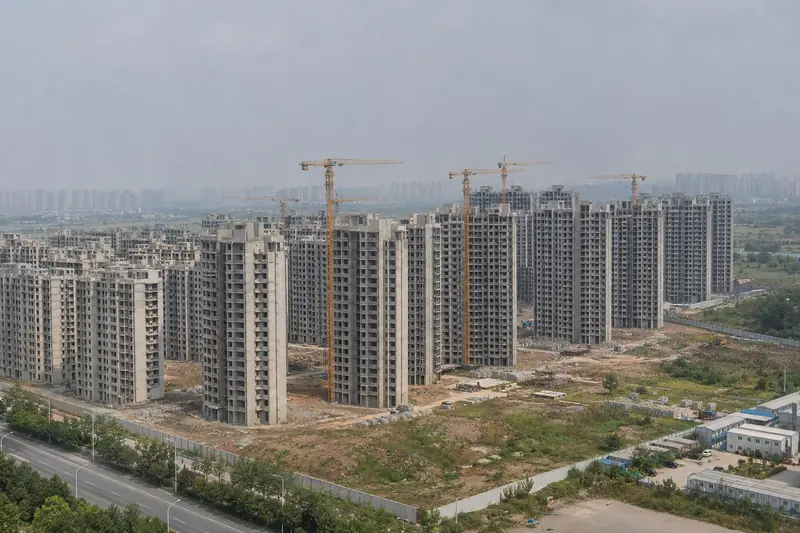
What happened
Vanke was seen as a model: professional management, lower debt than rivals, and a state-linked shareholder. Investors assumed the government would never let it fail.
But the whole sector shared the same problem — falling sales and prices after 2021. Vanke’s revenues fell, land and projects were written down and short-term debts piled up.
Shenzhen Metro replaced management and lent heavily, but in November 2025 it capped support, forcing Vanke to seek bond extensions and sell assets like ski resorts and schools.
The case shows the limits of implicit state guarantees and how a sector-wide slump can overwhelm even well-run firms.
The lessonImplicit support is not a guarantee — when a whole sector shrinks, even the strongest player can run out of cash.
Key moments
Wang Shi founds Vanke in Shenzhen.
Vanke lists in Shenzhen.
Chairman Yu Liang warns the industry must “survive”.
Vanke reports its first losses since listing; leaders resign.
Shenzhen Metro takes control and lends billions.
Bondholders reject one-year extensions but grant grace periods.
For your seminar, paper or interview
- Q1
Why did investors believe Vanke was safe?
- Q2
What is implicit state support, and why might it be limited?
- Q3
Should Shenzhen Metro keep lending to Vanke?
- Q4
How should bondholders respond to extension requests?
- Liquidity vs solvency
- Moral hazard
- Systemic risk
- Debt restructuring
Propose your solution
Pick a discussion question and set out what you would do, why, and what it would cost. Strong, well-argued answers are reviewed and published below with your first name and programme.
Published solutions
Loading published solutions…
- Caixin: Vanke’s debt spiral ↗
- Caixin: Vanke cuts losses, restructures debt ↗
- Jiemian: bond extension plan fails ↗
- The Edge/Bloomberg: Vanke averts default ↗
Figures are as reported in the cited sources. Check the source before quoting. Corrections: let us know through the solution form.