The idea
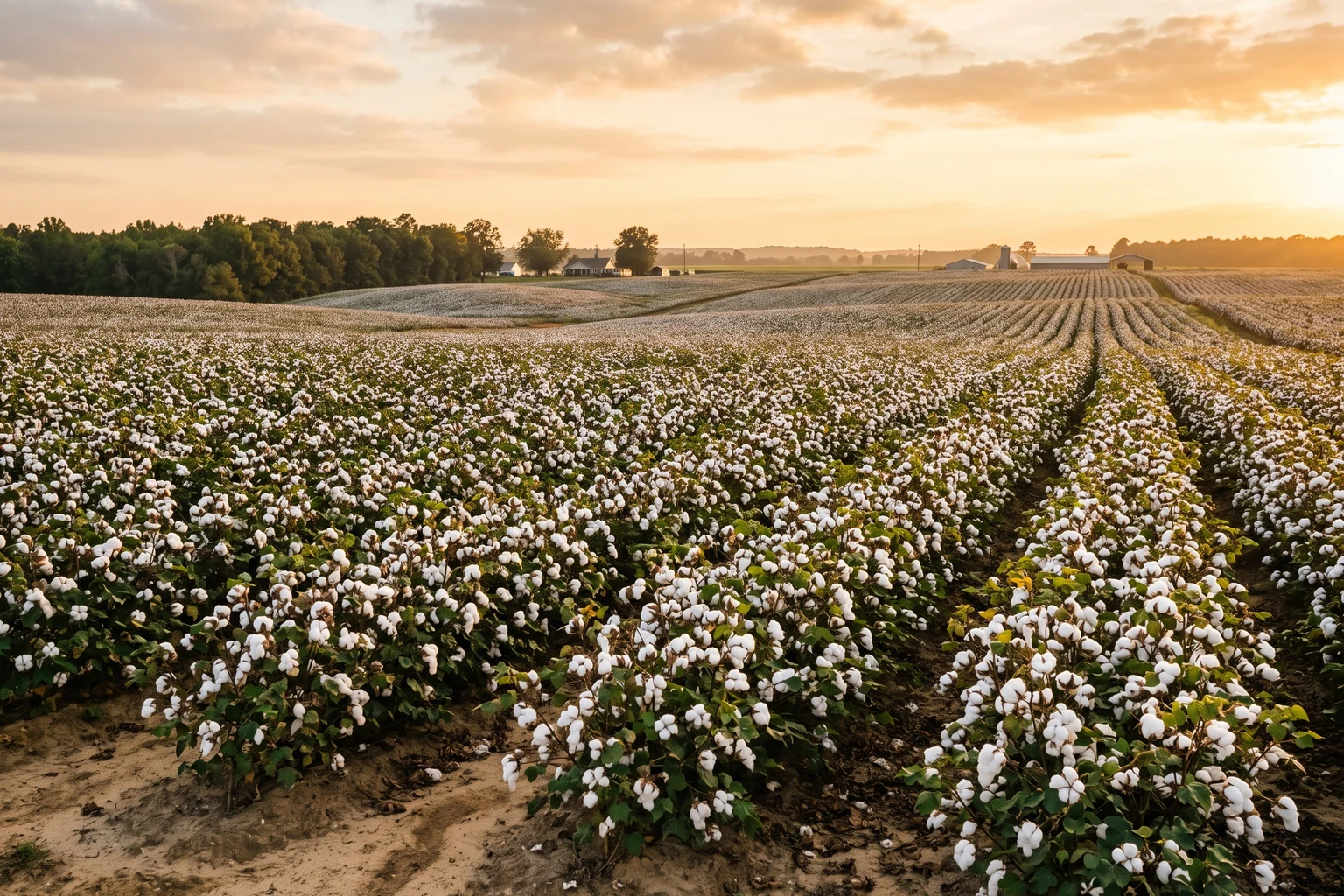
Cotton is the world’s most important natural fibre, used mainly for clothing and home textiles. It is grown in more than 70 countries, but a few dominate production and exports. Prices affect farmers’ incomes, textile makers’ costs and, eventually, clothing prices.

Major producers and exporters
| Country | Role | Note |
|---|---|---|
| China | Largest producer and consumer | Also a major importer |
| India | Major producer | Large domestic textile industry |
| United States | Largest exporter | Much of its crop is exported |
| Brazil | Major exporter | Fast-growing production |
Supply drivers
Weather is the biggest supply factor. Droughts in Texas, monsoon variability in India, and conditions in Brazil and Australia can change output significantly. Farmers decide each year how much land to plant with cotton versus crops such as soybeans or corn, depending on relative prices.
Demand drivers
Demand depends on textile mill activity, consumer spending on clothing and the economy. Many mills are in China, India, Bangladesh, Vietnam, Pakistan and Turkey. Economic slowdowns and high retail inventories can reduce orders quickly.
Competition from synthetics
Polyester and other synthetic fibres have overtaken cotton in total fibre use. Polyester prices are linked to oil prices. When oil and polyester are cheap, mills may substitute away from cotton, limiting cotton price rises.
Cotton futures
The main benchmark is the ICE Cotton No. 2 futures contract in New York, quoted in US cents per pound. Farmers, merchants and mills use futures to hedge, and speculators add liquidity. China’s Zhengzhou exchange also trades cotton futures.
Price history
Cotton prices are volatile. In 2011, prices rose above 2 dollars per pound, the highest since the US Civil War era in nominal terms, after poor harvests and strong demand, then fell sharply. Prices also spiked in 2022 before easing.
Stocks and government policy
China has held large state reserves of cotton, and changes in its stockpiling or release policies have moved world prices. Subsidies, import quotas and tariffs in major countries also shape trade flows.
Sustainability
Cotton growing can use large amounts of water and pesticides in some regions. Programmes promoting better practices and organic cotton aim to reduce environmental impact. Traceability has become more important as brands respond to concerns about labour practices in supply chains.
Investment exposure
Exposure can come through futures, commodity index funds that include cotton, or shares of textile and agricultural companies. Futures-based funds face roll costs and the effects of contango or backwardation.
The Gulf angle
Gulf countries import cotton textiles and garments rather than growing cotton at scale. Regional trading hubs re-export textiles to neighbouring markets, so cotton prices affect import costs and trading margins for these businesses.
What to watch
- US and Indian crop reports
- Weather in major growing regions
- Chinese imports and reserve policy
- Polyester and oil prices
- Retail clothing demand
Reading crop reports
The US Department of Agriculture publishes monthly World Agricultural Supply and Demand Estimates, which include global cotton production, consumption and stocks. Markets often move sharply when these reports differ from expectations. A key figure is the stocks-to-use ratio, which compares ending stocks with annual consumption: a low ratio signals tight supply and tends to support higher prices, while a high ratio suggests ample supply. Weekly US export sales data also show how strong foreign demand is.
Quality matters
Cotton is graded by fibre length, strength and cleanliness. Higher-quality cotton earns a premium, and differences in grade can make some supplies more valuable than others even at the same headline price. Mills buy specific grades to suit the yarn and fabric they produce, so quality-specific supply can matter as much as total crop size.
A realistic scenario
A drought cuts the US crop by a quarter. Export supplies tighten, and cotton futures rise 30% in a few months. Mills in Asia switch some production to polyester blends, and retailers delay orders. When the next harvest recovers, prices fall back.
Questions to ask yourself
- How is the weather in key regions?
- What are planting intentions for next season?
- Is demand from mills strong or weak?
- How cheap is polyester?
- What are China’s policies?
The short version
Cotton prices depend on weather, planting choices, textile demand and competition from synthetic fibres, with China, India, the US and Brazil key players. Futures help manage risk, and prices can swing sharply.
Illustration: a cotton futures contract covers 50,000 pounds. A move from 80 to 90 cents per pound changes the contract value by 5,000 dollars. Hypothetical figures.
Cotton prices depend on weather in a handful of major growing countries, demand from textile mills, and competition from synthetic fibres. Futures help farmers and mills manage price risk.
Primary educational references
International Cotton Advisory Committee ↗
Reviewed November 28, 2026. Examples are hypothetical illustrations. Educational content, not personalised investment, legal or tax advice.