The idea
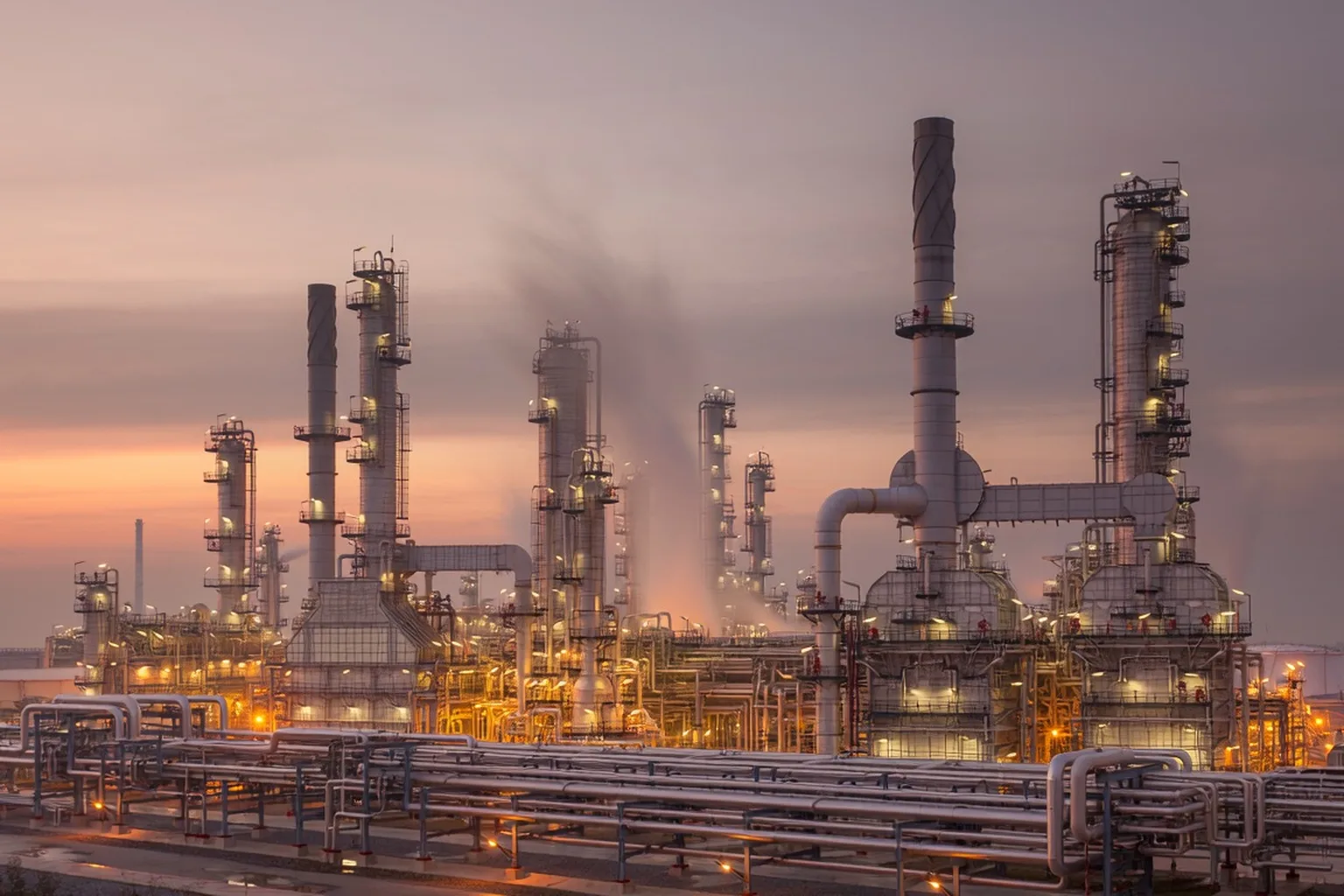
A refinery 'cracks' crude oil into products such as petrol, diesel, jet fuel and naphtha. Its gross profit is roughly the value of those products minus the cost of the crude. That difference is called the crack spread.
Traders often use a simple 3-2-1 crack: three barrels of crude producing two barrels of petrol and one barrel of diesel. Real refineries have more complex yields, but the idea is the same.
What a barrel becomes (typical US refinery, approximate)
| Product | Share of output | Main use |
|---|---|---|
| Petrol (gasoline) | About 45% | Cars |
| Diesel and heating oil | About 30% | Trucks, ships, machinery, power |
| Jet fuel | About 10% | Aircraft |
| Other products | About 15% | Petrochemicals, asphalt, LPG, fuel oil |
When diesel tightens
In 2022, sanctions and refinery outages cut diesel supply while demand recovered.
Diesel crack spreads rose to several times their normal level.
Drivers saw diesel prices rise much more than crude, and refiners earned record profits.
Crack spreads explain why pump prices do not always follow crude oil.
What moves crack spreads
Refinery outages
Hurricanes, fires or maintenance reduce product supply.
Seasons
Summer driving lifts petrol; winter lifts heating oil demand.
Export flows
Sanctions and trade shifts reroute fuel around the world.
New capacity
Large new refineries in Asia and the Middle East add supply.
Why investors care
Refining stocks
Profits follow crack spreads more than crude prices.
Integrated oil companies
Refining can offset weak upstream earnings when crude falls.
Inflation
Diesel costs feed into transport and food prices.
Regional hubs
The UAE's Ruwais refinery is among the largest in the world.
Simple and complex refineries
A simple refinery can only distil crude into basic fractions. A complex refinery adds units such as cokers and hydrocrackers that convert heavy residues into valuable diesel and petrol. Complex refineries can buy cheaper heavy, sour crude and still produce high-value fuels, earning wider margins.
Refinery complexity is often measured with the Nelson Complexity Index. Higher complexity costs more to build but gives more flexibility in which crudes to buy.
A realistic scenario
Layla notices diesel prices in her home country rising while crude oil is flat. She learns that several large refineries are offline for maintenance and that exports of diesel from one region have been disrupted, pushing diesel crack spreads to high levels.
She realises that her transport costs depend on refinery margins as much as on crude. She also notices that shares of refining companies have risen, even as oil producers' shares have been flat.
Questions to ask yourself
Is the move in fuel prices coming from crude or from refining margins? Which product is tight, petrol, diesel or jet fuel? Is this seasonal or caused by outages? Are new refineries coming online that could ease margins? Which companies benefit?
Official sources to check
The U.S. EIA (eia.gov) explains refining and publishes product prices and refinery utilisation. The IEA (iea.org) covers global refining in its Oil Market Report. ADNOC (adnoc.ae) provides information on the Ruwais refinery and UAE refining.
Common mistakes
Assuming fuel follows crude
Margins can move fuel prices independently.
Using one crack for all
Petrol and diesel margins often diverge.
Ignoring maintenance
Seasonal refinery turnarounds tighten supply temporarily.
Buying refiners at peak margins
Exceptional spreads rarely last.
Your checklist
- I know refiners earn the spread, not the oil price.
- I watch diesel and petrol cracks separately.
- I expect seasonal patterns in fuel demand.
- I do not assume pump prices follow crude one-for-one.
The short version
Refiners earn the crack spread, the gap between product prices and crude costs. Spreads move with outages, seasons and trade flows, which is why fuel prices and refiners' profits can diverge from the oil price.
Illustration: 3 barrels of crude at USD 80 = USD 240. They yield 2 barrels of petrol at USD 95 and 1 of diesel at USD 110 = USD 300. The 3-2-1 crack spread is USD 60 ÷ 3 = USD 20 a barrel.
Refiners profit from the spread between crude and products, not the oil price itself; fuel can get expensive even when crude is calm.
Primary educational reference
U.S. EIA · Refining crude oil ↗Reviewed November 20, 2026. Examples are hypothetical illustrations in AED or USD. Educational content, not personalised investment, legal or tax advice.