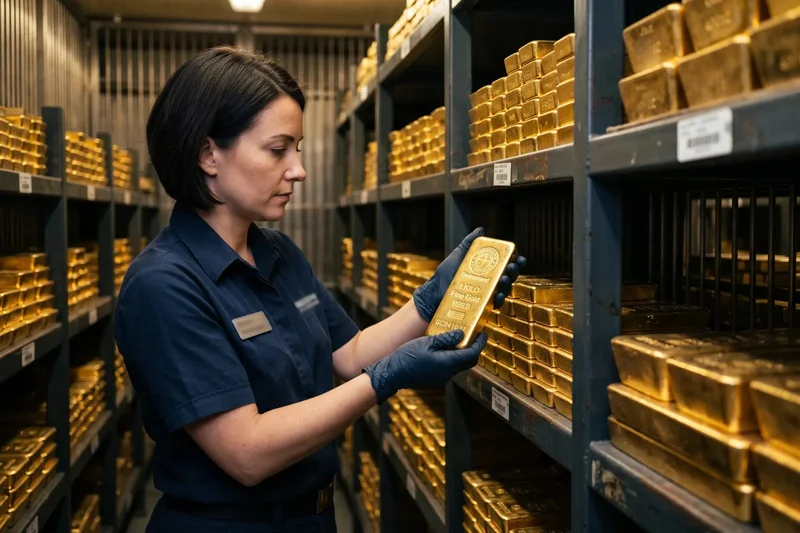
How the gold price is actually set
There is no single “gold price”. There is a spot price traded around the clock, futures on COMEX, a twice-daily London benchmark, a Shanghai price and the price your local dealer quotes. Knowing which one you are looking at is the first step to trading gold.
The five prices you will meet
Spot (XAU/USD)
The price for immediate delivery in the London over-the-counter market. This is what most trading platforms, charts and news reports show, and what CFD and spot accounts trade.
COMEX futures (GC)
The world’s most traded gold futures contract, run by CME in New York. Each contract is 100 troy ounces; smaller 50-ounce, 10-ounce (Micro) and 1-ounce versions also exist. Futures usually trade a little above spot because of interest costs.
LBMA Gold Price
The official London benchmark, set by electronic auction twice a day. Central banks, miners, refiners and jewellers use it to settle contracts. It replaced the old “London Gold Fix” in 2015.
Shanghai Gold Exchange
China’s main physical market, priced in yuan per gram. When Chinese demand is hot, Shanghai trades at a premium to London; when it is weak, at a discount.
Your local retail price
Dealers in Dubai, Mumbai or London start from spot, convert to local currency and add a premium, making charges and any taxes or duties.
Spot vs futures vs physical
| Spot / CFD | COMEX futures | Physical bars and coins | |
|---|---|---|---|
| What you own | A price exposure through a broker | A standard exchange contract | Metal in your hand or a vault |
| Trading hours | Nearly 24 hours, Monday–Friday | Nearly 23 hours, Sunday evening–Friday | Dealer hours |
| Leverage | High (set by broker and regulator) | High (set by exchange margin) | None |
| Overnight cost | Daily swap or financing charge | Built into the futures price; roll each contract | Storage and insurance |
| Who uses it | Retail traders | Funds, banks, professional traders | Savers, jewellery buyers, central banks |
Why futures trade above spot
Holding gold costs money: you lose the interest you could have earned and you pay to store and insure it. Futures prices include that cost, so a contract for delivery in six months normally trades above spot. Traders call this contango.
The gap widens when interest rates rise. If the futures premium suddenly jumps, it can signal a squeeze on physical metal in New York — as happened in early 2025 when tariff fears pulled huge amounts of gold into US vaults.
Reading a quote
Bid and ask
The bid is what buyers pay you; the ask is what you pay to buy. The gap is the spread, and it is your first cost on every trade.
Spreads widen
Spreads get wider in thin markets — the Asian lunch hour, the daily futures break, holidays — and around big data releases.
Premiums and discounts
Local premiums tell you about physical demand. A big Indian or Chinese discount to London means buyers are holding back.
- Know whether your chart shows spot or a futures contract — they differ by a few dollars.
- Check the spread before entering, especially outside London and New York hours.
- Futures traders must roll positions before expiry; spot traders pay a daily swap instead.
- CME Group — Gold futures contract specifications ↗
- ICE Benchmark Administration — LBMA Gold Price ↗
- LBMA — Precious metal prices summary ↗
- CME Group — Trading COMEX gold and silver ↗
Educational content, not investment or trading advice. Trading leveraged products carries a high risk of losing money.