Natural gas strategies and when they fail
Gas strategies revolve around weather, storage and seasonality. Each works in some conditions and fails in others.
Four strategies
| Strategy | Rules | Works best | Fails when |
|---|---|---|---|
| Forecast momentum | Trade in the direction of significant forecast changes | Strong cold or heat signals | Models flip back |
| Storage surprise | Trade the direction that holds after a clear Thursday surprise | Large misses versus consensus | Weather dominates the same day |
| Shoulder-season fade | Sell rallies in spring and autumn when demand is low | Mild, high-storage years | Late cold or early heat |
| Trend following | Follow the 50/200-day trend with wide ATR stops | Sustained supply or demand shifts | Choppy weather-driven markets |
Why gas is so volatile
Natural gas is one of the most volatile major commodities. Its demand depends heavily on weather, which can change quickly, and its supply cannot easily be increased in the short term. Storage acts as a buffer, but when storage is low or demand surges unexpectedly, prices can spike sharply.
US natural gas futures, priced at Henry Hub in Louisiana, can move 5% to 10% in a day during periods of extreme weather. In February 2021, a severe winter storm in Texas caused some regional gas prices to jump many times over in a few days. Strategies that work in calmer markets often need wider stops and smaller sizes in gas.
The storage cycle
The US gas year has two main seasons. During the injection season, roughly April to October, production exceeds demand and gas is put into storage. During the withdrawal season, roughly November to March, heating demand exceeds production and gas is drawn from storage.
Every Thursday at 10:30 a.m. New York time, the EIA publishes its weekly storage report. Traders compare the change with analysts' expectations and with the five-year average. Storage well below average going into winter is bullish; storage well above average is bearish.
Weather forecasts as a trading input
Gas traders closely follow weather forecasts, especially for the next one to two weeks. Forecasters express expected demand in heating degree days and cooling degree days, which estimate how much energy will be needed for heating or air conditioning.
Major forecast models update several times a day, and changes between runs can move prices. The forecast momentum strategy trades in the direction of significant forecast changes, but it carries the risk that the next model run reverses the change.
Seasonality in prices
Gas prices often show seasonal tendencies. Winter contracts usually trade at a premium to summer contracts because of higher expected demand. The shoulder seasons of spring and autumn, when neither heating nor cooling demand is high, are often quieter.
The shoulder-season fade strategy aims to sell rallies during these periods, but late cold snaps or early heat waves can cause sharp losses. Seasonal patterns are tendencies, not guarantees.
Supply drivers
On the supply side, US gas production comes mainly from shale basins such as the Appalachian and Permian regions. Production responds to prices over months, as companies adjust drilling. Pipeline constraints can affect regional prices, and some gas is produced as a by-product of oil drilling, which means oil prices also influence gas supply.
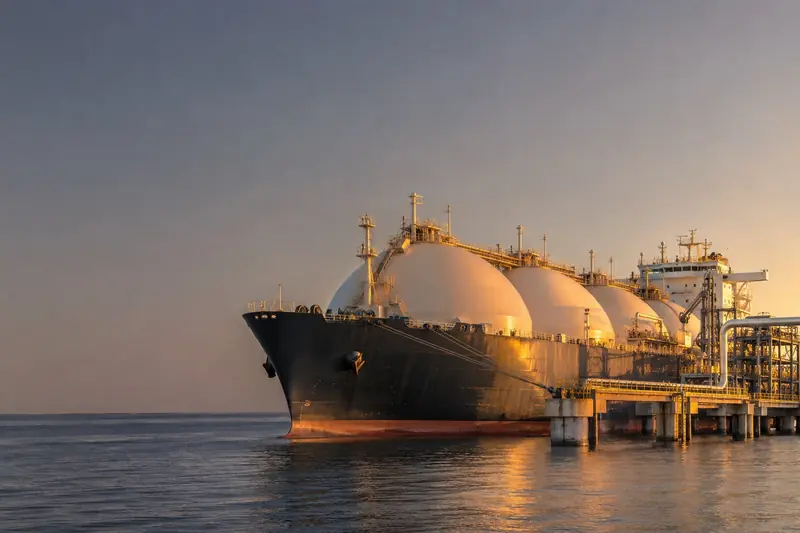
LNG exports have become an increasingly important source of demand, linking US gas prices to global markets. Outages at export plants can cause sudden drops in US prices, while new plants coming online add demand.
Contract rolls and exchange-traded funds
Many gas futures contracts trade in contango, especially ahead of winter, which means later contracts are more expensive. Funds that hold futures and roll them each month can lose significant value over time as a result, even if spot prices do not fall.
This makes gas funds unsuitable as long-term investments for most people. They are designed for short-term trading, and investors who hold them for years often see returns that differ sharply from the movement of spot gas prices.
Risk control for gas traders
- Keep risk per trade small, often half of what you would use in less volatile markets.
- Use stops based on average true range rather than fixed distances.
- Be cautious around the Thursday storage report and major forecast updates.
- Check contract expiry dates, as prices can behave erratically near expiry.
- Avoid holding leveraged positions through major weather events without a plan.
Gas rewards traders who respect its volatility and punishes those who treat it like a calmer market.
Combining weather and storage views
The most robust gas views combine weather and storage. A cold forecast matters more when storage is already low, because there is less buffer. A cold forecast with storage well above average may have a smaller price effect.
A simple scorecard, with storage versus the five-year average on one axis and the weather outlook on the other, can help judge whether conditions favour higher or lower prices.
Forecast momentum: a worked example
Suppose the midday weather model run shifts a forecast for the eastern United States from mild to significantly colder for the second week ahead, adding a large number of heating degree days. Gas futures start to rise. A trader using the forecast momentum strategy might buy after the change is confirmed by a second model, with a stop based on average true range and a plan to exit if the next runs reverse the change.
The figures and timing here are illustrative, but they show the logic: the trade is based on a measurable change in expected demand, not a guess about the weather. When models disagree or keep flipping, the strategy stands aside.
Storage surprise: reading the report
Before each Thursday report, analysts publish estimates of the weekly change in storage. If the actual injection or withdrawal differs from the consensus by a large amount, prices usually react within seconds. A withdrawal much larger than expected suggests demand was stronger or supply weaker than thought.
The storage surprise strategy waits to see whether the first move holds, because on some days weather forecast updates released around the same time overwhelm the storage news. Comparing the result with the five-year average and the same week last year adds context.
Trend following with wide stops
Gas sometimes trends for months, for example when production grows faster than demand and storage builds well above normal, or when a cold winter drains storage. Trend-following strategies aim to capture these moves.
Because daily swings in gas are large, stops must be wide to avoid being knocked out by normal noise, which means positions must be small. Many trend followers accept that gas trends are fewer and more erratic than in other markets and allocate only a small share of their risk to it.
European and Asian gas
Gas strategies are not limited to the US market. European TTF and Asian JKM prices have their own drivers, including pipeline flows, LNG imports, storage levels and weather. In Europe, storage targets set by governments influence buying patterns ahead of winter.
The relationship between these regional prices and Henry Hub creates spread opportunities for experienced traders, but also adds complexity. Beginners are usually better off understanding one market well before trading others.
When to stand aside
Sometimes the best strategy is not to trade. Periods of extreme weather, contract expiry days, holiday periods with thin liquidity and days when model forecasts swing wildly all carry elevated risk. Standing aside during these times avoids some of the largest and most unpredictable losses.
Writing a short list of conditions that mean no trading, and following it, is as much a part of a gas strategy as the entry rules.
Frequently asked questions
Why is natural gas so volatile?
Demand depends heavily on weather and supply cannot rise quickly, so prices react sharply to forecasts and storage.
When is the natural gas storage report?
The EIA publishes it on Thursdays at 10:30 a.m. New York time.
Are natural gas ETFs good long-term investments?
Usually not, because rolling futures in contango can erode returns over time.
- Combine weather and storage views.
- Use small size and wide stops.
Educational content, not investment or trading advice. Trading leveraged products carries a high risk of losing money.